

 Concrete and Mortar
 Exterior Waterproofing
 Professional Sealants
 Roof Waterproofing
 Substructure Waterproofing
  Tiling and Grouting

 Water Tanks and Other Areas
  Wet Areas

 Home
HomeUnderstanding Concrete Mix Ratios for Stronger Structures
Mar 24, 2026

Have you ever noticed two buildings in the same neighbourhood, one still standing firm after decades, and the other already showing damp patches and hairline cracks? The difference rarely comes down to the brand of cement used. More often than not, it goes back to the proportions in the mix and what was added to it on day one. In India, where structures face months of heavy rainfall in cities like Pune, Chennai and Kolkata, heat that pushes past 45°C in Rajasthan and Gujarat, and humidity that never seems to let up in coastal regions, the concrete mix is the foundation of everything. Getting the ratio right, and backing it with proper concrete waterproofing is what separates a building that ages well from one that does not.
What is a Concrete Mix Ratio?
A concrete mix ratio is a simple formula that tells you how much cement, sand and stone aggregate to combine. Think of it like a recipe. Change one ingredient and the result changes entirely. These ratios are written as three numbers, such as 1:2:4. The first number is cement, the second is sand (fine aggregate) and the third is stone chips (coarse aggregate). This balance determines the load-bearing capacity of your pillars, beams and slabs. Too much sand and the mix becomes weak. Too much water and the concrete shrinks and cracks as it dries.
Why is Cement Waterproofing Important in Concrete?
Standard concrete looks solid, but it is porous. Tiny microscopic channels run through the material, and over time, water finds its way in. Once water reaches the steel reinforcement bars inside your columns or slabs, the steel begins to rust. Rust expands and expanding steel cracks the surrounding concrete from within. This is one of the costliest forms of structural damage a homeowner can face years after construction.
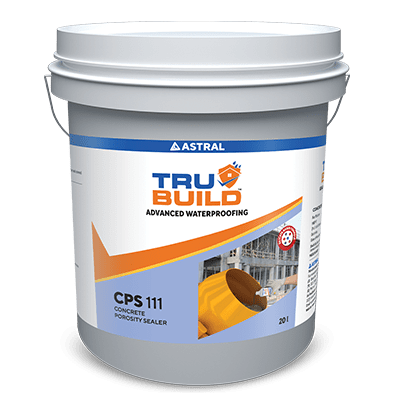
Adding cement waterproofing directly to the concrete mix seals these pores from the inside. Trubuild CPS 111, an integral waterproofing compound, works exactly this way. It is a single-component, low-viscosity liquid that reduces water permeability in concrete, mortars and plasters. It protects reinforced steel against corrosion and improves the workability of freshly mixed concrete without affecting its strength. CPS 111 meets IS: 2645:2003 standards and is suited for roof slabs, basements, drains, bathrooms and water tanks.
Common Concrete Mix Ratios Used in Indian Construction
Different parts of your home need different levels of strength. Using a heavy-duty mix for a garden pathway wastes money. Using a weak mix for a roof slab is a risk you do not want to take.
|
Mix Ratio |
Grade |
Common Application |
|
1:3:6 |
M10 |
Foundations, base layers and levelling |
|
1:2:4 |
M15 |
General construction and courtyard floors |
|
1:1.5:3 |
M20 |
Beams, columns and roof slabs |
For most modern Indian homes, M20 is the standard for load-bearing structural elements.
How Does Concrete Waterproofing Improve Structural Strength?
Integral waterproofing compounds act as plasticisers, substances that make the concrete mix more workable with less water. Less water means fewer voids form when the concrete sets. The result is a denser, more compact structure that resists both water ingress and chemical attacks from groundwater.
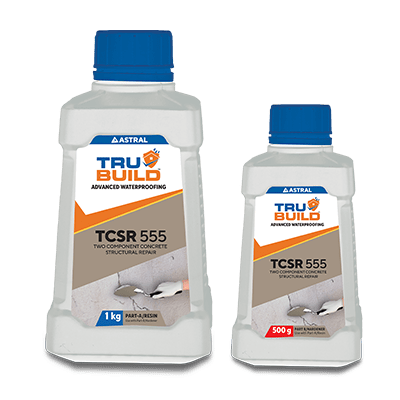
For older structures with existing cracks or damaged joints, Trubuild TCSR 555 is a strong repair option. It is a two-component, solvent-free epoxy system that bonds cracked or damaged concrete to new concrete, bricks and steel. It can be injected into damp and wet cracks wider than 2mm under high pressure and reaches a compressive strength within just 24 hours of application.
Tips for Preparing a Strong Concrete Mix
Step 1. Measure by volume
Use a standard measuring box (farama) for every single batch. Do not estimate quantities on site.
Step 2. Control the water ratio
Add only enough water to make the mix workable. Excess water leads to weak concrete that shrinks and cracks over time.
Step 3. Dry mix first
Combine cement and aggregates thoroughly before adding water. A mechanical mixer gives more consistent results than hand mixing for structural pours.
Step 4. Add waterproofing to the gauging water
Mix your concrete waterproofing additive into the water first. Then add this combined liquid to the dry mix. This distributes the compound evenly across every batch.
The strength of a building is decided well before the first brick is laid. By choosing the right concrete mix for each structural element and reinforcing it with integral cement waterproofing, you protect your investment for decades. With material costs rising across India, doing it right the first time is always more economical than repairing damage later.
Explore Astral Trubuild’s range of concrete waterproofing solutions today!
FAQ
What is the best concrete mix ratio?
For load-bearing elements like roof slabs, columns and beams, a 1:1.5:3 (M20) ratio is the standard recommendation for residential buildings in India. It provides the right balance of strength and economy for most structural pours.
Does waterproofing make concrete stronger?
Yes. Integral waterproofing reduces internal voids, prevents rebar corrosion and stops water-related deterioration. The structure retains its full strength for a much longer period as a result.
What is cement waterproofing?
It involves adding specialised liquid or powder compounds to the concrete or mortar mix during preparation. These compounds seal microscopic pores from the inside, stopping water from travelling through the material. Trubuild CPS 111 is one such product, designed specifically for this application.

