

 Concrete and Mortar
 Exterior Waterproofing
 Professional Sealants
 Roof Waterproofing
 Substructure Waterproofing
  Tiling and Grouting
 Water Tanks and Other Areas
  Wet Areas

 Home
HomeWhich Waterproofing is Best for Bathrooms?
Feb 6, 2026

Have you ever noticed damp patches on the walls adjacent to your bathroom? Or perhaps you have seen water slowly dripping from the ceiling below your washroom? These are common worries for many homeowners. While choosing stylish tiles and premium fittings, they sometimes overlook the importance of waterproofing for bathroom, which works silently behind the scenes.
Bathrooms are where we use a lot of water for daily cleaning. Your bathroom is constantly exposed to moisture. If the barrier between your floor and the structure is not strong, it can lead to serious damage. Let us help you understand how to protect your home from such leaks.
What Happens If Bathroom Waterproofing Is Not Done Properly?
When you skip or use poor-quality materials during waterproofing for bathroom areas, the consequences are usually expensive. Water seeps into the concrete slab and reaches the steel reinforcement bars. This causes the steel to rust and expand and it eventually leads to cracks in your ceiling and walls.
Apart from structural damage, constant dampness creates a breeding ground for mould and fungus. This can affect the air quality in your home and lead to health issues for your family. Often, the paint on the other side of the bathroom wall starts peeling off, ruining the look of your living room or bedroom. Addressing these problems later usually involves breaking tiles, which costs much more than doing it right the first time.
Key Areas That Need Waterproofing for the Bathroom
It is a mistake to think only the floor needs protection. There are several spots where water can find a way out:
1. The Floor Slump: The entire floor area must be sealed to prevent water from soaking into the ground.
2. The Splash Zone: Walls around the shower area or bathtub should be protected up to a certain height.
3. Pipe Joints: Areas where pipes enter or exit the walls and floors are the most common leak points.
4. Drain Outlets: The gaps around the floor trap or drain can let water bypass the tiles.
5. The Coving: The corners where the wall meets the floor need a continuous film of protection.
Which Waterproofing Is Best for Bathrooms?
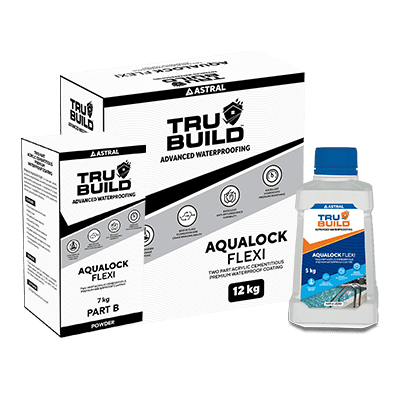
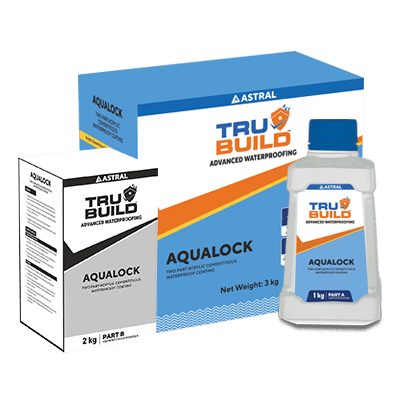
For modern Indian homes, a two-part acrylic cementitious coating is considered the most reliable solution. Astral Trubuild Aqualock is a standout choice for bathroom floor waterproofing because it combines the strength of cement with the flexibility of acrylic. This product comes in a ready-to-mix kit consisting of a powder and a liquid part. Once mixed, it forms a seamless and flexible membrane that acts as a superior water barrier. Because it is flexible, it can bridge small cracks that might develop over time due to temperature changes. It also has excellent adhesion to concrete and masonry, which means it will not peel away easily.
Best Waterproofing Method for Toilet Area
The toilet waterproofing process requires precision. You should not just slap on a coat of paint and expect it to work. Here is the recommended method using Trubuild Aqualock:
Step 1: Surface Preparation
The surface must be clean and free from oil, grease or loose dust. Ensure the concrete is fully cured.
Step 2: Coving
Create a ‘coving’ or a curved edge at the wall-to-floor junctions using a polymer-modified mortar to ensure the coating remains continuous.
Step 3: Dampening
The surface should be in a Saturated Surface Dry (SSD) condition, which means it is damp but has no standing water.
Step 4: Mixing
Use a mechanical mixer to slowly add the powder to the liquid. Let it stand for 5 to 10 minutes to release trapped air.
Step 5: Application
Apply at least two coats using a brush or a trowel. The second coat should be applied 4 to 6 hours after the first one.
Step 6: Curing
Allow it to air cure for 5 to 6 hours, followed by moist curing with water spray for 24 hours.
How Long Does Waterproofing for Bathroom Last?
When you use high-quality systems like Trubuild Aqualock and follow the right application steps, the protection is designed to last for many years. The product has a shelf life of 12 months in its original packaging. Once applied and covered with a protective screed or tiles, it remains shielded from physical damage.
Proper curing is the secret to longevity. You must allow the system to cure for at least 7 days before conducting any ponding tests or filling the area with water. This ensures the membrane has reached its full strength to withstand the constant presence of moisture.
Choosing the right waterproofing for bathroom is a step towards ensuring the good health of your home. By using a specialised product like Astral Trubuild Aqualock, you prevent structural decay and maintain the beauty of your interiors. It is a simple step that saves you from the stress of future repairs.
FAQ
What is the best waterproofing for bathroom floors?
A flexible, cementitious coating like Trubuild Aqualock is the best choice. It handles the moisture levels found in Indian bathrooms and moves with the structure to prevent cracks.
Is waterproofing required for bathroom walls?
Yes, it is necessary. Water from showers often splashes onto walls. Without a barrier, moisture travels through the grout and into the wall, causing dampness in adjacent rooms.
Can toilet waterproofing be done after tiling?
It is difficult to do effectively. While some surface sealants exist, true toilet waterproofing happens beneath the tiles to protect the structure. If leaks occur after tiling, you often have to remove the tiles to apply a proper membrane.
How many coats of waterproofing are needed in bathrooms?
A minimum of two coats is recommended to achieve the right thickness. In areas with very high water exposure or severe penetration, applying a third coat can provide extra safety.

