

 Concrete and Mortar
 Exterior Waterproofing
 Professional Sealants
 Roof Waterproofing
 Substructure Waterproofing
  Tiling and Grouting
 Water Tanks and Other Areas
  Wet Areas

 Home
HomeHow Soil Type Affects Foundation Waterproofing Strategies?
Jan 28, 2026

In India, where soil composition shifts dramatically from the sandy coasts to the clay-heavy central regions, treating every construction site the same is an expensive error. The soil around your home determines how water interacts with your structure. If you ignore the soil type, even the most expensive foundation waterproofing system might fail. This guide breaks down exactly how to match your defence strategy to the soil you build on.
What is Foundation Waterproofing?
Many people believe waterproofing is simply painting a black coating on a wall. It is much more than that. It is a complete system designed to manage water. This system includes drainage to move water away, membranes to stop moisture ingress and protection layers to shield these barriers from damage. Whether you are looking at new construction or foundation waterproofing, the goal is to create an envelope that separates your structure from the wet soil.
How Soil Impacts Structural Foundations?
To choose the right protection, you must understand the attack. Soil threatens your home in two specific ways.
1. Drainage and Permeability
This refers to how fast water moves through the soil. High permeability means water flows away quickly, which is generally good. Low permeability causes water to trap and pool against your walls. This standing water searches for any weakness in your concrete or masonry to seep through.
2. Expansion and Hydrostatic Pressure
This is the silent crusher. When water accumulates around a foundation, it builds weight. This weight exerts force against the walls, known as hydrostatic pressure. In many Indian regions, the soil expands physically when wet. This expansion pushes against the structure with immense power, which is capable of cracking rigid barriers.
Common Soil Types and Their Traits
Identifying your soil is the first step toward a dry home.
1. Clay Soil: This is the heavy lifter. It holds water tightly and expands significantly. When it dries, it shrinks. This constant movement creates a high-risk environment for foundations.
2. Sandy Soil: The drainer. Water runs through it fast. While it builds less pressure, it is unstable and can wash away, potentially undermining the footing.
3. Silt Soil: The wicker. Finer than sand but coarser than clay, silt retains moisture and is famous for wicking water upwards through capillary action.
4. Loam Soil: A mix of the three. It usually offers a balance but can lean towards the properties of its dominant ingredient.
Waterproofing Strategies by Soil Profile
A single approach does not work for all. Here is how to tailor your strategy.
1. Clay and Silt
Soils with high clay content are notorious for causing structural movement. The pressure they generate requires a robust defence.
- Positive-Side Application: You must stop the water before it enters the wall. Applying waterproofing on the external face is non-negotiable here.
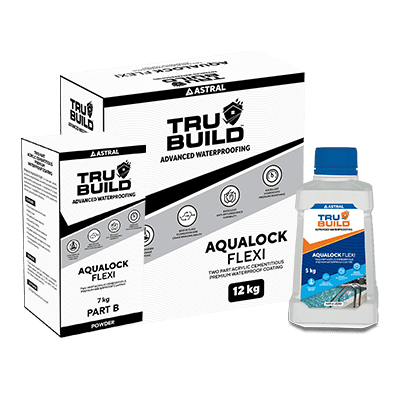
- Flexibility is Key: Rigid coatings crack when clay heaves. You need a flexible, cementitious coating that can stretch and bridge cracks. Products like our Trubuild Aqualock Flexi offer excellent elongation and crack-bridging abilities.
- Pressure Resistance: Since clay traps water, the coating must withstand the weight of the water it traps. Look for solutions with proven resistance to water force against the foundation walls and to prevent seepage even under stress.
Note: In clay soils, waterproofing alone is not enough. Install French drains or weeping tiles around the foundation to direct water away, reducing pressure on the waterproofing membrane.
2. Sandy Soils
Sand drains well, so the force of water against the foundation’s walls is less of a concern. But the speed of water flow brings its own issues.
- Filtration: The fast-moving water can carry fine sand particles into your drainage pipes, clogging them. Using geotextile filters around drains is a smart move.
- Surface Protection: While pressure is lower, dampness is still a threat. A cementitious coating that bonds well to masonry is often sufficient.
3. Loam and Mixed Soils
If your soil is a mix, the ‘better safe than sorry’ approach is best.
- Assess the Dominant Trait: If it feels sticky when wet, treat it like clay. If it feels gritty, treat it like sand.
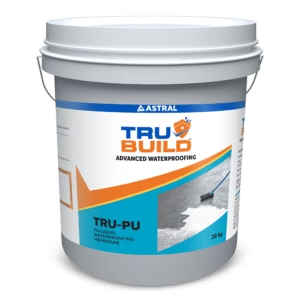
- Universal Protection: In mixed conditions, a flexible, membrane-forming coating is the safest bet. It handles the potential pressure of clay pockets while sealing against the dampness of silt. A system like our Astral Trubuild TRU PU that forms a flexible membrane is ideal for these unpredictable conditions.
Note: For foundations with permanent water immersion or high water tables, consult a waterproofing specialist for the most suitable system.
Common Foundation Waterproofing Mistakes
Even with the right product, application errors can ruin the project.
- Wrong Backfill: After waterproofing, never shove the excavated clay back against the wall. It will expand and damage the new coating. Use gravel or loose soil for the immediate backfill.
- Ignoring Cure Times: Waterproofing layers need time to set. For example, some cementitious coatings require 12 to 24 hours of curing between coats. Rushing this process weakens the barrier.
- Rigid Solutions on Moving Soil: Using a stiff mortar on expansive soil is a recipe for basement foundation waterproofing failure. When the soil moves, the rigid layer snaps. Always opt for materials with elongation properties.
Why Choose Astral Trubuild Solutions for Foundation Waterproofing?
For robust foundation defence, we at Astral Trubuild offer two superior choices.
- Trubuild Aqualock Flexi: It is a two-component, acrylic-modified coating designed for concrete and masonry. It offers excellent resistance to the force of water pushing against your foundation walls. It also provides superior crack-bridging ability, and this makes it suitable for shifting soils.
- Trubuild Tru PU: It is a single-component, bitumen-modified polyurethane membrane. It delivers exceptional elongation and remains permanently flexible. This adaptability creates a seamless barrier that withstands significant structural movement.
Your home’s structural foundation is the anchor of your home. Understanding whether it sits on expansive clay or free-draining sand allows you to armour it correctly. By selecting a method and solution suitable for the soil type, prioritising flexibility and drainage where needed, you can protect your home’s foundation for decades. Do not wait for a leak to remind you of what lies beneath.
FAQ
Does soil type affect foundation cracks?
Yes. Expansive soils like clay swell and shrink, causing movement that can crack foundations if they are not properly protected with flexible waterproofing and drainage.
Which soil needs the most waterproofing protection?
Clay soil generally demands the most robust foundation waterproofing due to its tendency to hold water and exert a high force of water pushing against the foundation’s walls.
Is basement foundation waterproofing necessary in all soils?
Yes. Even in well-draining sandy soil, natural soil moisture and heavy Indian monsoons can lead to dampness. A proper barrier is always required to keep the interior dry.

