
 Concrete and Mortar
 Exterior Waterproofing
 Professional Sealants
 Roof Waterproofing
 Substructure Waterproofing
  Tiling and Grouting
 Water Tanks and Other Areas
  Wet Areas

 Home
HomeImportance of Waterproofing Before Bathroom Tile Installation
May 2, 2026

A freshly tiled bathroom looks beautiful, but what lies beneath those tiles matters just as much as what you can see. Skipping waterproofing before laying bathroom tile installation is one of the most common and costly mistakes made during home construction and renovation in India. The damage does not show up immediately, but within a few months, the signs begin to appear: damp patches on the wall, loose tiles, leakage into the room below, and mould creeping along the grout lines.
Getting this step right from the beginning protects your bathroom, your tiles, and the structure of your home.
Why Is Bathroom Waterproofing Necessary?
A bathroom is one of the wettest spaces in any home. Water splashes on walls, collects on floors and works its way into every gap it can find. Tiles and grout alone are not fully waterproof. They slow the water down, but they do not stop it completely.
Over time, water that seeps through grout lines and tile edges reaches the substrate, the layer of cement, brick or concrete beneath. Once the substrate becomes wet repeatedly, it weakens, swells and begins to deteriorate. This sets off a chain of damage that becomes progressively harder and more expensive to fix.
Waterproofing for bathroom surfaces creates a continuous barrier between the water and the substrate. It is a barrier that tiles and grout simply cannot provide on their own.
Problems Caused by Poor Waterproofing
When bathroom waterproofing is inadequate or missing entirely, the consequences go well beyond a damp smell.
1. Tile Damage
Water that penetrates behind tiles causes the adhesive bond to weaken. Tiles begin to hollow out, crack or pop off the wall entirely. Re-tiling a bathroom because the underlying waterproofing failed is a far more disruptive and expensive job than getting it right the first time.
2. Leakage
Bathrooms on upper floors are particularly at risk. Water that seeps through the floor travels downward and shows up as stains, damp patches or active drips on the ceiling of the room below. In apartment buildings, this type of leakage often leads to disputes between neighbours and significant repair costs for both parties.
3. Mould Growth
Moisture trapped between the tile and the substrate is the ideal environment for mould and mildew. Mould is not just unsightly, it releases spores that affect indoor air quality and can trigger respiratory problems, particularly in children and elderly occupants.
Step-by-Step Bathroom Waterproofing Process
A systematic approach to bathroom water proofing delivers the most reliable, long-lasting results. Here is how it is done:
Step 1: Surface preparation
Clean the substrate thoroughly, remove dust, grease and any loose material.
Repair cracks and gaps: Fill hairline cracks, particularly at wall-floor junctions and around pipe penetrations.
Step 2: Apply primer
A bonding primer improves adhesion between the substrate and the waterproofing product.
Step 3: First coat of waterproofing
Apply an even coat and pay special attention to corners and joints.
Step 4: Reinforce vulnerable joints
Embed a fibre mesh tape at wall-floor junctions and internal corners before the second coat.
Step 5: Second coat of waterproofing
Apply perpendicular to the first coat for complete, uniform coverage
Step 6: Curing time
Allow the waterproofing layer to cure fully before tiling begins; rushing this step undermines the entire process
Step 7: Tile installation
Once cured, proceed with tile adhesive and tile laying.
This sequence applies to both floors and walls in bathrooms, wet rooms and kitchen areas.
Best Waterproofing Solutions for Bathroom Tiles
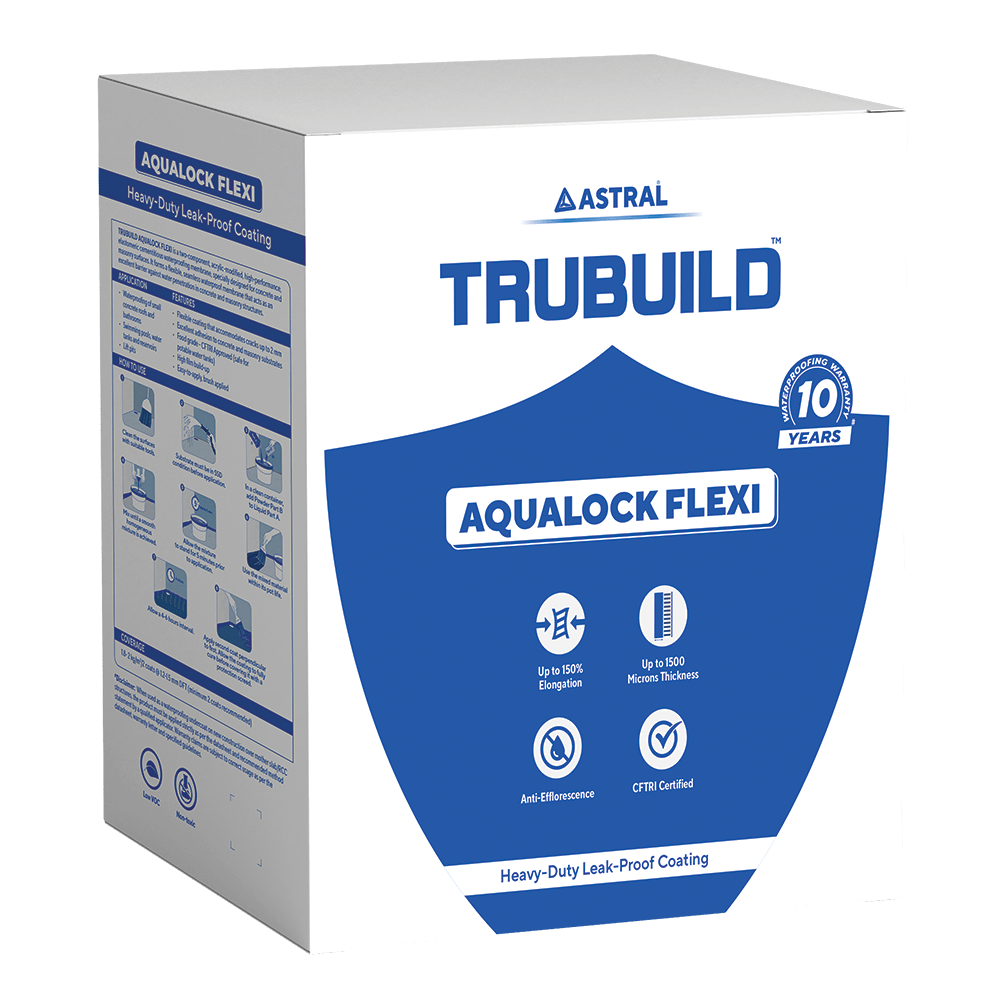
Astral Trubuild offers products specifically suited to wet area waterproofing and bathroom tile preparation.
Trubuild Aqualock Flexi is particularly recommended for bathrooms because it accommodates slight substrate movement, which is common in older buildings, without cracking. Once the waterproofing layer is cured, Trufix tile adhesives bond tiles securely, and Stylo grout products seal the joints to complete the protection system.
Benefits of Waterproof Bathroom Tiles
When waterproofing is applied correctly beneath the tiles, the entire bathroom surface performs at a much higher level.
- Longer tile life: Tiles stay firmly bonded and do not hollow out or crack prematurely.
- No inter-floor leakage: Protects the room below from water damage, especially relevant in multi-storey homes and apartments
- Mould-free surfaces: A dry substrate gives mould and mildew no foothold
- Easier cleaning: Well-sealed grout lines resist staining and discolouration.
- Structural integrity: The wall and floor substrate remain strong and undamaged over time.
- Cost savings: Avoiding re-tiling, replastering and mould remediation saves significant money in the long run
These benefits are not just about aesthetics; they directly affect the health of the building and the people living in it.
Waterproofing before bathroom tile installation is not an optional extra, it is a foundational step that determines how well your bathroom holds up over years of daily use. The right waterproofing product, applied correctly before the tiles go down, prevents a long list of problems that are difficult and costly to reverse.
Astral Trubuild’s tiling and waterproofing range gives you everything needed for a complete, reliable bathroom system, from substrate waterproofing to tile adhesives and grout. Explore the full range at Astral Trubuild.
FAQ
Is waterproofing needed before tiling?
Yes, waterproofing is needed before tiling in any wet area, bathrooms, kitchens, balconies and wet rooms. Tiles and grout are not fully waterproof on their own. Water finds its way through grout joints over time and reaches the substrate, where it causes adhesive failure, mould growth and structural damage. A proper waterproofing membrane applied before tiling prevents all of this and significantly extends the life of the tile installation.
Which waterproofing is best for bathrooms?
For bathrooms, a flexible cementitious waterproofing product like Trubuild Aqualock Flexi is an excellent choice. It bonds well to concrete, brick and cement substrates, accommodates minor surface movement and creates a reliable water barrier before tiles are laid. For areas with higher movement or where long-term flexibility is a priority, it performs better than rigid waterproofing systems. Always follow application guidelines and allow full curing before tiling.

