
 Concrete and Mortar
 Exterior Waterproofing
 Professional Sealants
 Roof Waterproofing
 Substructure Waterproofing
  Tiling and Grouting
 Water Tanks and Other Areas
  Wet Areas

 Home
HomeHow to Protect Exterior Walls from Rain Water
May 5, 2026

India sees some of the heaviest rainfall in the world, and every monsoon season puts exterior walls to the test. Yet most homeowners only notice the damage after it has already set in, peeling paint, damp patches or a musty smell indoors. The good news is that protecting exterior walls from rainwater is straightforward when you know what to look for and what to do about it.
Why Rainwater Damages Exterior Walls?
Exterior walls are constantly exposed to the elements, rain, wind, heat and humidity. Brick and concrete are naturally porous, which means they absorb moisture when rainwater hits the surface.
Over time, this repeated wetting and drying weakens the surface layer, causes paint to lose adhesion and creates conditions for algae and fungus growth. In areas with heavy rainfall, water can even seep through to internal walls, which affects indoor air quality and structural integrity. Without exterior wall waterproofing, even a well-built wall can show visible damage within a few years. Know the way on how to protect wall from rain water, so that you can prevent or repair any damage or issues.
Signs of Rainwater Damage
Catching these signs early can save significant repair costs later.
1. Damp patches
Dark, wet-looking spots that appear or worsen after rain are the most common sign of water seeping through exterior walls. They may fade when dry weather returns, but reappear with every rainfall
2. Efflorescence
White, powdery deposits on the wall surface are caused by water dissolving salts in the masonry and carrying them to the surface as it evaporates. It is a reliable indicator of moisture movement through walls
3. Paint peeling
Moisture trapped beneath paint layers pushes the film outward, which causes bubbles, blisters and eventually flaking. Once paint starts peeling on an exterior wall, the surface beneath is already absorbing water
How to Protect Wall from Rain Water?
1. Exterior Wall Waterproofing
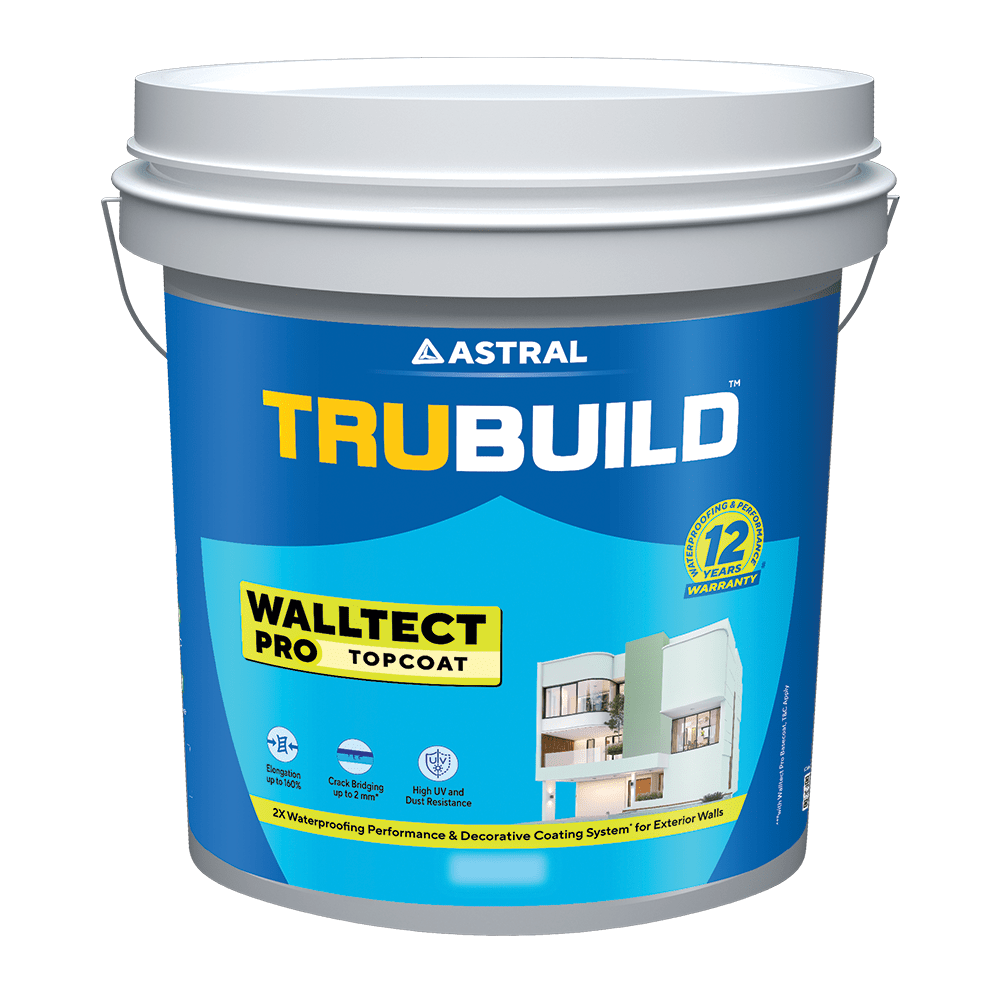
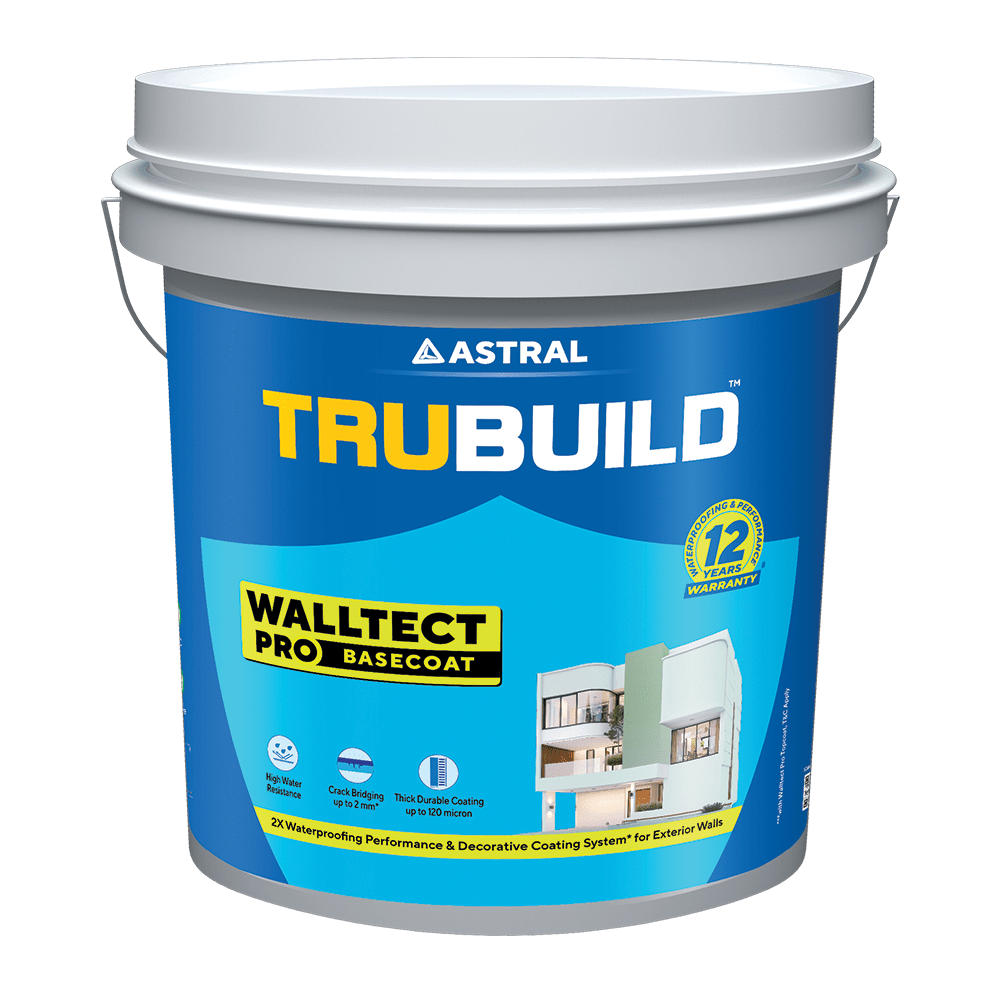
Applying a quality exterior waterproofing coating is the most effective long-term solution. A good waterproofing system includes a primer to prepare the surface, a basecoat for sealing and bonding, and a topcoat for weather resistance and protection. Astral Trubuild’s Walltect Basecoat and Walltect Topcoat for exterior wall waterproofing form a complete two-coat exterior waterproofing system with excellent elongation, UV resistance and fungi resistance, built specifically for Indian climate conditions.
2. Crack Filling
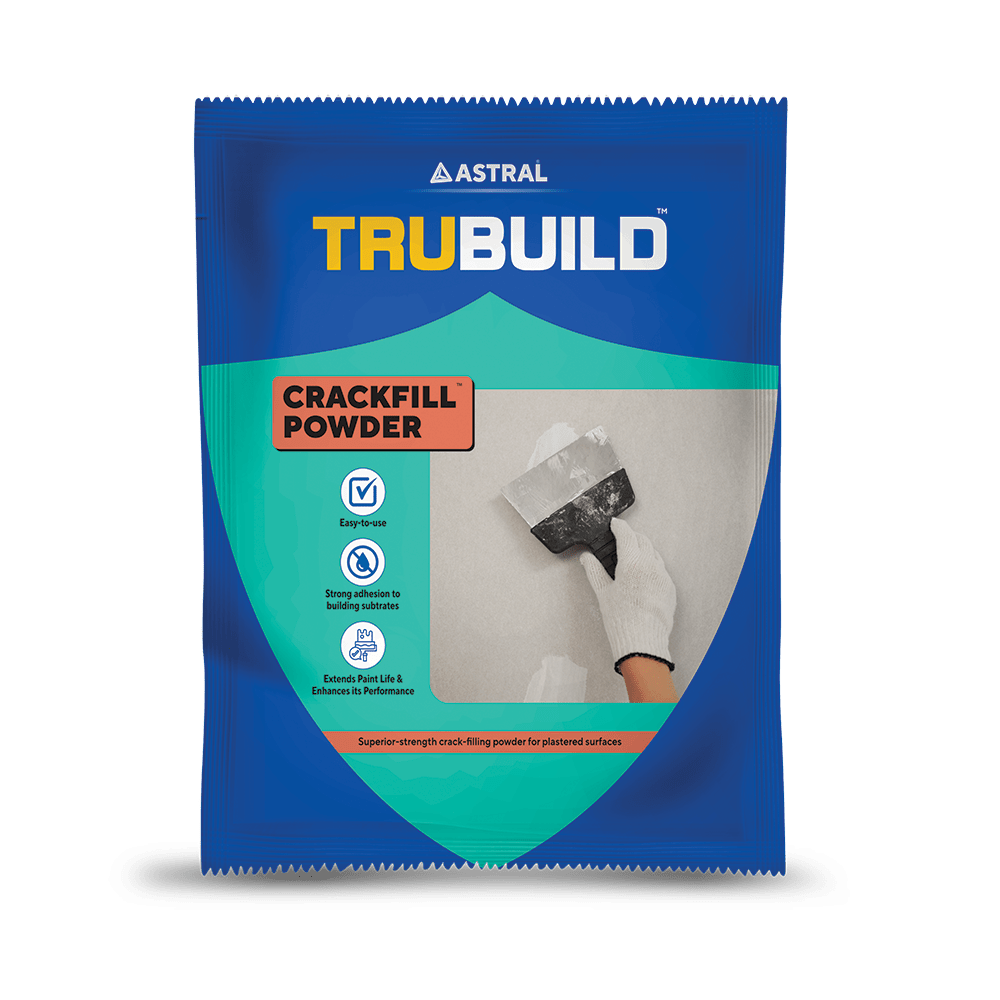
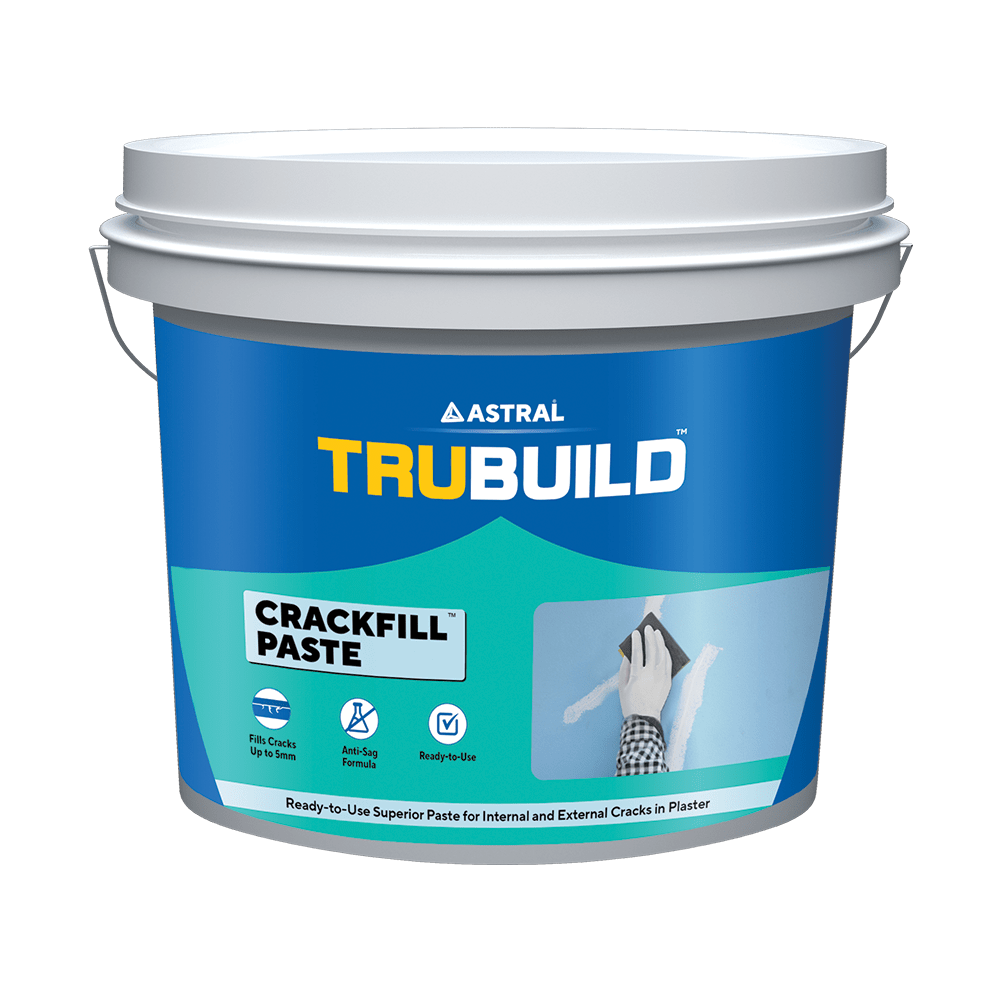
Cracks are the most direct entry points for rainwater. Before applying any waterproof coating, all cracks must be filled. Hairline cracks up to 5 mm should be cut into a ‘V’ groove and filled with a crack filler paste such as Astral Trubuild CFP 425. Larger cracks need a polymer-modified mortar with WPL 333 or BWP 222.
3. Protective Wall Coating
Over and above waterproofing, a protective elastomeric topcoat adds a final layer of defence. Astral Trubuild’s Walltect Topcoat has a crack-bridging ability of over 1 mm and a Solar Reflectance Index (SRI) of 98, reflecting heat and reducing thermal stress on the wall surface, which is a key cause of paint cracking in hot climates like India.
Benefits of Exterior Waterproofing
Investing in wall waterproofing does more than just stop water:
- Prevents damp from reaching internal walls, which reduces the risk of mould and indoor humidity issues
- Extends the life of paint and plaster finishes significantly
- Protects the structural integrity of brick and concrete over the long term
- Reduces maintenance frequency and repair costs across monsoon seasons
- Maintains the appearance and value of the property
Your exterior walls face the rain every single year, giving them the right protection is a one-time investment that pays off season after season. Knowing how to protect wall from rain water helps you to plan the next steps of action, be it a small DIY fix or calling in a professional for work that requires expertise.
Explore Astral Trubuild’s complete range of exterior wall waterproofing solutions at Astral Trubuild.
FAQ
Which waterproofing is best for exterior walls?
An acrylic-based elastomeric waterproofing system works best for exterior walls in India. A two-coat system using Astral Trubuild's Walltect Basecoat and Walltect Topcoat provides excellent waterproofing, UV resistance, crack-bridging and fungal protection, making it well-suited for walls exposed to heavy monsoon rainfall.
Can rainwater seep through walls?
Yes, it can. Brick, concrete and plaster are all porous materials. Without a waterproof barrier, rainwater gradually penetrates the wall surface, especially through hairline cracks, poorly sealed joints or areas where old paint has lost adhesion. Over time, this leads to internal dampness, structural damage and mould growth.

