
 Concrete and Mortar
 Exterior Waterproofing
 Professional Sealants
 Roof Waterproofing
 Substructure Waterproofing
  Tiling and Grouting
 Water Tanks and Other Areas
  Wet Areas

 Home
HomeWhy is Underground Tank Waterproofing Essential for Water Safety
Apr 30, 2026

Access to clean water is a basic necessity for every household in India. Most of us rely on underground tanks to store this precious resource. However, have you ever thought about the structural health of these tanks? If a tank is not properly protected, it can lead to severe health risks and expensive repairs.
Water safety starts with the container itself. Without a robust barrier, groundwater, which often contains harmful pollutants and chemicals, can seep into your storage. Similarly, the water you store can leak out, weakening the foundation of your building. Let us help you understand why a waterproofing solution for an underground tank is a non-negotiable step for every property owner.
Why is the Waterproofing of the Underground Water Tank Important?
The primary reason for underground tank waterproofing is to maintain the purity of stored water. In many parts of India, the water table is high or fluctuates with the seasons. This external water exerts pressure on the tank walls. If there are cracks or pores, this external water, often contaminated with sewage or soil bacteria, enters the tank.
Moreover, concrete is naturally porous. Without a proper waterproofing solution for underground water tank, moisture can travel through the walls. This leads to the growth of algae and fungi, which can cause water-borne diseases. A well-sealed tank acts as a one-way container that keeps the good water in and the bad elements out. It also prevents the corrosion of steel reinforcements within the concrete, which maintains the structural integrity of your home for years to come.
Risks of Poor Waterproofing of Underground Water Tanks
Neglecting the waterproofing of underground water tank can lead to a variety of problems that are hard to fix later.
1. Contamination: Harmful microbes and chemicals from the surrounding soil can mix with your drinking water.
2. Structural Damage: Seepage can cause the concrete to swell and crack, eventually leading to structural failure of the tank and even the building foundation.
3. Seepage into Walls: Water leaking from the tank can rise through the walls of the house via capillary action, causing dampness and peeling paint.
4. High Maintenance Costs: You will find yourself cleaning the tank more often due to rapid sludge and algae build-up.
5. Water Loss: Constant leakage means you are losing water every day, leading to higher utility bills and water scarcity.
Best Waterproofing Solutions for an Underground Water Tank
Choosing the right method depends on the condition of the tank and the specific needs of the structure. Here are the most effective types:
1. Cementitious Waterproofing
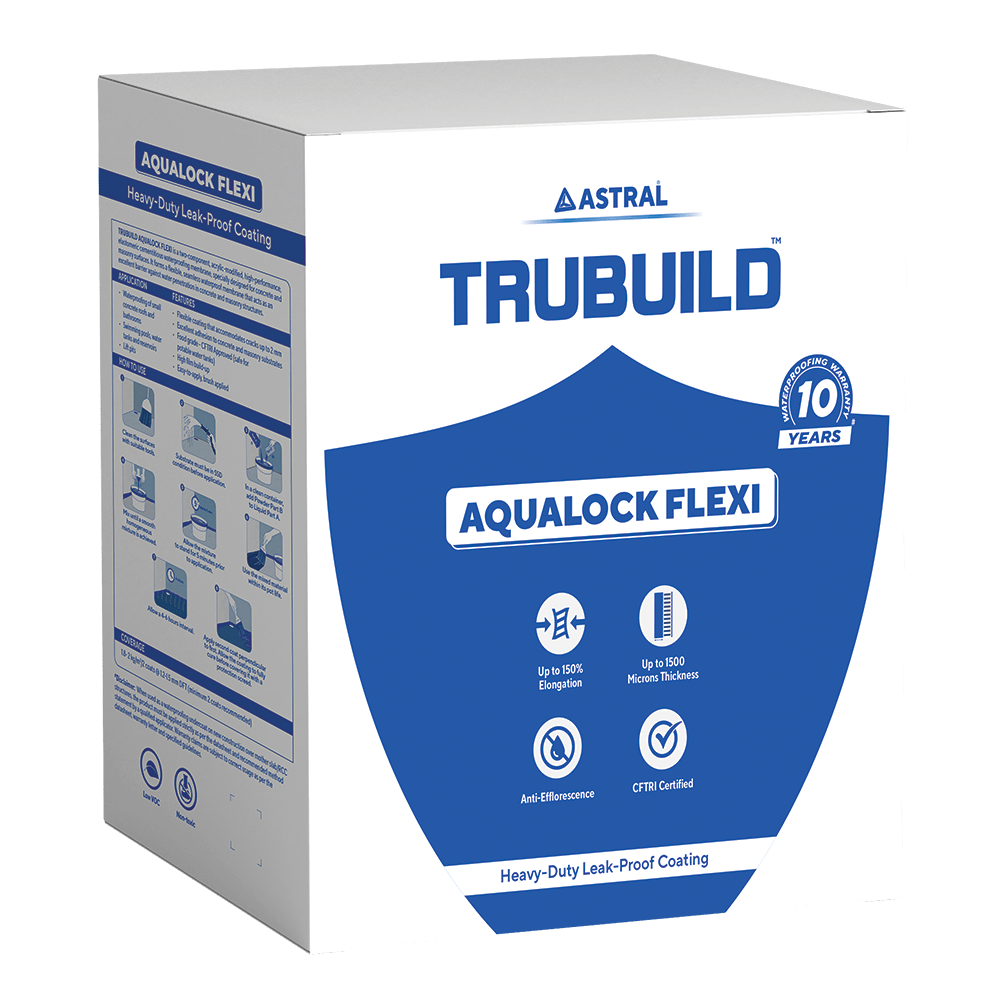
This is a popular choice because it is easy to apply and highly compatible with concrete surfaces. Products like Trubuild Aqualock Flexi fall into this category. It creates a flexible membrane that can withstand hydrostatic pressure from both the inside and outside.
2. Crystalline Waterproofing
This method involves chemicals that react with moisture in the concrete to form insoluble crystals. These crystals block the pores and minor cracks, which makes the concrete itself a water barrier.
3. Liquid Waterproofing
Liquid-applied membranes provide a seamless coating. They are often polymer-modified or epoxy-based. These solutions offer excellent adhesion and can bridge small cracks, providing a durable finish.
How to waterproof an underground water tank?
For a successful waterproofing of underground water tank a systematic approach is necessary:
Step 1: Surface Preparation
The surface must be thoroughly cleaned. Remove all loose particles, dirt, and oil using a wire brush or high-pressure water jet.
Step 2: Repairing Cracks
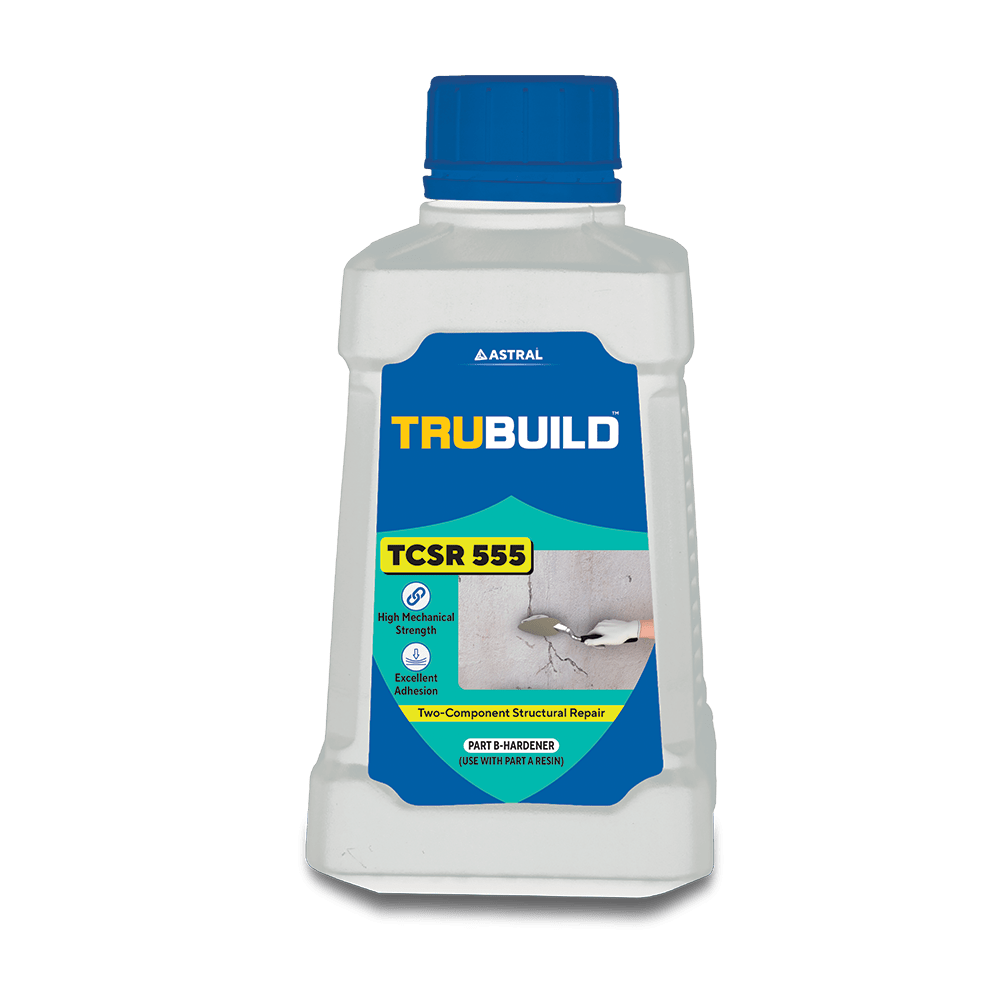
Any existing cracks or damaged areas should be repaired. For structural repairs and bonding old concrete to new, Trubuild TCSR 555 is an ideal epoxy-based system.
Step 3: Mixing
For cementitious coatings, slowly add the powder component to the liquid and mix until smooth. Do not add any extra water.
Step 4: Application
Apply the first coat using a brush or trowel. Ensure even coverage across the entire surface.
Step 5: Second Coat
Once the first coat is dry (usually after 4 to 6 hours), apply the second coat in a perpendicular direction to the first one.
Step 6: Curing
Proper curing is essential. For water retaining structures, wait at least 7 days before filling the tank with water.
Tips for Long-Lasting Waterproofing
- Always choose high-quality, non-toxic products as the water will be used for daily needs.
- Ensure that the corners (junctions) are properly treated with coving to prevent leakage at the weakest points.
- Conduct a ponding test after the coating has fully cured to verify that there are no leaks.
- Regularly inspect the tank for any signs of new cracks or wear and tear.
Why Choose Astral Trubuild’s Waterproofing Solutions for Underground Water Tank?
Astral Trubuild offers advanced technology specifically designed for the Indian climate and construction style. Their products are tested for high performance and reliability.
- Trubuild TCSR 555: This is a two-component, solvent-free epoxy system used for repairing cracked and damaged concrete. It provides excellent adhesion and high mechanical strength. It is an ideal waterproofing solution for an underground water tank.
- Trubuild Aqualock Flexi: This premium acrylic cementitious coating is designed for masonry and concrete surfaces. It forms a flexible, seamless membrane that acts as a powerful water barrier. With its high resistance to hydrostatic pressure and excellent crack-bridging ability, it is the top choice for both positive and negative side waterproofing.
Explore Astral Trubuild for more such waterproofing solutions.
FAQ
Which waterproofing is best for underground water tanks?
A cementitious, acrylic-modified coating like Trubuild Aqualock Flexi is often considered the best because it is flexible, durable, and safe for potable water.
Is cementitious waterproofing safe for drinking water?
Yes, provided it is certified as non-toxic. Trubuild Aqualock Flexi is CFTRI approved and non-toxic, making it safe for tanks storing drinking water.
How long does underground tank waterproofing last?
When applied correctly using high-quality products like those from Astral Trubuild, the waterproofing can last for many years. Regular maintenance and proper initial application are key factors for longevity.

