
 Concrete and Mortar
 Exterior Waterproofing
 Professional Sealants
 Roof Waterproofing
 Substructure Waterproofing
  Tiling and Grouting
 Water Tanks and Other Areas
  Wet Areas

 Home
HomeCommon Roof Waterproofing Failures and How to Avoid Them
Jan 21, 2026

A home is often the biggest investment of a lifetime. Its roof is the primary shield against the elements. However, many homeowners deal with the persistent headache of dampness, peeling paint and structural damage. Roof waterproofing is essential to safeguard a building’s integrity, but it is frequently misunderstood or poorly executed. When waterproofing fails, the consequences are not just aesthetic. They can lead to weakened concrete and health hazards from mould. Understanding why roof waterproofing failures occur is the first step toward achieving a leak-free home.
What is Roof Waterproofing?
Roof waterproofing is the process of creating an impermeable barrier over a roof surface. This barrier prevents water ingress into the building structure. The process involves applying specialised membranes or liquid coatings that seal the substrate. A successful system does not just block water, it also manages UV exposure, thermal expansion and drainage to keep the roof bone-dry despite heavy rains.
Common Roof Waterproofing Failures
Even with the best intentions, waterproofing often falls short. Here are the most common reasons for waterproofing failure:
1. Poor Surface Preparation
This is the number one cause of waterproofing failure. If the roof is not cleaned of dust, oil and loose debris, the waterproofing material will not bond correctly and it could lead to peeling. Think of it like painting over dirt. No matter how good the paint, it will not stick. The substrate needs to be free from contaminants for the membrane to adhere properly.
2. Cracks in Roof Slab
Structural or settlement cracks that are not treated with specialised crack fillers before the main coating is applied will eventually telegraph through the waterproof layer. These cracks allow moisture to seep through the slab. They need to be filled, not just covered.
3. Wrong Waterproofing Material Selection
Using a standard waterproof paint for an area with standing water or high foot traffic is a recipe for disaster. Different roofs: flat, sloped or green roofs require specific chemical compositions. A cementitious coating might work for a terrace with good drainage, but a liquid membrane is better for flat roofs prone to water pooling. Choosing the wrong product means the system will fail prematurely, sometimes within the first monsoon season.
4. Improper Application Thickness
Thin coats fail to provide a barrier and the excessively thick layers can crack during the drying process. Precision in DFT (Dry Film Thickness) is vital. Manufacturers specify application rates for a reason. Applying too little means inadequate protection. Applying too much waste material and create brittleness. Both scenarios lead to waterproofing failure.
5. Inadequate Drainage Slope
If the roof does not have a proper slope (at least 1:100), the water accumulates. No waterproofing material is designed to withstand permanent submersion unless specified. Standing water puts constant pressure on the membrane and breaks it down over time. To fix this, drainage is half the solution, and waterproofing is the other half.
How to Avoid Waterproofing Failure?
Avoiding roof waterproofing failures requires a shift from ‘patchwork’ thinking to a ‘systemic’ approach. First, the substrate must be cleaned. Always treat joints and corners with extra care. They are the most vulnerable points for leaks.
Secondly, choose products based on the local climate. For instance, in areas with high temperature fluctuations, an elastomeric coating is necessary to move with the building’s thermal expansion. The Indian climate is harsh, with scorching summers followed by torrential monsoons. Your roof waterproofing solution needs to handle both extremes.
Finally, always hire certified applicators. Roof waterproofing is a technical skill. Even the best roof waterproofing solution will fail if the mixing ratios or curing times are ignored. Professionals understand surface preparation, application techniques and quality control.
Best Roof Waterproofing Solution: Astral Trubuild
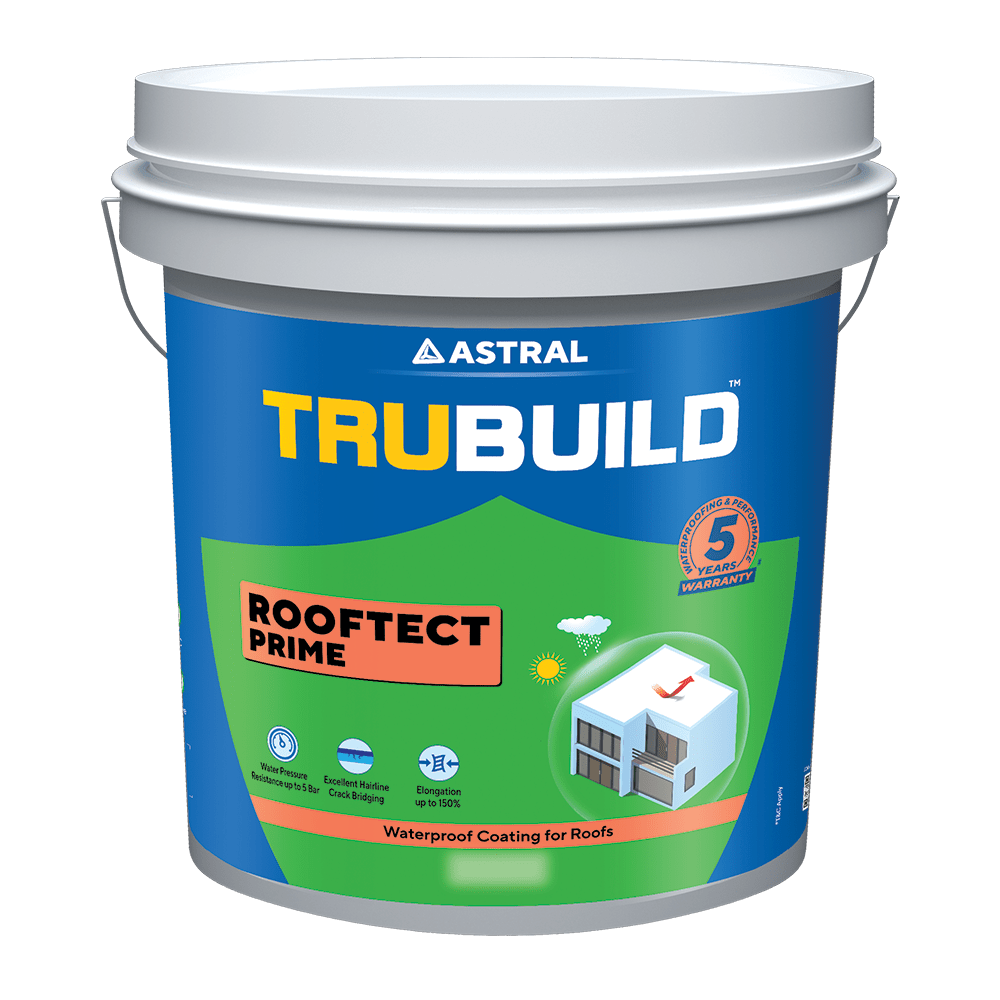
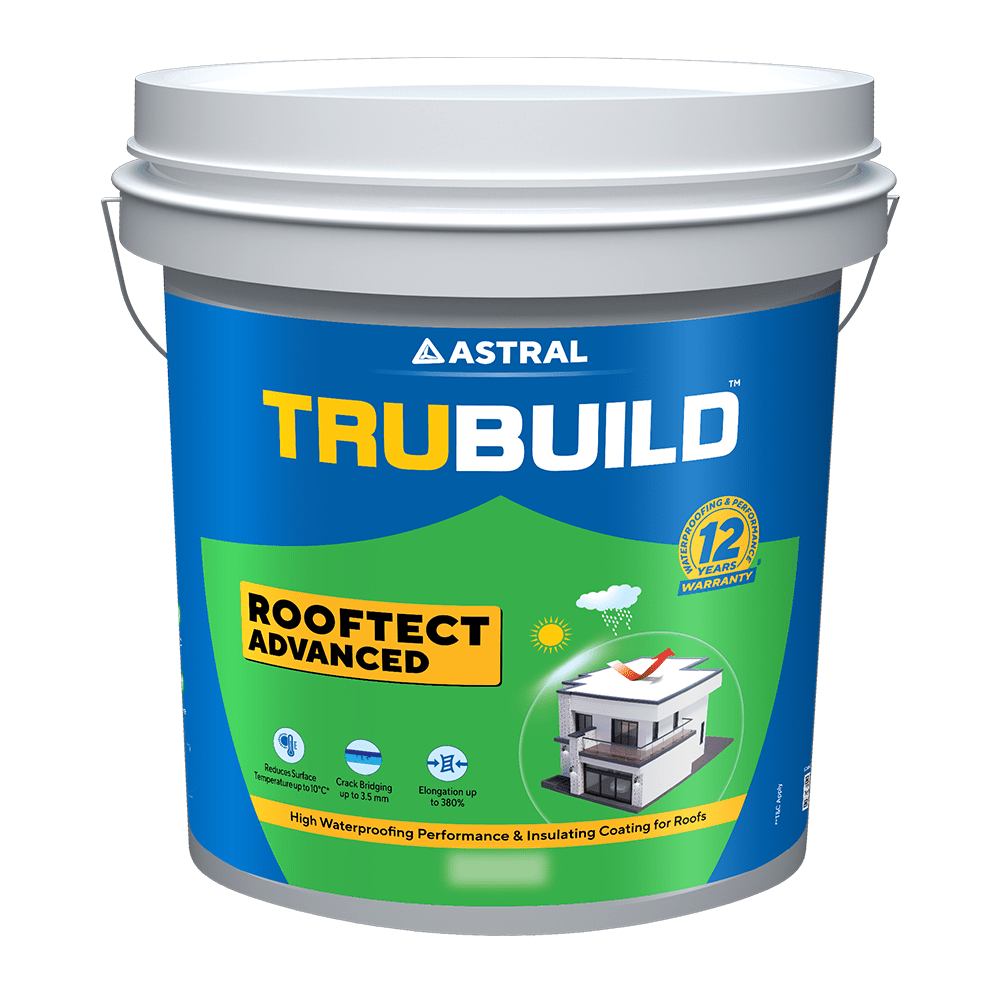
For long-term protection, Astral Trubuild offers some of the most advanced solutions in the Indian market. Our range includes products like Rooftect Pro, Rooftect Advanced and more.
Trubuild Rooftect Advanced: This is a single-component waterproofing system. The product offers superior UV resistance, excellent weather resistance and fast drying properties. Ideal for brick bat coba, sloped roofs, flat roofs, cement mortar screed and tile-embedded RCC surfaces, Rooftect Advanced delivers comprehensive protection for terraces, balconies and external surfaces exposed to water.
Trubuild Rooftect Pro: This solution is a high-performance roof acrylic coating specifically formulated for roof rehabilitation projects. It offers excellent UV resistance and flexibility. This solution is suitable for roofs exposed to harsh sunlight and temperature fluctuations common in Indian climates.
At Astral Trubuild, our waterproofing solutions are engineered to bridge cracks and withstand the harsh Indian monsoon, ensuring your roof stays protected for years without the need for frequent repairs. These products combine flexibility, UV resistance and strong adhesion to deliver the best roof waterproofing solution that actually works.
Waterproofing is an important structural requirement. By focusing on proper surface preparation, choosing the right materials like those from Astral Trubuild and building effective drainage systems, you can avoid the cycle of temporary fixes and enjoy a durable, leak-proof home.
FAQ
What is the main reason for waterproofing failure?
Inadequate surface preparation and the lack of proper slope are the primary reasons systems fail prematurely.
How long does roof waterproofing last?
Depending on the material used (bituminous vs PU/acrylic), a good system can last between 5 to 15 years with proper maintenance.
Can old roofs be waterproofed again?
Yes, but all old, failing layers must be scraped off to reach the base concrete before applying a new system.
Which waterproofing is best for terraces in India?
Polyurethane (PU) or advanced elastomeric coatings are best for terraces in India due to their ability to handle extreme heat and heavy rainfall.

