
 Concrete and Mortar
 Exterior Waterproofing
 Professional Sealants
 Roof Waterproofing

 Substructure Waterproofing
  Tiling and Grouting

 Water Tanks and Other Areas
  Wet Areas

 Home
HomeDifferent Types of Wall Cracks and What They Indicate
Nov 22, 2025

Wall cracks are a common concern faced by homeowners. With India’s varying weather, construction methods and the passage of time, it is normal to spot cracks in walls. The cracks are sometimes small, sometimes wide and sometimes growing. These cracks leave you wondering if a minor cosmetic fix will do or if there is a larger issue requiring urgent attention.
If you have ever spotted a line curving across your living room wall or seen a stair-step pattern near the windowsill, you should figure out the right solution to fix it. Many seek clarity on the reasons behind these cracks, types of wall cracks to watch out for and how best to approach wall crack repair with lasting results. This guide simplifies all those doubts, offering easy explanations and trusted repair tips for Indian homes.
What Causes Wall Cracks?
Understanding why cracks appear in walls helps you address the problem more thoroughly. Common reasons include:
- Changes in temperature and humidity can cause material expansion or contraction
- Poor construction materials or the methods, including improper curing
- Seepage and dampness because of faulty waterproofing
- Natural settlement of a new building
- Vibrations from nearby construction or traffic
- Age of the structure and regular wear over time
Spotting a crack early and knowing what caused it can help with quick, cost-effective repairs. The wall crack repair also helps maintain the safety and appearance of your home.
Types of Wall Cracks and What They Indicate
Identifying different types of wall cracks helps you decide when to repair and when to contact an expert.
1. Hairline Cracks
- Very thin lines, typically less than 1 mm wide
- Common in new constructions or after plaster dries
- Usually harmless and easy to repair
- Often due to shrinkage or minor temperature changes
2. Vertical Cracks
- Run straight up and down, often from the floor towards the ceiling
- May occur due to minor settlement or expansion
- If very wide or growing, there may be an underlying structural issue
3. Horizontal Cracks
- Run across the wall, parallel to the floor
- It can be caused by pressure from soil or damp conditions
- In load-bearing walls, these cracks may require immediate attention
4. Diagonal Cracks
- Appears at an angle and spreads from the door or window corners
- May signal foundation shifting or structural movement
- Widening cracks here need professional evaluation
5. Stair-Step Cracks (in Brick Walls)
- Follow the mortar line in a stepped pattern
- Usually seen in external brick walls
- Indicates movement or settling, particularly in older buildings
6. Settlement Cracks
- Appear as the building settles over time
- Can be vertical or diagonal
- Common in newly constructed houses and often settle on their own
7. Cracks Near Doors and Windows
- Often start at the edge of frames
- Usually, due to the structure settling or improper lintel placement
- Repairing early limits further spreads
8. Ceiling-Wall Joint Cracks
- Found where the ceiling meets the wall
- Caused by movement between the slab and masonry
- Monitoring is essential, especially if cracks widen with time
How to Diagnose the Severity of Wall Cracks?
Not every crack needs urgent repair but an informed assessment helps you to prioritise the needed actions.
Step 1: Measure width
Hairline cracks (<1 mm) are generally cosmetic. Structural cracks or those above 5 mm may need professional repair.
Step 2: Monitor progression
Mark the ends of the crack with a pencil and check after a week. If it grows, take timely action.
Step 3: Note pattern
Vertical cracks are usually less worrisome. Diagonal or horizontal ones may signal deeper concerns.
Step 4: Check moisture
Look for damp patches or peeling paint near the crack. It is a sign that water seepage is adding to the problem.
Step 5: Consider building age
Cracks in a new house may settle over time but the sudden cracks in old structures can signal wear or water ingress.
Wall Crack Repair: Best Solutions
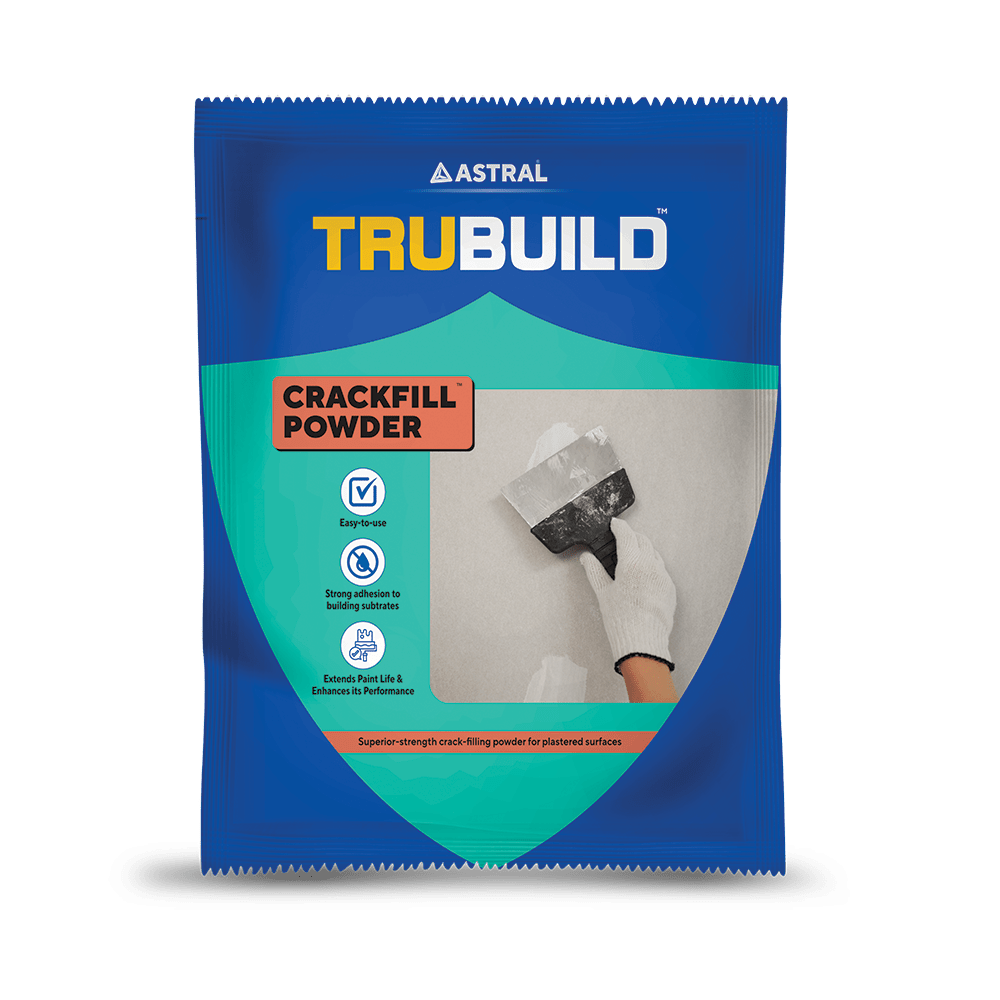
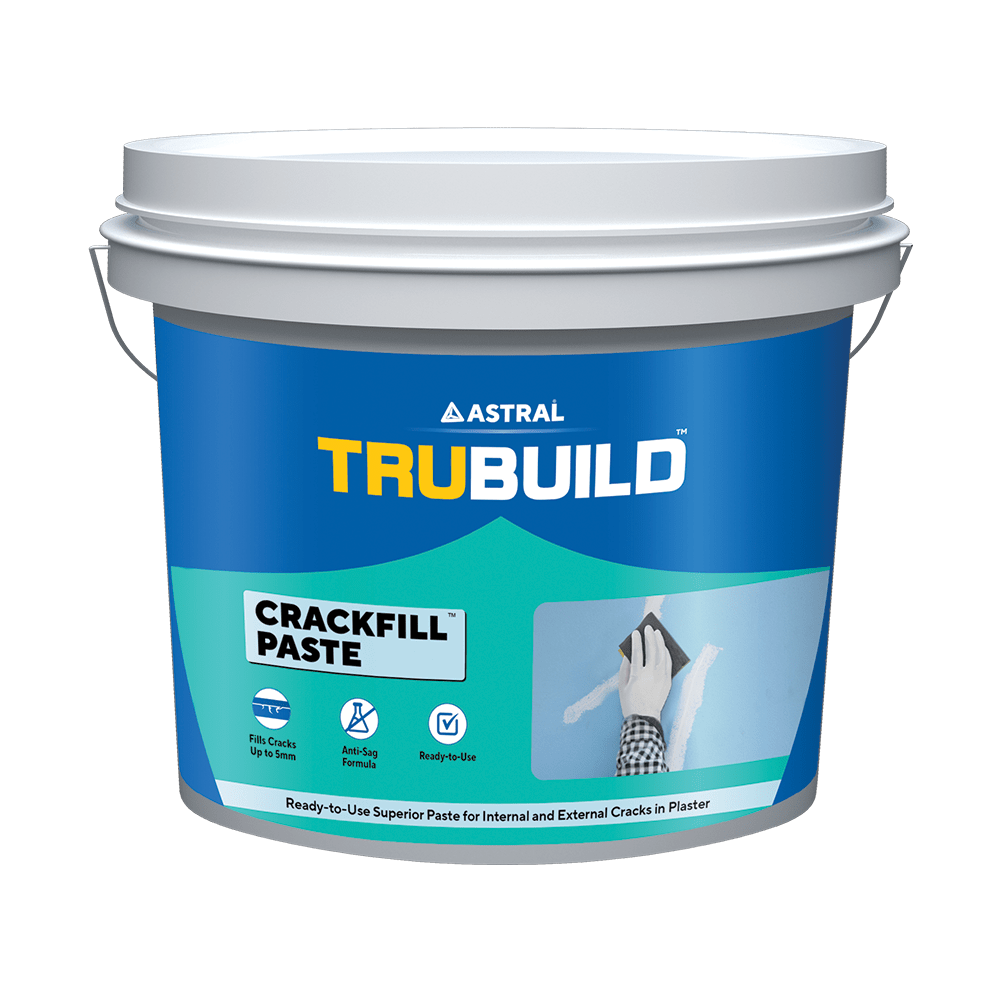
Repairing wall cracks early can keep your home safe and improve its appearance. Astral Trubuild’s CFP 425 crack filler is made for filling and repairing cracks. Here’s how it works:
- Clean and prepare: Scrape off loose material and dust from the crack area.
- Choose the right filler: For cracks up to 5 mm, Trubuild CFP 425 works well. It comes ready to use and it does not sag. It bonds strongly on both internal and external plastered brick masonry walls.
- Apply with a putty knife: The paste spreads smoothly. It is flexible enough to accommodate minor wall movement without cracking again.
- Suitable for Indian climate: The wall crack repair solution has low VOC, is water-based, can be applied on damp surfaces (as long as there is no running water in the crack). It resists UV rays and changing weather conditions.
- Paint friendly: Once dry (after 24 hours), it can be painted over with any polymer-based paint. This keeps your walls looking new.
FAQ
Are wall cracks normal in a new house?
Yes, minor wall cracks, especially hairline cracks, often appear in newly built homes as the structure settles. These are usually harmless and can be repaired with suitable fillers.
Can waterproofing fix wall cracks?
Waterproofing can help manage dampness but cracks need to be filled before applying waterproofing paint or coatings. Ignoring cracks may lead to seepage problems.
What is the best product for wall crack repair?
For cracks up to 5 mm in plastered masonry, a flexible acrylic-based filler like Trubuild CFP 425 gives reliable and lasting results, even in changing Indian weather conditions.

