
 Concrete and Mortar
 Exterior Waterproofing
 Professional Sealants
 Roof Waterproofing
 Substructure Waterproofing
 Tiling and Grouting
 Water Tanks and Other Areas
 Wet Areas


 Home
Waterproofing Checklist for Indian Homeowners
Sep 5, 2026

At a Glance:
Waterproofing problems rarely appear overnight.
They usually begin as small cracks or blocked drainage points that worsen over time. Water slowly makes its way into the structure and by the time you notice peeling paint or a stain on the ceiling, the damage has generally been accumulating for some time.
That is why a seasonal waterproofing check helps identify these issues before the monsoon arrives.
Over time, sun, rain and the daily heating/cooling of the slab wear down the terrace coating and cause existing cracks to grow larger. Thus, allowing the surface to be open to leakage.
A fresh coat alone will not resolve the issue. You must first determine where water is entering and what areas require repair, and only then can you select a product that is appropriate for the condition of the surface.
So, what should you check prior to the arrival of the rains? Let’s take a look at a practical waterproofing checklist for Indian home owners.
5 Key Waterproofing Checks to Complete Before the Monsoon
Begin by checking the areas that receive the most rain, heat and movement. These areas include: the terrace, drainage outlets, external walls and joints. A thorough inspection now can significantly reduce the amount of repair work required later.
-
Inspect the Terrace for Cracks and Damaged Coatings
Walk across the terrace on a dry day and examine the surface closely. Look for cracks, loose plaster, damaged screed and areas where the existing waterproofing layer has worn away.
A small crack may not appear to be much. However, heat, rain and daily movement can cause it to expand over time. Once water enters the slab, it frequently appears as a damp ceiling in the room below.
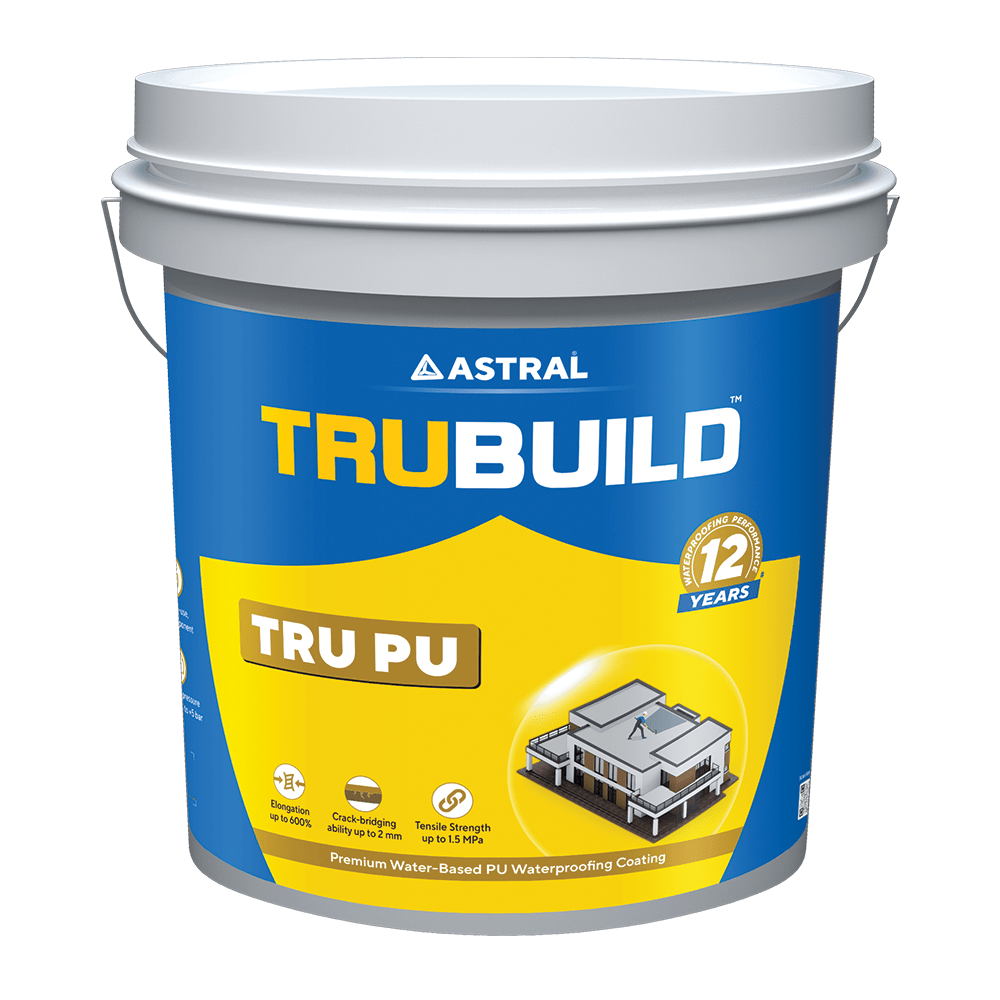
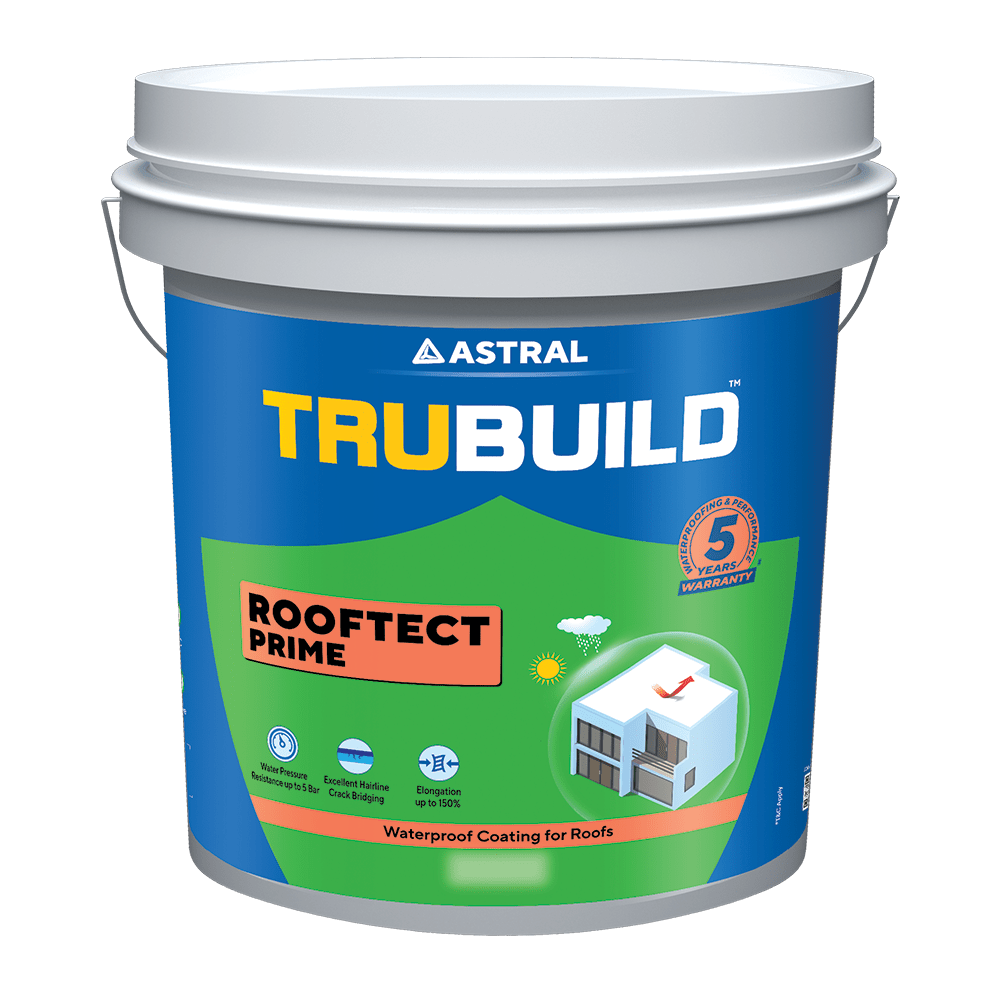
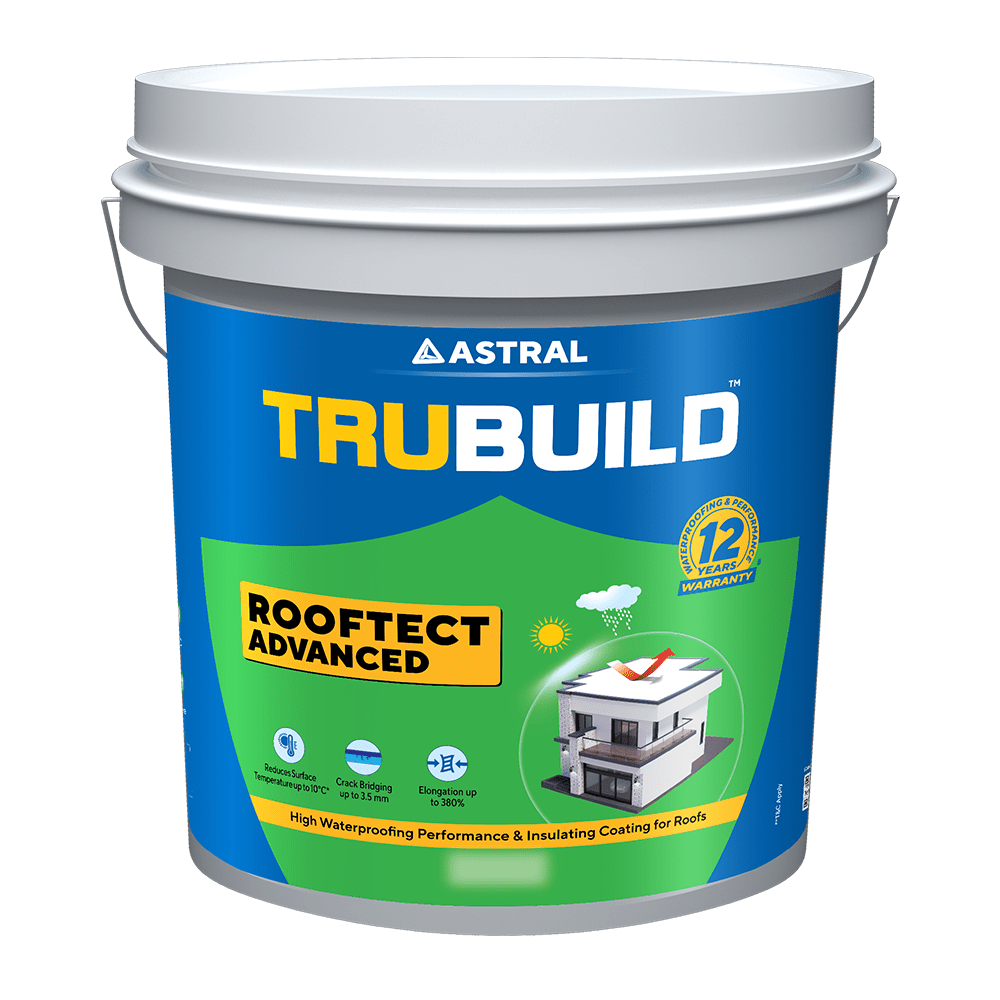
Older terraces require a flexible solution as opposed to a rigid repair. For example, Trubuild Rooftect Advanced is a single-component PU-acrylate elastomeric coating that creates a seamless membrane and can bridge cracks up to 2 mm.
-
Check Roof Drains and Water Outlets
Sometimes the problem is not the terrace surface itself. It is the drainage.
Leaves, plastic bags, dirt and construction dust can clog drains within a single season. When water cannot quickly exit, it collects in low areas and slowly makes its way through weak areas.
Before the monsoon:
- Remove leaves, plastic, dirt and construction debris from drains.
- Ensure that the outlet grills are secured and not blocked.
- Water should flow towards the outlets instead of collecting in low areas.
- Look for silt build-up around the edges of drains.
- Verify that downpipes are not clogged or disconnected.
Standing water places constant pressure on the terrace and can accelerate the wear of coatings. So, a terrace should have some slope near the outlets to help drain the water quickly.
-
Identify Damp Walls and Ceiling Stains
Seepage often becomes apparent indoors before you can identify the source outdoors. Inspect the rooms located below the terrace, particularly bedrooms, bathrooms and walls that receive heavy rain.
Watch for yellow or brown ceiling stains, bubbling paint, flaking plaster and damp patches that grow after rain. A damp odor in a closed room can also serve as a clue.
Do not merely repaint the stain. Determine whether moisture is entering through the terrace, a cracked external wall, a bathroom leakage point or a poorly sealed joint.
Exterior walls require protection from rain, while bathrooms and kitchens require a flexible waterproofing membrane beneath the tiles.
-
Seal Critical Joints and Cracks
Joints are common entry points for water due to the fact that different materials expand and contract at varying rates.
You should be inspecting these areas carefully:
- Pipe penetrations through the terrace or walls.
- Parapet wall joints.
- The junction where the roof meets the walls.
- Expansion joints and construction joints.
- Edges surrounding the drains.
First, remove dust, loose material and old sealant. Then use a flexible sealant for moving joints. A good sealant remains elastic and prevents water from entering as the building expands and contracts.
-
Choose the Right Waterproofing Solution
The appropriate product is dependent upon the surface and its condition. A new terrace, an old cracked roof, a bathroom and an external wall do not experience the same moisture problem.
First, identify the area you wish to treat. Then check for cracks, damp patches or damaged plaster. This will assist you in determining whether you require a flexible coating, a cementitious membrane or a repair mortar.
Also read the product details before buying. Verify where it can be applied, how many coats it requires, and how long it takes to dry and cure.
| Surface condition | Suitable approach |
| New roof or terrace | Flexible liquid-applied membrane |
| Older terrace with cracks | Elastomeric coating with crack-bridging |
| Exterior walls with dampness | Waterproof wall coating system |
| Bathroom, kitchen or concrete surface | Two-component cementitious membrane |
| Repair of old slabs and terraces | Polymer-modified repair mortar |
How Should You Apply Waterproofing?
Even a quality product will not function well on a dirty or damaged surface. Therefore, preparation is just as important as the coating itself.
Step 1: Prepare the Surface First
Begin by removing dust, oil, dirt, and any flaking old coating. Damaged plaster or spalled concrete should also be repaired.
The repair method is dependent upon the size of the crack. Small cracks, typically up to 5 mm, can be opened into a V-groove and filled. Wider cracks may require a polymer-modified mortar repair, while moving joints should be sealed with a flexible sealant.
Cementitious coatings adhere best to a damp surface without standing water. This state is referred to as saturated-surface-dry.
Step 2: Apply the Coating in Layers
A single thin coat often results in weak spots, particularly near corners, drains and pipe penetrations. Most liquid systems therefore require at least two coats.
Allow the first coat to dry as directed by the manufacturer. Then apply the second coat in the opposite direction to cover any missed areas.
Step 3: Allow Enough Curing Time
Curing is the phase that many home owners rush. The coating requires sufficient time to develop strength and adequately resist water.
You should not walk on the surface, apply screed or test it with water too quickly. Adhere to the curing period specified by the manufacturer. Some cementitious coatings also require light moist curing during this phase.
A properly cured coating forms a continuous barrier. If you rush it, the membrane may not perform as anticipated.
What Mistakes Should Homeowners Avoid?
Many waterproofing issues arise from avoidable errors during inspection or application.
Treating only the stain is one such error. A ceiling patch indicates where water emerged, not where it entered.
Ignoring hairline cracks is another common error, particularly when they are located near parapets or drains.
Some homeowners apply the same product to every surface, and that rarely works. Roofs, bathrooms, external walls and joints experience different conditions.
Dirty surfaces are yet another issue. Dust and loose material inhibit proper adhesion. And applying screed or walking on a coating before it cures can damage the membrane.
If water continues to enter despite minor repairs, or if the dampness is spreading across floors, get a professional assessment before initiating repairs.
Quick Waterproofing Checklist
Use this list prior to every monsoon to ensure no errors are made:
- Inspect the terrace for cracks and damaged coatings.
- Clear all roof drains, outlets and downpipes.
- Verify whether the water is pooling after rain.
- Look for damp walls, peeling paint and ceiling stains.
- Inspect pipe penetrations, parapets and roof-wall joints.
- Repair cracks before you apply any waterproofing coat.
- Select a product appropriate for the surface and exposure.
- Follow surface preparation, coating and curing instructions.
- Reinspect after the first heavy rain.
Conclusion
Waterproofing is most effective when it is preventive. Inspect the terrace, maintain clear drains, monitor for damp patches and seal the joints where water typically enters.
A seasonal check can prevent minor defects from developing into major repairs. If your inspection reveals cracks, damp walls or a worn terrace coating, select a solution specifically designed for that surface.
Astral Trubuild provides waterproofing solutions for roofs, walls, wet areas and repair applications. Review the range or consult with a Trubuild expert to identify the appropriate product for your home.
FAQ
How often should we check the terrace for leakage issues?
You should inspect your terrace at least once per year prior to the start of monsoon season; and again after the end of monsoon season. You should also inspect your terrace after any major storm, any renovation work, and whenever a new stain develops on your ceiling.
Can I apply a coating directly over existing cracks?
No, you must fill the cracks first, particularly if they are wide. A flexible coating may be used to bridge small movements in the crack, however, it should not be used as a substitute for proper crack repair.
What are the early indications of seepage in a home?
Damp patches, peeling paint, discolored ceilings, bubbling plaster and a musty odor are all common indications. It is possible that moisture will be found at some distance from the actual point of entry.
Is treatment necessary for external walls?
Yes. External walls are subjected to rain, temperature fluctuations and dust. Treatment with protective coatings helps prevent moisture from entering into the wall and protects the wall surface from damage caused by weather.
Which parts of my home need the most protection?
Terraces, roofs, balconies, bathrooms, kitchens, basements and external walls are the most susceptible. All of these areas are continuously exposed to either water or moisture.
Do I need to hire a professional to treat my terrace?
Homeowners can perform routine cleaning and inspections. However, for widespread cracking, repeated leakage, structural damage or for full terrace treatment, a trained applicator can provide the best results through proper preparation and application.
