
 Concrete and Mortar
 Exterior Waterproofing
 Professional Sealants
 Roof Waterproofing
 Substructure Waterproofing
  Tiling and Grouting
 Water Tanks and Other Areas
  Wet Areas

 Home
HomeRe-Waterproofing Old Buildings Before Monsoon: When and How to Do It
Apr 11, 2026

Every year, as the monsoon approaches, thousands of Indian homeowners discover the same thing: the waterproofing on their building has quietly given up. A damp patch here, a hairline crack there, paint bubbling on the ceiling. These are not small cosmetic issues. Left unaddressed, they become costly structural problems.
The good news is that re-waterproofing an old building is entirely manageable, provided it is done before the rains arrive. This guide covers the warning signs to look for, the right building waterproofing solutions for different areas, and a clear step-by-step process to get the job done properly.
When Should You Re-Waterproof a Building?
Most waterproofing systems last between 5 and 10 years, depending on product quality, application and exposure. If your building is approaching or past that window, a pre-monsoon inspection is a good starting point.
Look out for these tell-tale signs:
- Damp or wet patches on walls and ceilings, particularly after rain
- Cracks visible on the roof, terrace or external walls
- Paint peeling, bubbling or turning chalky (efflorescence)
- Musty smell inside rooms, often a sign of hidden moisture
- Water seepage around window frames, door frames or bathroom areas
- Leaking or damp basement walls
If two or more of these signs are present, it is time to take action. Waiting until the rains begin will only make the process harder and the damage worse.
What Happens If You Ignore Building Waterproofing?
Skipping or delaying building waterproofing is one of the most expensive decisions a property owner can make. Water is persistent. Once it finds a way in, it spreads.
- Structural reinforcement (steel rebar) begins to rust when exposed to moisture, weakening the concrete over time
- Mould and mildew grow in damp areas, affecting air quality and posing health risks
- Interior finishes, flooring and paintwork deteriorate quickly
- Repair costs multiply. A crack that costs a few hundred rupees to seal today can require structural work worth lakhs if left for another monsoon season
Pre-monsoon re-waterproofing is not just maintenance. It is an investment in the longevity of the building.
Essential Waterproofing Solutions for Old Buildings
Selecting the right waterproofing solutions for aging structures depends on the location and the severity of existing damage. Effectively addressing leaks requires a strategic approach using modern materials that handle structural movement.
Types of Building Waterproofing
1. Cementitious Waterproofing
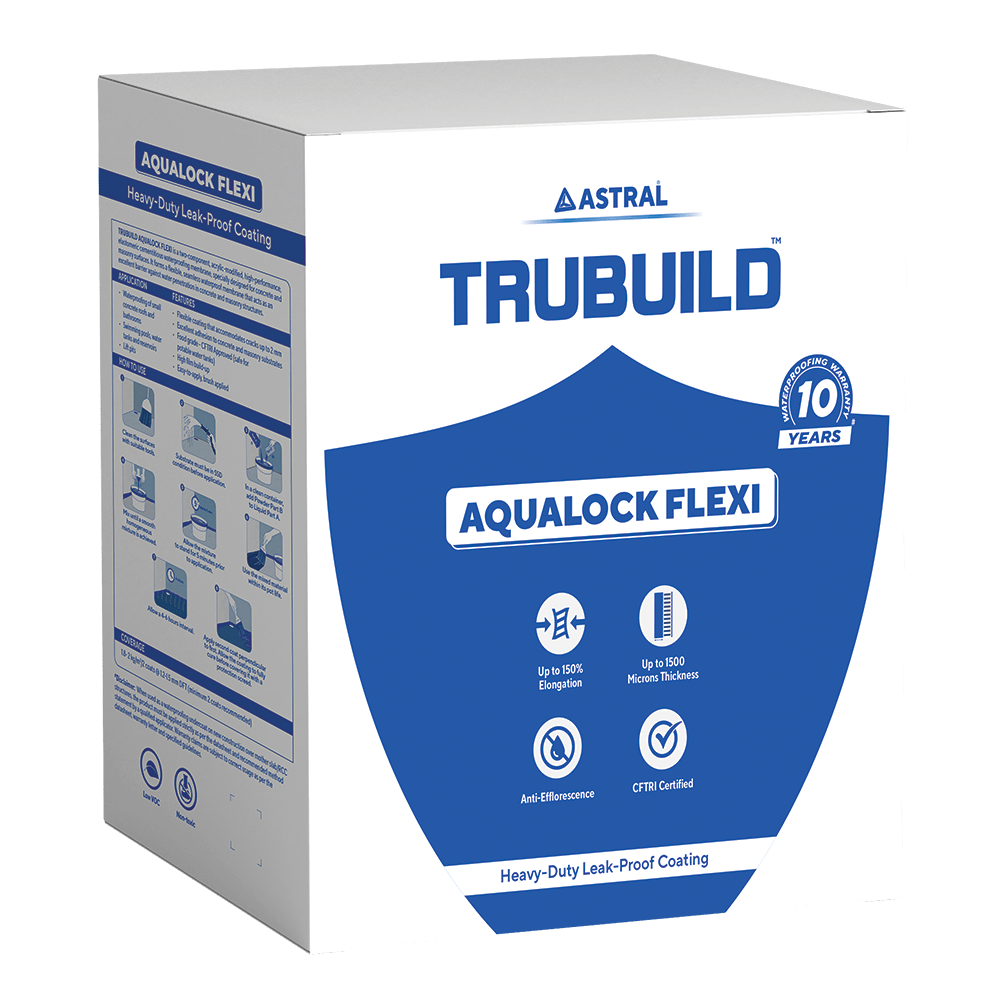
This cement-based coating, often mixed with acrylic polymers, bonds to masonry and concrete. It works on both damp surfaces and under pressure. For example, Astral Trubuild Aqualock Flexi offers over 150% elongation and bridges cracks up to 2 mm, making it ideal for basements, water tanks, and wet areas.
2. Liquid Waterproofing Membrane
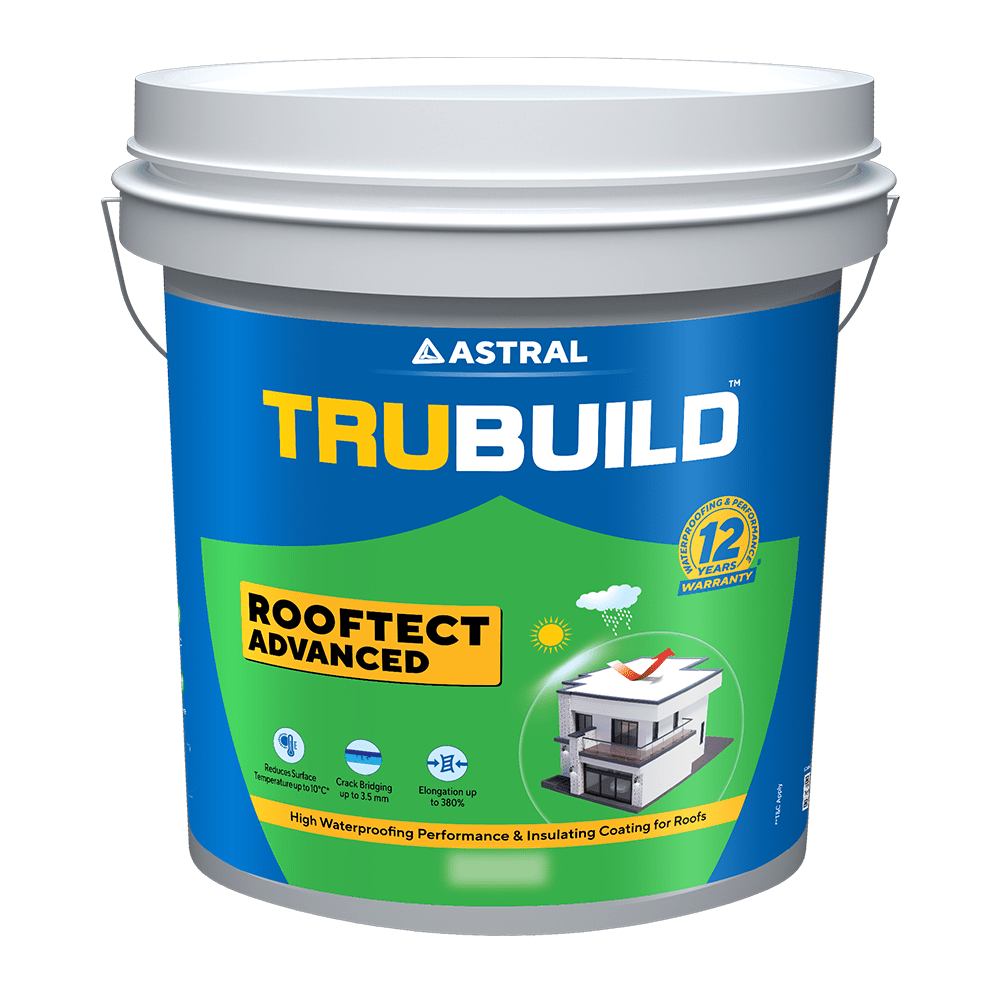
Applied as a liquid that cures into a seamless, rubber-like barrier, this is perfect for complex roof shapes. Trubuild Rooftect Advanced (PU acrylate-based) or the fibre-reinforced Rooftect Pro provide high elongation (up to 350%), essential for expanding and contracting terraces.
3. Elastomeric Wall Coating
These thick, paint-like coatings protect exterior facades. Trubuild WPC 666 offers UV stability and high flexibility, acting as a shield against rain-driven moisture.
How to Re-Waterproof an Old Building Step-by-Step?
A successful building waterproofing project relies on meticulous execution. Skipping steps, especially preparation, leads to premature failure.
Step 1: Inspection & Clearing
Identify cracks and damp patches. Mechanically remove all old, flaking coatings. Applying new material over a failing layer is a guaranteed recipe for leaks.
Step 2: Crack Repair
Cut cracks into a V-groove. Use Trubuild CFP 425 for cracks under 5 mm, and polymer-modified mortar (WPL 333) for larger gaps. Create angle fillets at wall-to-slab junctions to ensure continuity.
Step 3: Priming
For cementitious waterproofing, achieve a Saturated Surface Dry (SSD) condition. For liquid membranes, apply a self-priming coat (diluted 50%) and dry for 6 hours.
Step 4: Application
Apply at least two coats perpendicularly to ensure uniform coverage.
Step 5: Curing
Cementitious products require moist curing, while liquid membranes need 7–10 days of air curing before conducting a pond test.
Which Waterproofing Solution Works Best for Each Area?
Different parts of an old building have different exposure levels and substrate types. Use this table as a quick reference:
|
Area |
Recommended Product |
Why It Works |
| Roof / Terrace | Rooftect Advanced / Rooftect Pro | Seamless PU acrylate or acrylic coating; crack-bridging up to 2 mm; reduces surface temperature up to 10°C |
| Exterior Walls | WPC 666 | Elastomeric acrylic coating; UV stable; waterproofs and breathes |
| Basement / Substructure | Aqualock Flexi | Cementitious, two-component; resists negative hydrostatic pressure up to 4 bar; CFTRI approved |
| Wet Areas (bathrooms, kitchens) | Aqualock Flexi> | Non-toxic, food-grade certified; flexible membrane for tile-bearing areas |
Why Is Pre-Monsoon Waterproofing So Important in India?
India receives some of the heaviest monsoon rainfall in the world. Cities that see intense, sustained downpours from June through September. Old buildings, many constructed without modern waterproofing systems, are particularly exposed. The months of April and May represent the last practical window for waterproofing work before the rains arrive. Waterproofing should not be applied to wet or rain-exposed surfaces because adhesion fails and the coating lifts. Pre-monsoon application, in dry conditions, gives the product time to cure fully and bond to the substrate.
Taking action now means your building will be protected throughout the season and beyond. Explore Astral Trubuild’s full range of building waterproofing solutions.
FAQ
How often should building waterproofing be done?
Most waterproofing systems require renewal every 5 to 10 years, depending on product type, surface exposure and application quality. High-UV and high-rainfall areas may need more frequent attention. Annual inspections, ideally before the monsoon, can help catch early signs of wear before damage sets in.
What is the best waterproofing solution for old buildings?
There is no single best solution for all surfaces. For roofs and terraces, a liquid membrane like Rooftect Advanced or Rooftect Pro from Astral Trubuild is highly effective. For basements, water tanks and wet areas, a cementitious product like Aqualock Flexi is more suitable. For exterior walls, an elastomeric wall coating like WPC 666 works well. The condition and substrate of each area should guide the choice.
Is cementitious waterproofing effective for long-term use?
Yes, when applied correctly. Cementitious waterproofing forms a rigid but slightly flexible membrane that bonds strongly to concrete and masonry. For long-term effectiveness, at least two coats and proper curing are essential.

