
 Concrete and Mortar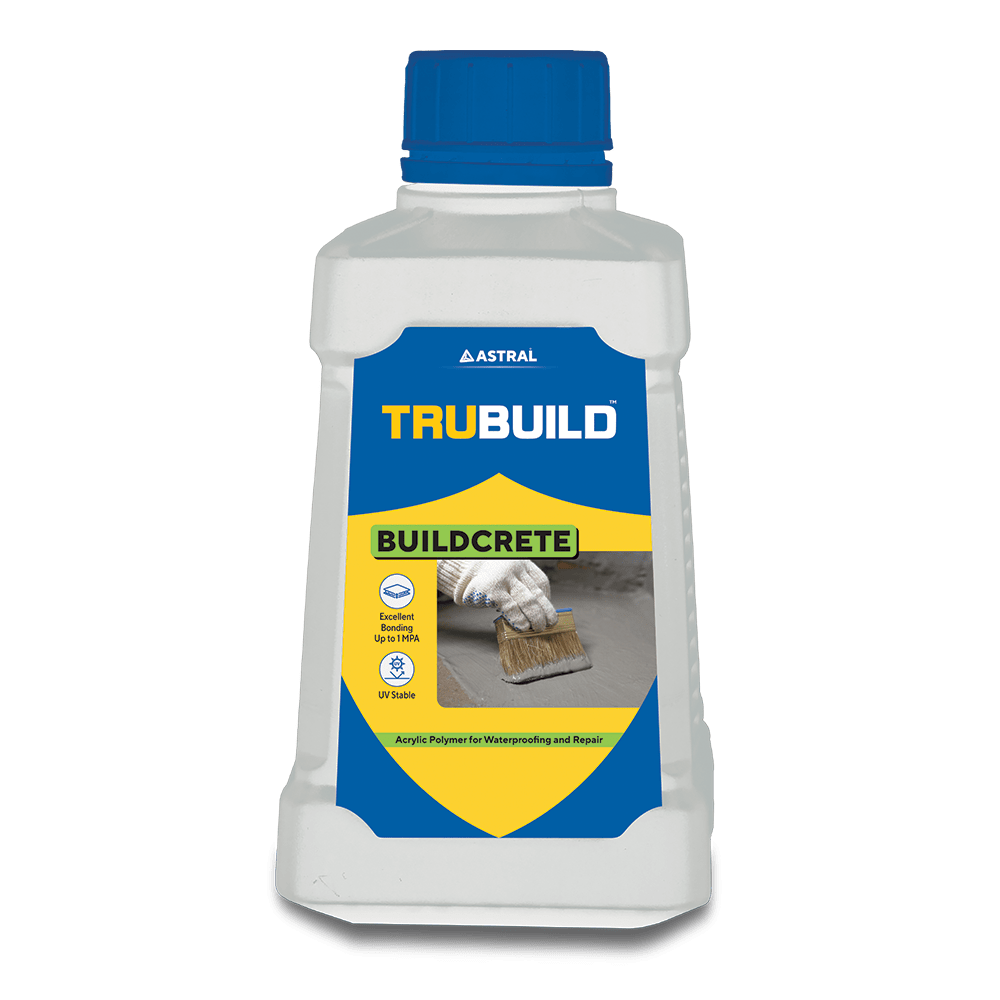
 Exterior Waterproofing
 Professional Sealants
 Roof Waterproofing
 Substructure Waterproofing
  Tiling and Grouting
 Water Tanks and Other Areas
  Wet Areas

 Home
HomeDifferent Types of Cement Waterproofing in Construction
Jun 10, 2026

In Indian construction, cement is the backbone of most structures, yet plain cement and concrete are not fully resistant to water. Monsoon rain, high groundwater levels and daily wet‑area use can cause damp walls, peeling paint and gradual damage to slabs and columns. Cement waterproofing offers a way to strengthen these elements against water ingress rather than dealing with repeated surface repairs.
This guide explains what cement waterproofing is, why it is widely used, the main types available, and where products like Astral Trubuild Buildcrete fit in for practical applications such as bathrooms, basements, water tanks and foundations.
What is Cement Waterproofing?
Cement waterproofing refers to systems that use cement‑based materials to create a barrier against water. These may be coatings applied on surfaces, additives mixed into concrete and mortar, or specialised formulations that react within the capillaries of the substrate. The aim is to reduce water absorption, control seepage and improve durability. Cement waterproofing works with the structure itself. It bonds strongly to concrete, brick and plaster. It often becomes part of the surface layer. This makes it suitable for areas that face continuous moisture, pressure and wear.
Why is Cement Waterproofing Popular?
Cement waterproofing is popular in Indian construction for several reasons. It is compatible with common building materials such as concrete, mortar, brick and plaster. Application methods are familiar to contractors and masons. This makes it easier to adopt it on-site. Many systems can be used both inside and outside structures.
Cement‑based waterproofing solutions also tolerate high moisture and can handle both positive and negative water pressure in areas such as basements and tanks. They are often more resistant to mechanical wear than thin paint layers and can be covered with tiles, screeds or plaster. Overall, they offer a good balance between performance, practicality and cost for a wide range of projects.
Types of Cement Waterproofing
Different construction needs call for different types of cement waterproofing. The main categories of cement based waterproofing are outlined below.
Cementitious Coating
Cementitious coatings are slurry or mortar‑like mixes applied as a layer on surfaces such as walls, floors and tanks. Once cured, they form a dense, water‑resistant film. These coatings of cement based waterproofing are often used inside bathrooms, basements and water tanks, and can be applied on both new and existing surfaces.
Polymer Modified Cement
Polymer modified cement waterproofing combines cement with polymers to improve flexibility, adhesion and crack resistance. This type of system can bridge small cracks and handle minor movement in the substrate better than plain cement coatings. It is useful in areas where waterproofing and slight flexibility are needed, such as terraces and wet rooms.
Crystalline Waterproofing
Crystalline waterproofing uses active chemicals within a cementitious base that react with moisture and cement to form crystals inside the pores of concrete. These crystals block pathways for water while still allowing water vapour to pass. Crystalline systems are often used for basements, foundations and water tanks, where deeper, internal protection is needed.
Integral Waterproofing Compounds
Integral waterproofing compounds are additives mixed directly into concrete or plaster at the batching stage. They reduce water penetration and improve mix properties, which helps control permeability and dampness in slabs, beams and walls. This approach is common in new construction where waterproofing can be planned from the start.
Flexible Cement Waterproofing
Flexible cement waterproofing combines cementitious materials with polymers or fibres to create a coating that can accommodate more movement. These systems are chosen for surfaces that may expand, contract or crack slightly, such as external walls, balconies and some roofs. They give cement‑based waterproofing a more adaptable character.
Also Read : What Are The Different Types of Waterproofing Methods in Construction?
Best Applications for Cement Waterproofing
Cement waterproofing is especially effective in areas where structures face direct contact with water or constant damp conditions.
Key applications include:
- Bathrooms: Floor slabs, wall‑floor junctions and wet zones under tiles
- Basements: Walls and slabs exposed to groundwater pressure
- Water tanks: Internal surfaces of overhead and underground tanks
- Foundations: Footings, plinth beams and retaining walls that touch soil and moisture
In these spaces, cement‑based systems work well because they bond to the structural surface and can handle regular contact with water.
Choosing the Best Waterproof Cement
Choosing the best waterproof cement or cement‑based system depends on the area, exposure and stage of construction. For new work, integral waterproofing compounds and cementitious coatings at key interfaces provide strong long‑term control. For existing surfaces, polymer-modified and flexible cement solutions help treat visible problems while improving resistance to future leakage.
Our Astral Trubuild Buildcrete is an example of a specialised waterproofing compound designed to improve the performance of cement and concrete. It is used as an additive in plaster and concrete mixes to reduce permeability and enhance durability. This makes it suitable for foundations, external walls and other structural elements that must stay more resistant to water. When combined with appropriate coatings and good detailing, such products help form a comprehensive waterproofing strategy rather than relying on one layer alone.
Explore our range of waterproofing solutions at Astral Trubuild for all types of waterproofing applications.
FAQ
Which cement is waterproof?
No ordinary cement is fully waterproof by itself. Waterproofing performance comes from specialised cement‑based systems such as cementitious coatings, polymer-modified mortars and integral compounds added to concrete and plaster mixes.
Is cement waterproof by itself?
Standard cement and concrete are naturally porous and allow water to pass through their capillaries over time. They need help from waterproofing additives, coatings or membranes to reduce water penetration and improve long‑term resistance to dampness and leakage.
Which waterproof cement lasts longest?
Waterproof cement systems that combine low permeability with strong adhesion and suitable flexibility tend to last longer, especially when applied on well‑prepared surfaces. Lifespan also depends on exposure, correct mix proportions and regular maintenance where needed.
Is cement waterproofing suitable for roofs?
Cement waterproofing can be suitable for roofs when used as part of a system that includes proper slope, crack treatment and protective layers. Flexible, polymer-modified cementitious coatings are often preferred on roofs, sometimes in combination with other membranes or topcoats for best results.

