
 Concrete and Mortar
 Exterior Waterproofing
 Professional Sealants
 Roof Waterproofing
 Substructure Waterproofing
  Tiling and Grouting
 Water Tanks and Other Areas
  Wet Areas

 Home
HomePU Waterproofing vs Acrylic Waterproofing for Roof
Jun 6, 2026

Indian roofs and terraces face strong sun, heavy monsoon rain and constant temperature shifts. Over time, these conditions expose weak points in coatings and joints. Many property owners look at PU waterproofing and acrylic waterproofing as two main options, but it is not always clear which is better for a specific roof. This guide explains both systems, compares them on key performance points, and helps you decide which roof waterproofing solution suits Indian conditions.
What is PU waterproofing?
PU waterproofing uses a liquid polyurethane membrane that cures into a seamless, elastic film over the roof surface. PU waterproofing is suitable for wet areas, foundations, basements, terraces, podiums and roof structures that are protected from direct sunlight for longer life.
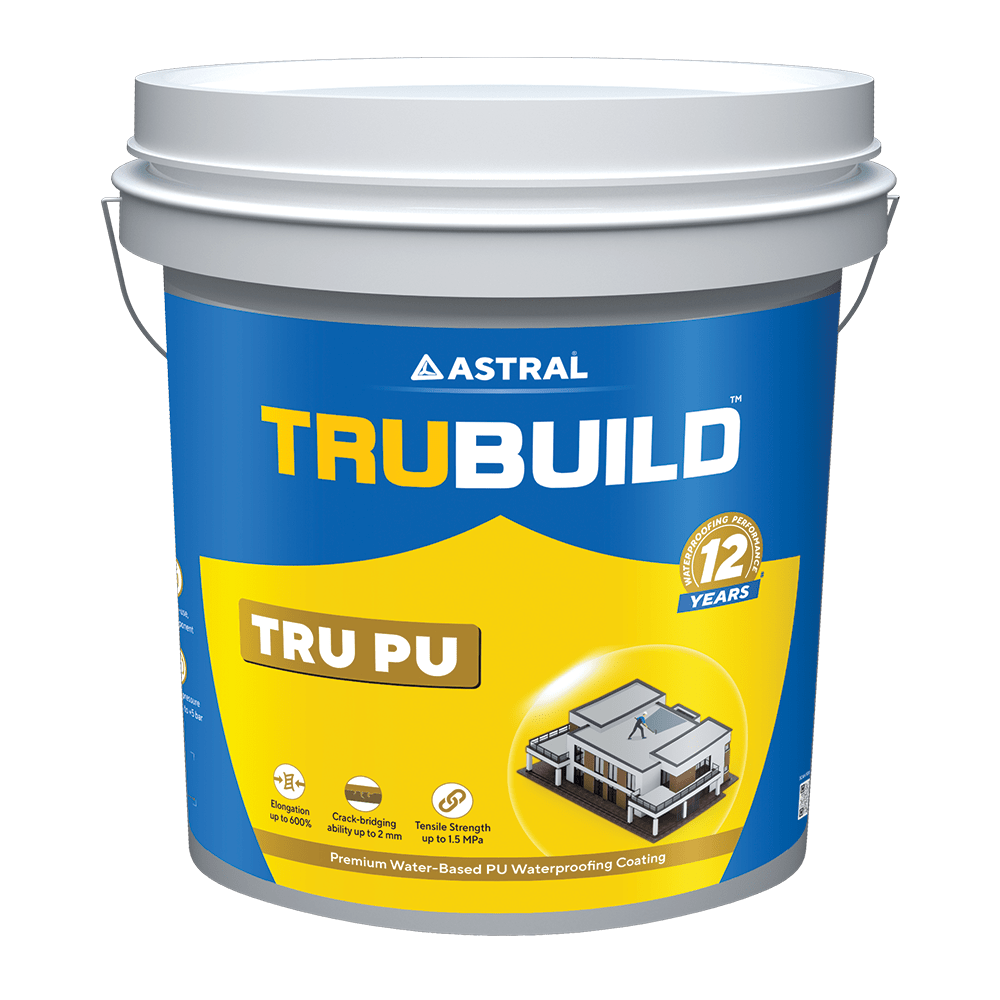
Astral Trubuild TRU PU is a single-component, bitumen‑modified, PU‑based waterproofing system supplied as a viscous liquid. It is applied by brush, roller or spray on prepared surfaces. Once cured, TRU PU forms a flexible barrier with elongation of around 600 percent and crack bridging capacity of about 2 mm. The membrane also offers strong adhesion on various substrates and good resistance to oxidation, which reduces brittleness over time.
What is acrylic waterproofing?
Acrylic waterproofing relies on liquid applied, fibre-reinforced acrylic coatings that create an elastomeric film over the roof or terrace. These water‑based systems are designed to be brushed or rolled on the surface in multiple coats.
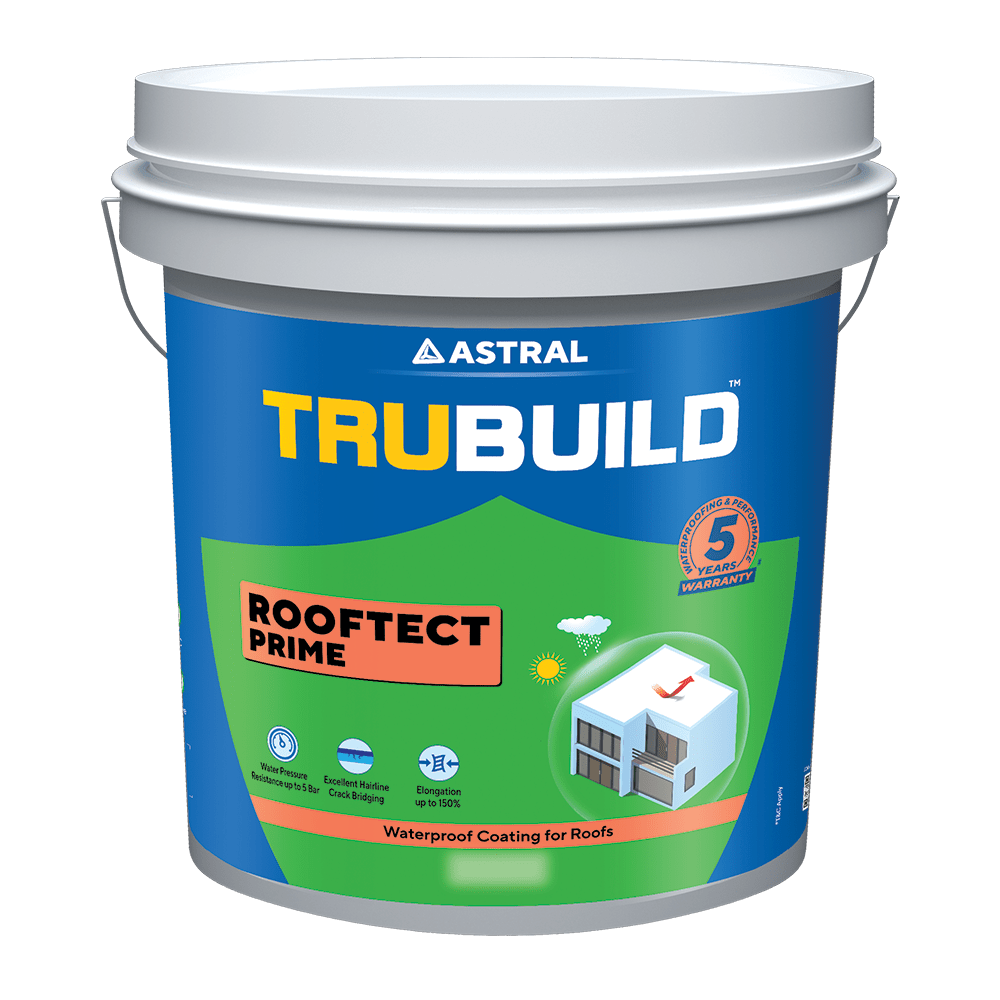
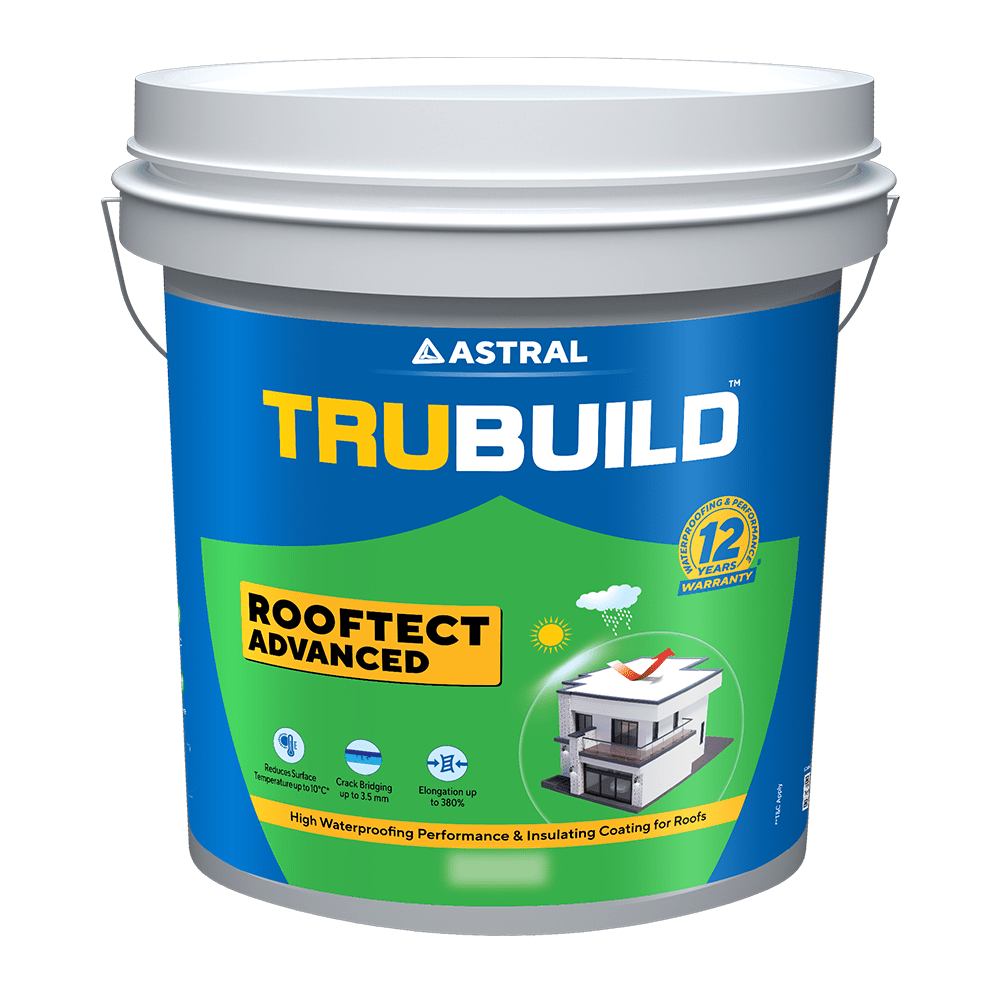
Astral Trubuild’s acrylic roof membranes, such as Rooftect Pro, are formulated to resist weathering and provide crack bridging for roofs and terraces. Acrylic waterproofing tends to offer good UV resistance and colour stability, which makes it suitable for exposed roofs that receive strong sunlight.
PU waterproofing vs acrylic waterproofing (comparison table)
The table below compares PU and acrylic waterproofing for roofs on key parameters that matter in Indian conditions.
| Parameter | PU waterproofing (e.g., TRU PU) | Acrylic waterproofing (e.g., Rooftect‑type systems) |
| Durability | High durability with strong resistance to oxidation and brittleness. | Good durability for many residential and commercial roofs when maintained and recoated as needed. |
| UV resistance | Performs best when protected from direct sunlight for longer life or used with suitable topcoats. | Generally formulated with good UV resistance and colour retention for exposed roofs. |
| Flexibility | Very high flexibility and elongation (around 600 percent), suitable for roofs with movement and thermal expansion | Flexible film with elastomeric behaviour, but usually lower elongation than PU membranes |
| Crack bridging | Good crack bridging up to about 2 mm due to high elasticity of TRU PU | Designed to bridge hairline cracks and minor surface defects; larger cracks may need repair before coating. |
| Cost | Typically a higher investment per square metre than basic acrylic systems | Often more economical, especially for standard residential roofs and periodic maintenance |
| Maintenance | Requires periodic inspection and protection from mechanical damage | Needs regular checks and recoating at defined intervals to retain film thickness |
| Lifespan | When applied correctly and used in suitable conditions, can offer long service life | Have a solid service life but may require more frequent renewal, especially on heavily exposed roofs. |
Which Waterproofing is Better for Indian Roofs?
The better option depends on roof type, exposure and performance expectations. For roofs and terraces that face movement, temperature swings and complex detailing, PU waterproofing offers strong flexibility and crack bridging. It is well suited to terraces, podiums and roof areas where a seamless membrane around joints and penetrations is important.
Acrylic waterproofing suits many exposed roofs where colour stability, UV resistance and cost are priorities, such as standard residential terraces and some commercial roofs. In practice, PU waterproofing is often chosen for high performance or heavy duty applications, while acrylic waterproofing is used for large roof areas where periodic recoating is acceptable.
Factors to Consider Before Choosing Roof Waterproofing
Before deciding between PU and acrylic waterproofing, it is useful to look at a few practical factors.
Key points include:
Roof type and condition: Flat terrace, sloped roof, presence of existing cracks or old coatings.
Exposure: Continuous direct sun, shaded areas, presence of water tanks or equipment.
Movement: Roofs with structural movement or temperature‑related expansion may benefit from higher flexibility.
Budget and maintenance plan: Initial investment and willingness to perform recoating at intervals.
Application schedule: Time available before monsoon for surface preparation, multiple coats and curing.
Discussing these factors with a waterproofing specialist or Astral Trubuild technical support can help match the system to the roof instead of relying on generic choices.
Common Mistakes While Waterproofing Roofs
Some roof waterproofing issues arise not from the product itself, but from application mistakes.
Frequent errors include:
Inadequate surface cleaning, leaving dust, loose material or old peeling coatings below the new membrane
Skipping crack repair and joint sealing before applying PU or acrylic waterproofing
Applying membranes on wet surfaces, which weakens adhesion
Ignoring specified film thickness and number of coats, leading to thin, weak layers
Poor detailing around outlets, parapet walls and penetrations, where leaks often start
Lack of curing time before exposing the roof to heavy rain or traffic
Avoiding these mistakes is as important as choosing the right product, especially when preparing roofs for Indian monsoon conditions.
PU waterproofing and acrylic waterproofing both play important roles in protecting Indian roofs and terraces. PU systems such as Astral Trubuild TRU PU offer high flexibility, strong crack bridging and durable membranes for demanding roof conditions. Acrylic waterproofing provides UV resistant, economical coatings for many exposed roof surfaces.
By assessing roof type, exposure, movement and maintenance plans, property owners can select the roof waterproofing solution that delivers reliable performance across monsoon seasons.
Explore Astral Trubuild waterproofing products for a complete waterproofing solution for your home or building.
FAQ
Is PU waterproofing better than acrylic waterproofing?
PU waterproofing is often better for roofs with movement, complex joints or higher performance needs because of its high flexibility and crack bridging. Acrylic waterproofing suits many standard roofs where UV resistance and cost are the main considerations.
Which waterproofing lasts longer?
PU membranes generally offer longer service life when applied correctly and used under suitable conditions, due to strong elasticity and resistance to oxidation. Acrylic coatings also perform well but may need more frequent recoating on highly exposed roofs.
Can acrylic waterproofing be applied over old coatings?
Acrylic waterproofing can be applied over sound, compatible old coatings after cleaning and surface preparation. Loose, blistered or incompatible layers must be removed, and cracks treated, before new acrylic systems are applied.
Which is more economical?
Acrylic waterproofing is generally more economical for large roof areas due to lower material cost and simpler recoating cycles. PU waterproofing involves higher initial cost but can offer better long‑term value for demanding roofs where performance is a priority.
Is PU waterproofing suitable for terraces?
Yes. PU waterproofing products such as Astral Trubuild TRU PU and Tru PU Pura 1K are designed for terraces and similar flat roofs, where their seamless, flexible membrane helps reduce leakage and handle movement across seasons.

