
 Concrete and Mortar
 Exterior Waterproofing
 Professional Sealants
 Roof Waterproofing
 Substructure Waterproofing
  Tiling and Grouting
 Water Tanks and Other Areas
  Wet Areas

 Home
HomeWhat is Mortar in Construction?
May 8, 2026

If you have ever watched a wall being built, you have seen mortar being used, that grey paste applied between bricks or blocks to hold them together. But mortar does a lot more than just fill gaps. It is a fundamental material in construction, used in everything from plastering walls to fixing tiles to repairing cracked structures. Understanding what mortar in construction is and how it works helps in making better decisions on any build or repair project.
What is Mortar?
Mortar is a workable paste made by mixing binding materials with fine aggregates and water. Once applied, it hardens over time to bond building components together or coat surfaces.
The basic composition of standard cement mortar includes cement, sand and water. The ratio of these materials changes depending on the application, a richer cement mix is used for load-bearing work, while a leaner mix may be used for plastering or pointing. Polymer additives can also be introduced to improve flexibility, adhesion and durability. Now that you understand what is mortar in constructions, let us also understand its types and uses.
Types of Mortar Used in Construction
Cement Mortar
Cement mortar is the most widely used type in Indian construction. It is made by mixing ordinary Portland cement with fine sand and water in specific ratios, typically 1:3 to 1:6, depending on the application. It is strong, sets relatively quickly and is used for brickwork, block laying, plastering and general repairs.
Lime Mortar
Lime mortar uses lime as the binding agent instead of cement. It is more flexible than cement mortar and was widely used in older construction. Today, it is mostly used in restoration projects and heritage buildings where some degree of movement tolerance is needed.
Polymer Mortar
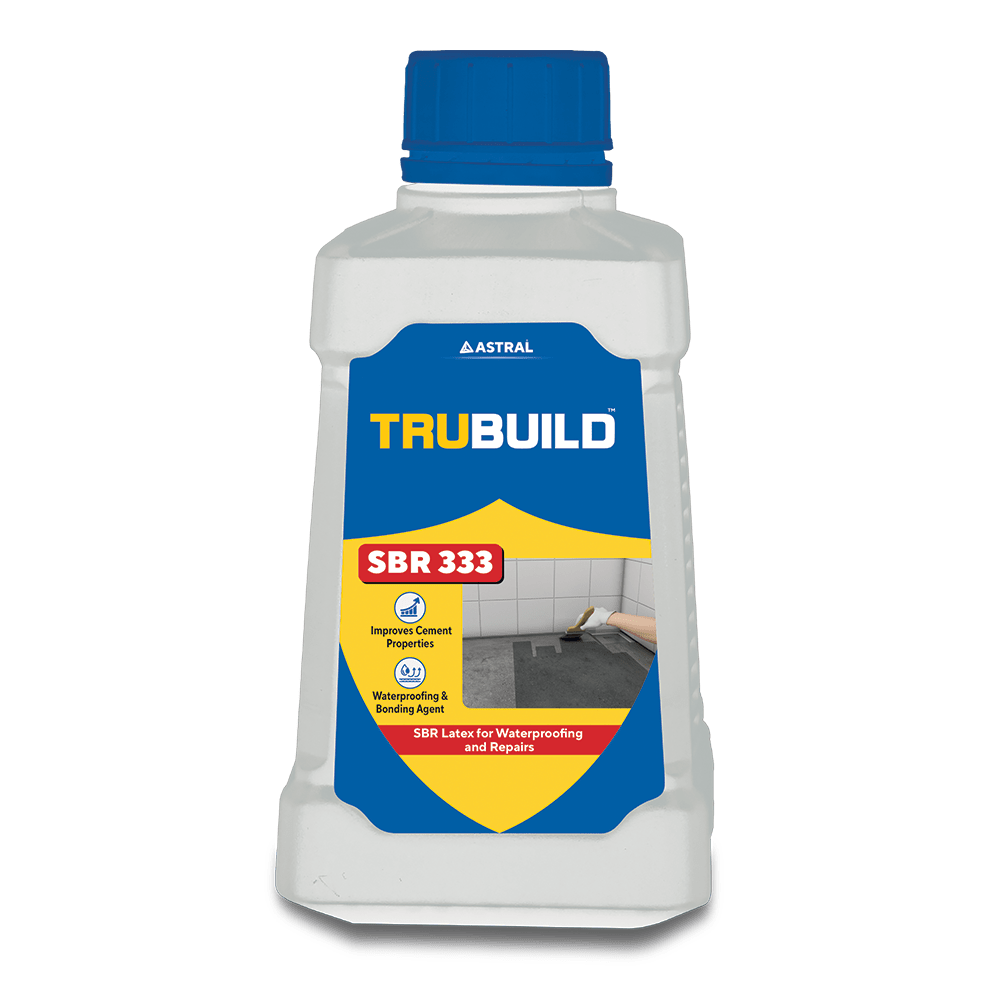
Polymer mortar is a cement-based mix modified with polymer additives to enhance performance. It offers better adhesion, higher flexibility and improved water resistance compared to standard cement mortar. Astral Trubuild’s WPL 333 is a polymer additive used for creating polymer modified mortar, suitable for bonding new to old concrete, crack repair and surface rendering. Trubuild BWP 222 is another acrylic co-polymer emulsion used as a bonding agent and waterproofing additive in cement mortar mixes.
Uses of Mortar in Construction
Mortar is one of the most versatile materials on a construction site. Here is where it gets used most:
- Brick and block masonry: Mortar fills the joints between bricks, stones and blocks, distributing loads evenly and holding the masonry wall together as a single unit
- Plastering: A sand-cement mortar mix is applied over brick or concrete walls to create a smooth, even surface ready for painting or finishing
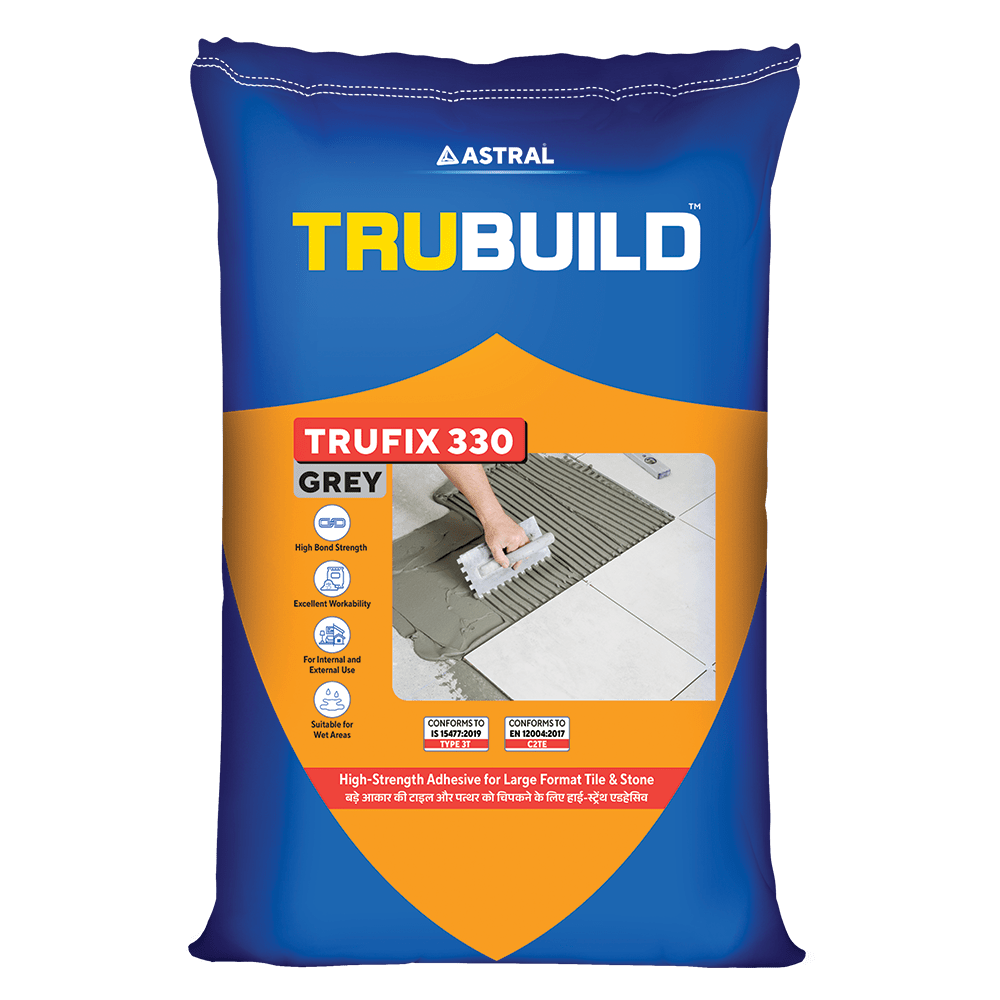
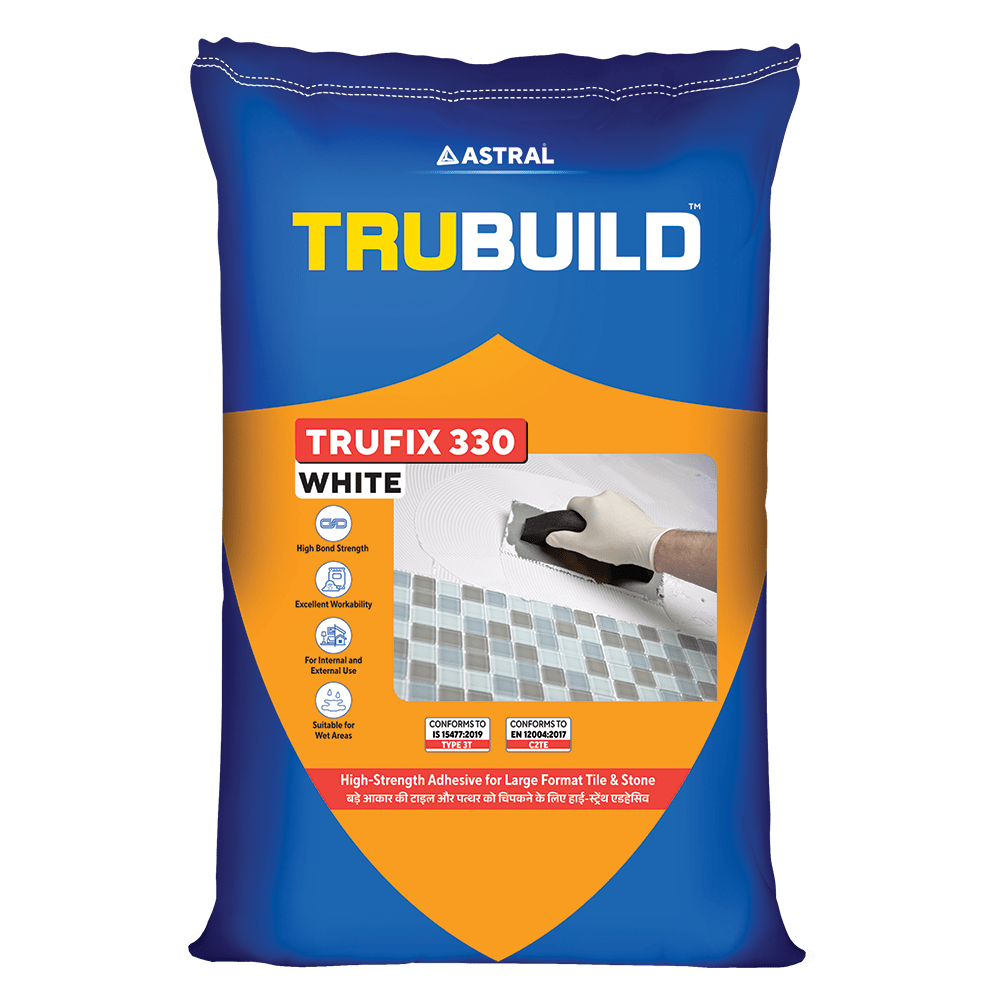
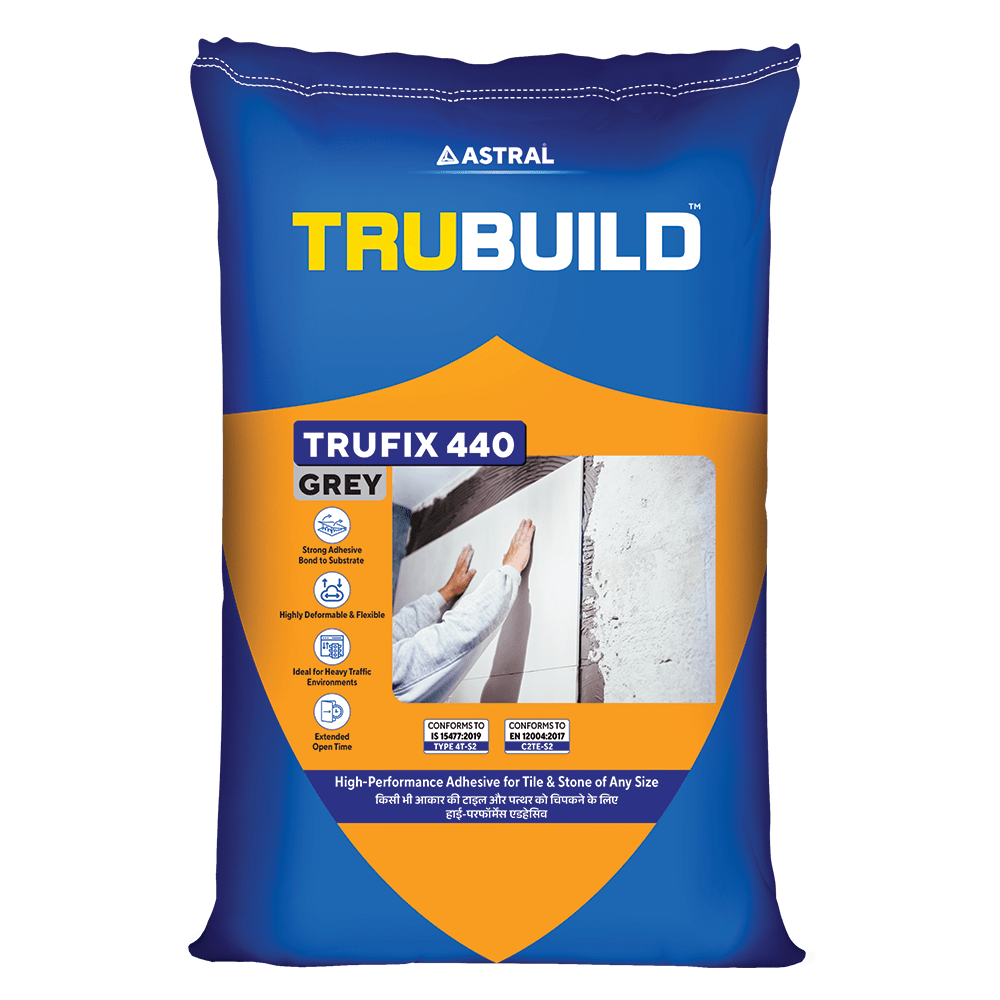
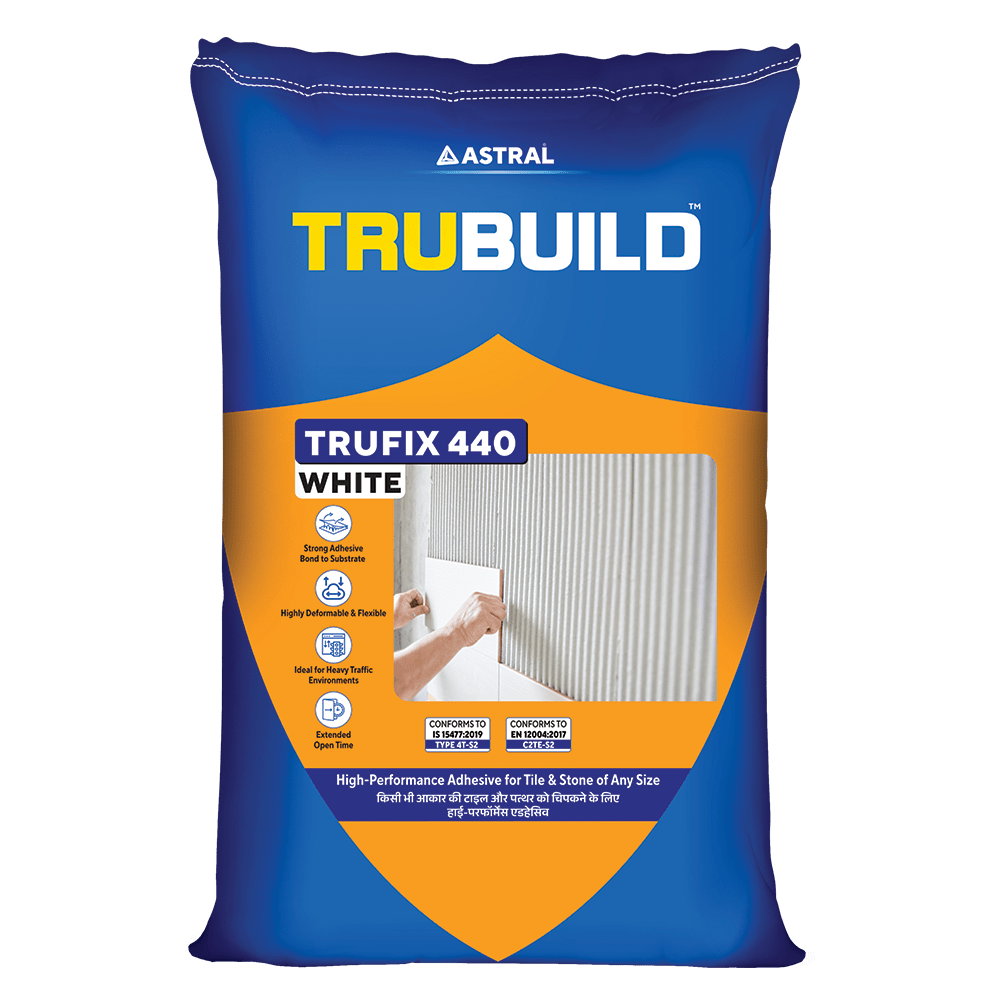
- Tile fixing: A thin-bed mortar or tile adhesive mortar is used to bond ceramic, vitrified or stone tiles to walls and floors, which provides a flat, stable base
Properties of Good Mortar
Not all mortar mixes perform equally. A well-made mortar should have the following qualities:
- Good workability, so it can be applied and shaped easily on site
- Strong adhesion to the surfaces it bonds
- Adequate compressive strength once cured
- Resistance to moisture and water ingress
- Minimal shrinkage during and after curing
- Durability over the long term, which includes resistance to freeze-thaw cycles and thermal movement
Difference Between Mortar and Concrete
Understand what is mortar in construction and why it is often confused with concretete, but they serve different purposes and have different compositions.
|
Feature |
Mortar |
Concrete |
| Composition | Cement, fine sand, water (sometimes lime or polymer) | Cement, sand, coarse aggregate (gravel), water |
| Strength | Lower compressive strength | Higher compressive strength |
| Primary use | Bonding, plastering, pointing, tile fixing | Structural work: slabs, foundations, columns |
| Consistency | Thicker, paste-like | More fluid, less adhesive |
| Coarse aggregate | No | Yes |
In short, mortar holds things together; concrete builds the structure itself. Both are needed in construction, but they are not interchangeable.
Astral Trubuild offers a range of concrete and mortar solutions designed for superior bonding, waterproofing and repair performance. Explore the full range at Astral Trubuild to find the right product for your next project.
FAQ
Is mortar waterproof?
Standard cement mortar is not fully waterproof. It is porous and can absorb moisture over time. Adding a polymer waterproofing additive, such as Astral Trubuild's WPL 333 or BWP 222, to the mortar mix significantly improves its water resistance and makes it suitable for wet areas and external applications.
What is mortar made of?
Mortar is made of cement, fine sand and water. Lime may be added for flexibility, and polymer additives can be included for better adhesion and water resistance. The ratio of these ingredients is adjusted based on where and how the mortar will be used.
Which mortar is strongest?
Polymer-modified mortar offers the best combination of strength, adhesion and flexibility. For structural repair work on beams, columns and concrete surfaces, a polymer modified mortar mix with Astral Trubuild WPL 333 provides superior performance over standard cement mortar.

