
 Concrete and Mortar
 Exterior Waterproofing
 Professional Sealants
 Roof Waterproofing
 Substructure Waterproofing
  Tiling and Grouting
 Water Tanks and Other Areas
  Wet Areas

 Home
HomeWhat is Grouting in Construction?
May 19, 2026
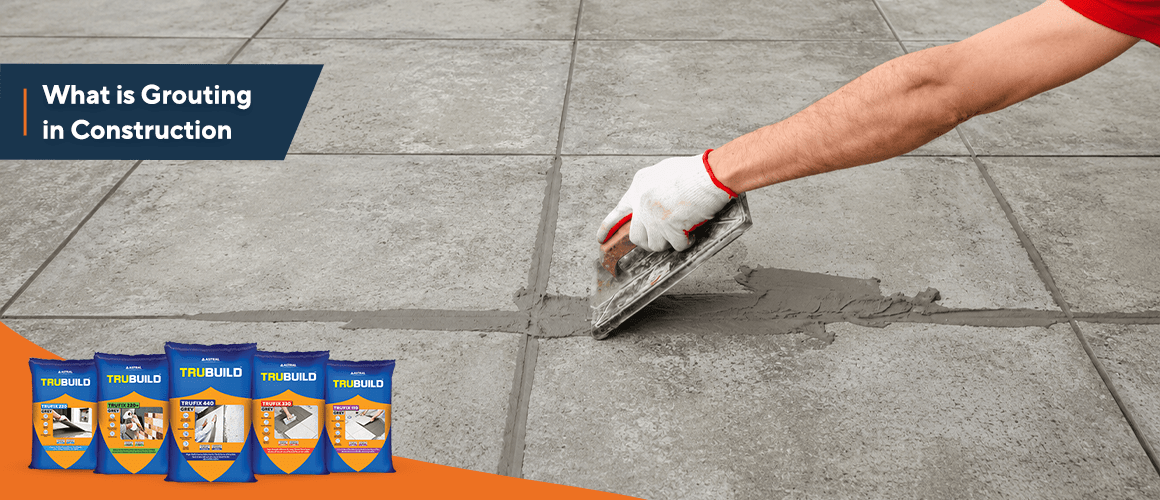
You have probably seen grout without ever thinking about it, those thin lines running between bathroom tiles, or the sealed joints in a kitchen floor. But grouting in construction goes far beyond tiles. It plays a key role in waterproofing, crack repair and structural stability across buildings of all types. If you are building, renovating or just trying to understand how constructions stay strong and watertight, this is a good place to start.
What is Grouting?
Grouting is the process of filling gaps, joints, voids or cracks in a structure using a fluid or semi-fluid material that hardens over time. The material used, called grout, is typically made from cement, chemical polymers or epoxy resins, depending on the application. The purpose of grouting is to bond surfaces together, seal out water, add structural strength and prevent movement between sections of a structure. In Indian construction, grouting is widely used in everything from tile work in homes to waterproofing in basements and foundations. Now that we understand what grouting is in construction, let us also learn about its types and applications.
Types of Grouting Used in Construction
1. Cement Grouting
Cement grouting is the most commonly used method on Indian construction sites. It uses a mix of cement, sand and water to fill gaps and cracks in masonry, foundations and concrete surfaces. It is cost-effective, widely available and reliable for general-purpose applications.
Astral Trubuild’s Stylo Cem is a cementitious tile grout designed to fill tile joints with a strong, non-shrink and crack-resistant finish, suitable for walls and floors alike.
2. Chemical Grouting
Chemical grouts use polymer-based materials, such as acrylic, polyurethane or epoxy, to fill very fine cracks and voids that cement grout cannot reach. It is particularly useful in wet environments and where greater flexibility or chemical resistance is needed.
Astral Trubuild’s range of tiling and grouting solutions includes options suited for areas with high moisture exposure and chemical contact.
3. Epoxy Grouting
Epoxy grout is a three-component system made from epoxy resin, hardener and filler. It creates extremely hard, stain-free, waterproof joints with excellent chemical resistance. It is the preferred choice for swimming pools, commercial kitchens, wet areas and any space where hygiene and durability matter.
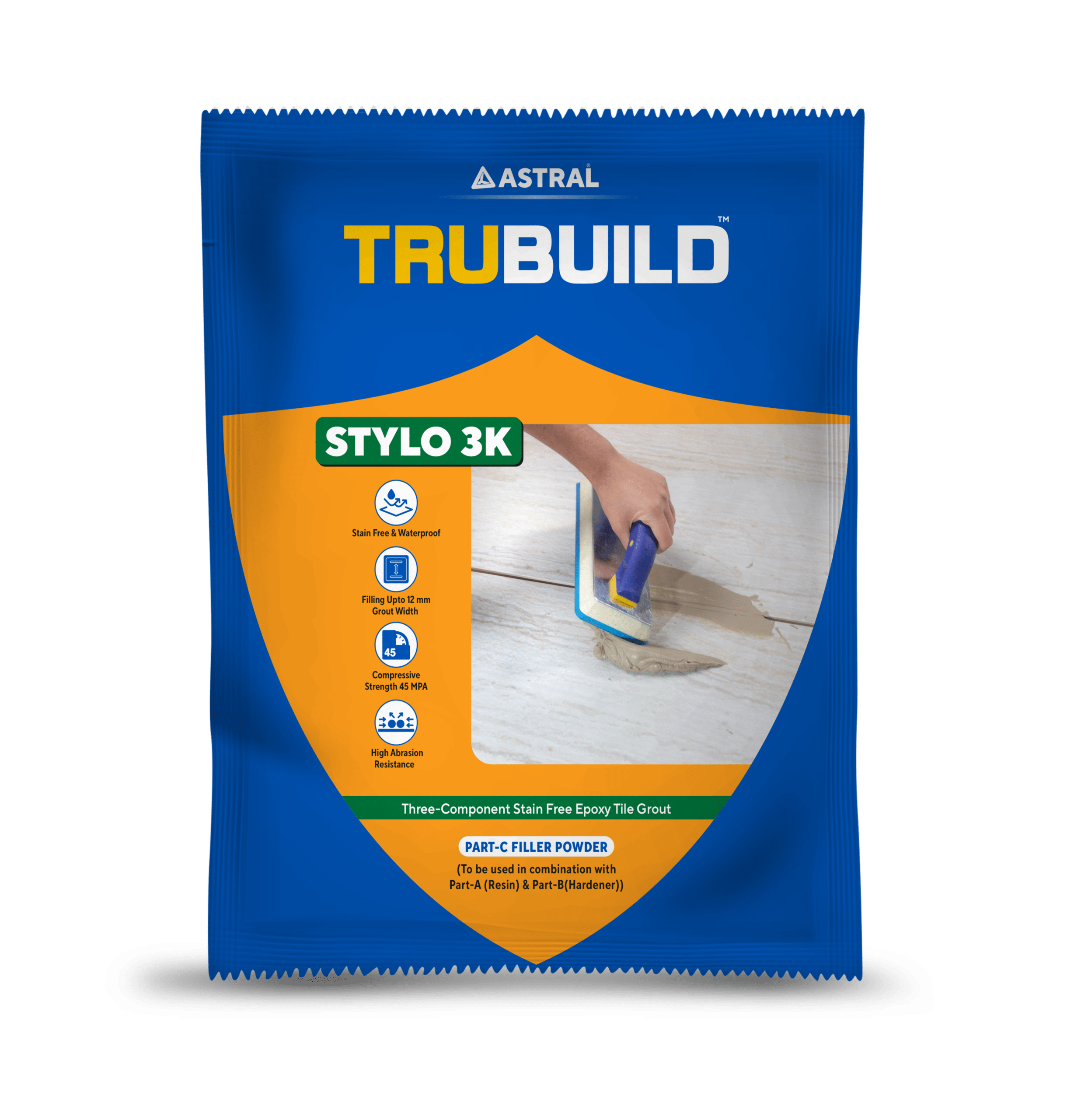
Astral Trubuild’s Stylo 3K is a premium three-component epoxy grout, stain- and water-resistant, and built for long-lasting tile joints in both residential and commercial spaces.
Importance of Grouting in Construction
Grout is one of those steps in construction that is easy to underestimate, until something goes wrong.
1. Strengthening Structures
Grout fills the voids between structural members and the base, distributing load evenly and preventing movement that can lead to cracks over time
2. Waterproofing Benefits
Properly grouted joints block water from seeping into tile joints, walls and foundations, reducing the risk of dampness, staining and long-term structural damage
3. Crack Filling
Grouting is a primary method for repairing existing cracks in concrete or masonry, restoring the surface’s integrity and stopping damage from spreading further
Applications of Grouting
Grouting in construction is used across a wide range of surfaces and situations:
1. Tile joints
The most visible use of grout, filling the gaps between ceramic, vitrified or stone tiles on walls and floors to create neat, watertight joints
2. Basements
Grouting seals cracks and joints in basement walls and floors, preventing water ingress in areas that are constantly exposed to ground moisture
3. Foundations
In foundation work, grouting fills voids beneath structural slabs and base plates, providing a stable, even bearing surface for heavy loads
4. Water tanks
Grout applied in and around water tanks seals joints and hairline cracks, keeping water in and contaminants out. Epoxy grout is especially recommended here for its chemical and water resistance
Grouting vs. Sealant
Both grout and sealant fill gaps, but they are built for very different jobs.
|
Feature |
Grouting |
Sealant |
| Material | Cement, epoxy, or chemical polymer | Silicone, polyurethane, or acrylic |
| Primary purpose | Fills rigid joints between tiles or structures | Seals flexible joints and expansion gaps |
| Rigidity | Rigid (once cured) | Flexible |
| Best used for | Tile joints, foundations, and crack repair | Around bathtubs, windows, and expansion joints |
| Water resistance | Good to excellent (depends on type) | Excellent |
| Durability | Long-lasting; low maintenance | May need periodic reapplication |
| Paintable | Yes (cement grout) | Not always |
Understanding grouting is in construction is important because choosing the wrong one for the job can lead to cracks, water damage or joint failure, so understanding the difference matters. For tiles, walls, basements or foundations, the right grout product makes a measurable difference to how long a surface lasts. Explore Astral Trubuild’s complete range of tiling and grouting solutions, from cement grout to premium epoxy grout, at Astral Trubuild.
FAQ
Is grout waterproof?
It depends on the type. Standard cement grout is water-resistant but not fully waterproof. Epoxy grout, such as Astral Trubuild's Stylo 3K, offers superior water resistance and is the recommended choice for wet areas like bathrooms, swimming pools and kitchen backsplashes.
What is epoxy grout?
Epoxy grout is a three-component mixture of epoxy resin, hardener and filler. Once cured, it forms a hard, stain-free, chemical-resistant joint that is far more durable than cement grout. It is the ideal choice for areas that face constant moisture, heavy traffic or chemical exposure.
What is the difference between grout and mortar?
Mortar is used to bond tiles or bricks to a surface, it is the adhesive layer beneath. Grout, on the other hand, is used to fill the joints between tiles after they have been laid. Both are essential parts of tiling work, but they serve completely different roles in the process.

