
 Concrete and Mortar
 Exterior Waterproofing
 Professional Sealants
 Roof Waterproofing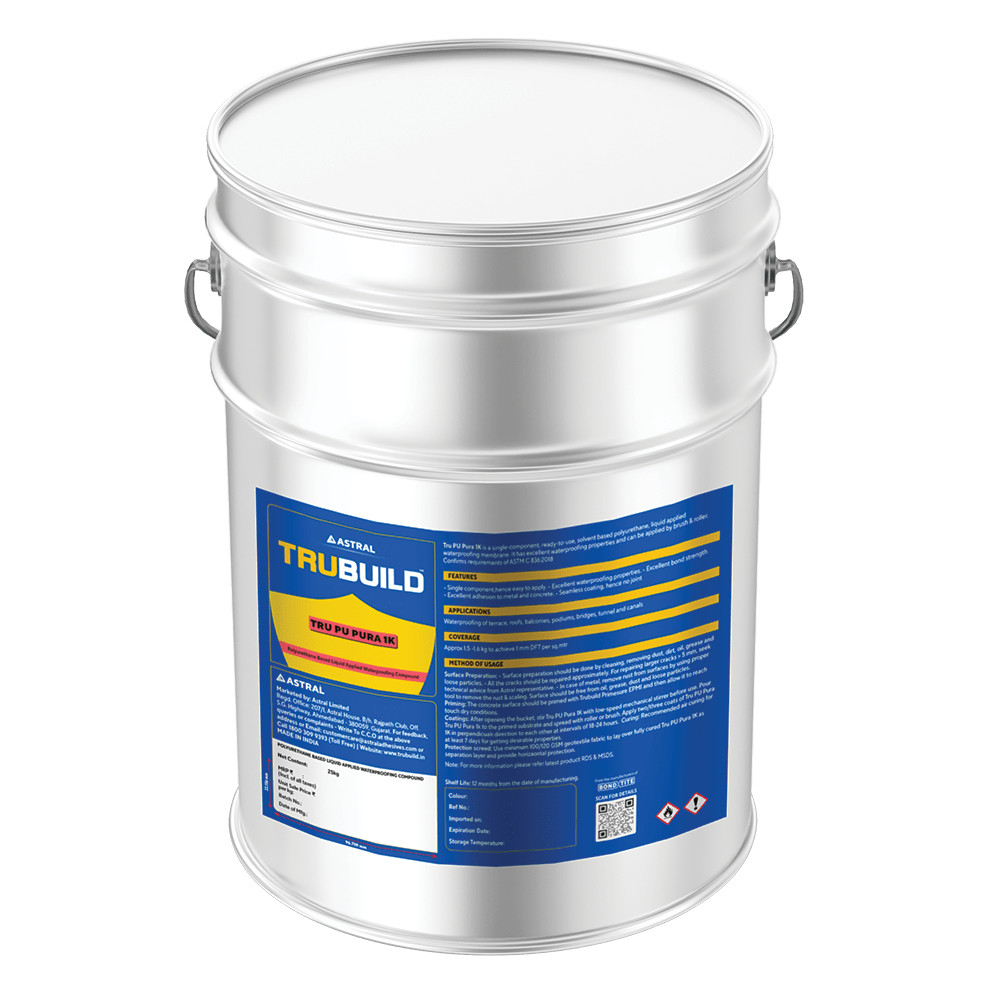
 Substructure Waterproofing
  Tiling and Grouting
 Water Tanks and Other Areas
  Wet Areas

 Home
HomeWhat is PU Paint
May 25, 2026
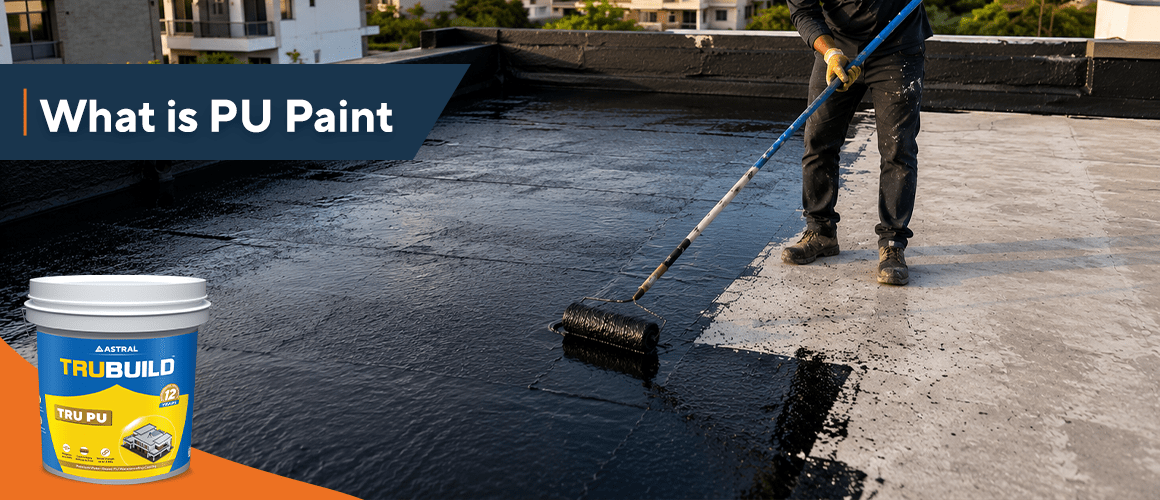
If you are wondering what is PU paint, it is a specialised coating made using polyurethane, a tough and flexible polymer widely used in protective finishes. PU paint forms a dense film that resists wear, stains and weathering, making it suitable for demanding applications in Indian homes and projects. Unlike standard wall paints, PU paint is designed to provide a harder, more durable and often glossier finish, along with better resistance to moisture, chemicals and UV rays. This makes it ideal for surfaces exposed to high traffic, outdoor conditions or regular cleaning.
What is PU Paint Made of and How Does it Protect Walls?
PU paint is based on polyurethane chemistry, which can be either single-component or two-component, depending on the system.
- Many PU coatings use a polyol and an isocyanate component that react to form a strong, crosslinked film once applied and cured.
- Water-based PU paints and membranes use polyurethane dispersions in water, often modified with additives or bitumen for waterproofing performance.
After curing, the film combines flexibility with strength, so it can handle movement and thermal expansion without cracking, which is important on terraces, external walls and concrete structures in Indian climates.
What are the Main Types of PU Paint?
PU coatings are available in different forms to suit various needs.
1. Water-based PU paint
- Water-based PU systems use water as the main carrier, leading to low odour and easier clean-up.
- They are more user-friendly indoors, with lower levels of volatile organic compounds compared to many solvent-based coatings.
- In waterproofing membranes, water-based PU can be applied as a liquid film that cures into a seamless elastomeric layer on concrete and masonry.
2. Solvent-based PU paint
- Solvent-based PU paints are commonly used where higher chemical resistance and high-gloss finishes are required.
- They are popular in automotive, industrial and metal protection applications, as they give a very hard, smooth and UV-resistant finish.
- Due to stronger fumes and higher VOC content, they need careful handling and good ventilation during application.
What is PU Paint Used For?
PU paint and PU waterproofing systems serve several roles in Indian homes and infrastructure.
1. Terrace waterproofing and exposed slabs
- Liquid-applied PU waterproofing membranes are widely used on terraces, podium slabs and flat roofs.
- The coating is applied in layers to form a continuous film that resists standing water, rain and thermal movement.
- Good elongation and crack-bridging properties help the membrane span small cracks (often up to a few millimetres) without failure.
2. Exterior wall and podium protection
- PU-based membranes and coatings also protect external retaining walls, basements and podium decks.
- These areas often face soil moisture, intermittent water contact and backfilling stress, so a tough yet flexible coating is valuable.
- A separation layer and protective screed are usually applied over the membrane to shield it from mechanical damage.
3. Industrial flooring and heavy-duty zones
- PU paints and topcoats are used in industrial flooring systems, car parks and production areas.
- PU topcoats offer strong abrasion, impact and UV resistance, which supports long service life in busy spaces.
- In many systems, PU is used as a topcoat over epoxy to combine the strength of epoxy with the flexibility and UV stability of PU.
4. Metal, wood and interior surfaces
- PU paints are popular for furniture, doors, metal structures and facades.
- On wood, PU finishes protect against scratches, stains and UV exposure while keeping a premium appearance.
- On metal, PU coatings provide weather resistance and colour stability in outdoor conditions.
Now that you understand what is PU paint used for, let us also understand its benefits.
What are the Main Benefits of PU Paint?
PU paints and membranes offer several advantages when correctly selected and applied.
1. Strong waterproofing performance
PU waterproofing systems form a seamless membrane with low water permeability, suitable for terraces, wet areas, foundations and retaining walls.
2. High elongation and crack bridging
Many PU membranes offer elongation of several hundred percent and crack bridging up to a few millimetres, which helps them cope with structural movement and temperature changes.
3. Durability and weather resistance
PU coatings handle UV, heat and rain better than many conventional coatings, which is important under harsh Indian summer and monsoon cycles.
4. Good adhesion to multiple substrates
PU systems bond well to concrete, masonry, some metals and, in certain cases, wood, which makes them versatile on site.
These properties make PU coatings suitable for Indian buildings that face high temperature variation, heavy rain and increasing exposure to pollutants.
Why is PU Waterproofing Suited to Indian Weather?
Indian weather patterns bring intense sun, heavy rainfall, humidity and in many regions large day-night temperature swings.
- Flexible PU membranes can handle thermal expansion and contraction on terraces and podiums, reducing the likelihood of cracks and leaks over time.
- Good resistance to hydrostatic pressure and water ponding helps on flat roofs, basements and wet areas that may see standing water.
By combining waterproofing, flexibility and weather resistance, PU systems offer a practical choice for long-term protection in many Indian structures.
How Does Astral Trubuild Tru PU Help in Waterproofing?
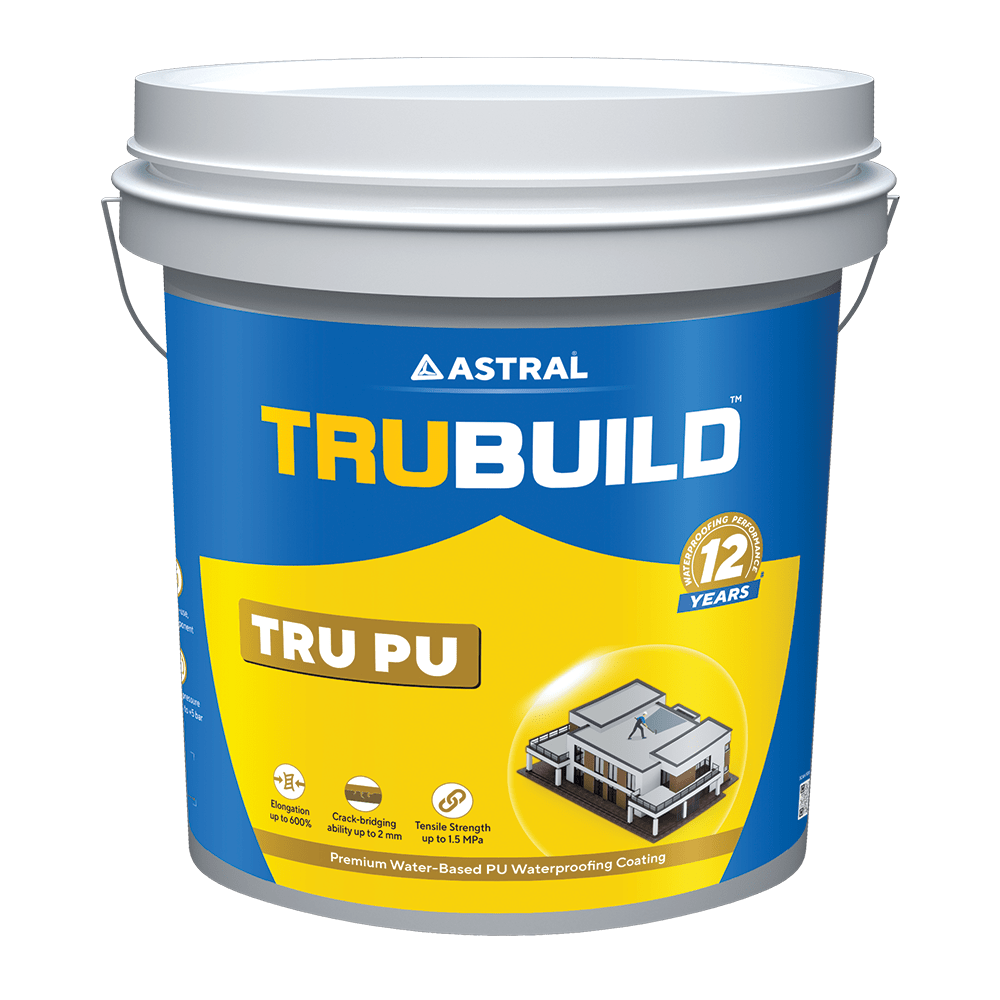
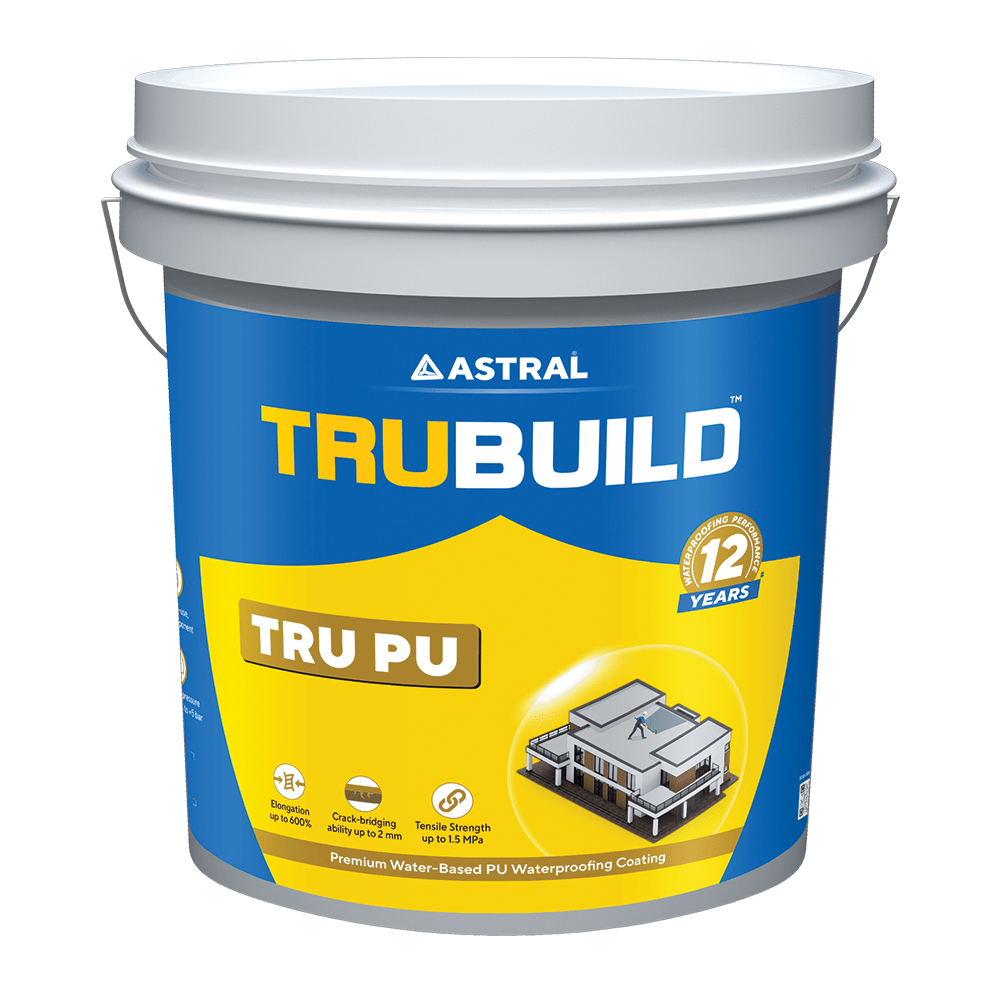
Astral Trubuild Tru PU is a water-based, single-component, bitumen-modified, liquid-applied polyurethane waterproofing membrane designed for demanding Indian site conditions.
- Tru PU provides excellent waterproofing performance, high elongation and good resistance to hydrostatic pressure, while forming a flexible barrier over a wide temperature range.
- The product offers good crack-bridging capacity up to about 2 mm, strong adhesion to a range of substrates and resistance to oxidation and brittleness.
- Tru PU is recommended for waterproofing wet areas, foundations, basements, terraces, retaining walls and podiums.
Explore more such waterproofing solutions at Astral Trubuild.
FAQ
Is PU paint waterproof?
PU paint and PU membranes offer strong water resistance and are widely used for waterproofing terraces, wet areas and exposed concrete. Their seamless film and high elongation help resist water ingress, making them suitable for many Indian building applications when applied as part of a proper system.
How long does PU coating last?
A PU coating can last several years, often 7–10 years or more, depending on surface preparation, film thickness, exposure conditions and maintenance. Correct application, adequate curing and protection from mechanical damage or standing water help extend its service life on terraces, basements and podiums.
Can PU paint be used on roofs?
Yes, liquid-applied PU waterproofing membranes are commonly used on flat roofs and terraces. They form a seamless, flexible film that can handle temperature changes and limited water ponding. A protective screed or topping over the cured membrane is usually recommended for long-term durability under foot traffic.
PU coating vs epoxy coating: which is better?
Epoxy coatings provide very hard, chemical-resistant floors, while PU coatings add more flexibility and better UV resistance. For exterior areas, exposed terraces and places with temperature movement, PU often performs better. For heavy industrial floors with strong chemical exposure, epoxy or epoxy topped with PU can be preferred.

