
 Concrete and Mortar
 Exterior Waterproofing
 Professional Sealants
 Roof Waterproofing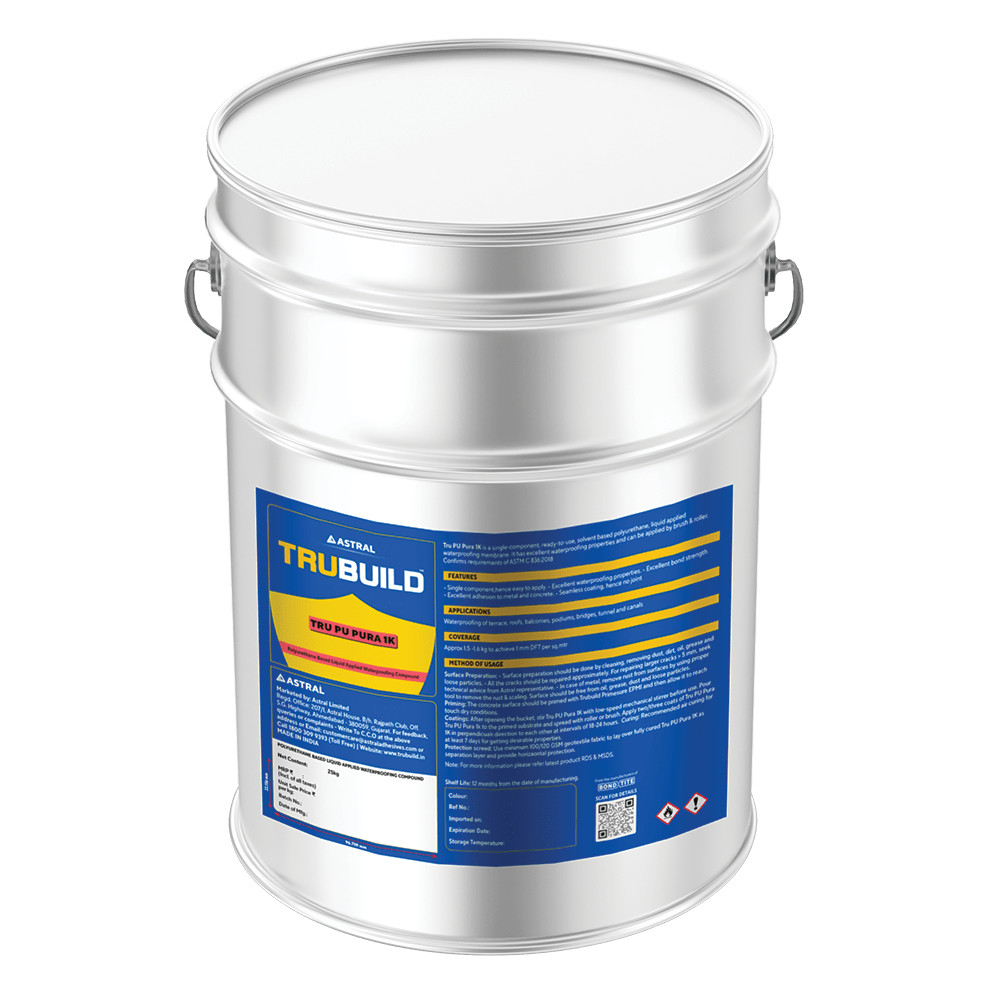
 Substructure Waterproofing
  Tiling and Grouting
 Water Tanks and Other Areas
  Wet Areas

 Home
HomeDifferent Types of Waterproofing Products and Their Applications
Mar 30, 2026
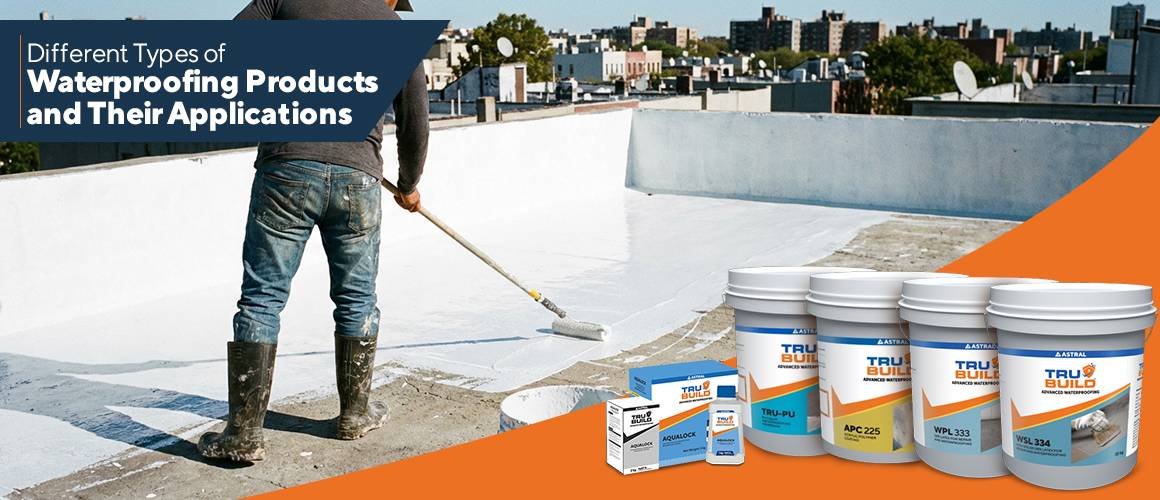
That dark patch spreading across your bedroom ceiling after the first monsoon rain. The paint in your bathroom keeps bubbling up no matter how many times you fix it. These are signs water has found a way in. In India, with its heavy rains, extreme heat and high humidity, water damage is one of the most persistent home problems. The right waterproofing solutions can stop this before it becomes expensive. But with so many options available to you, knowing which is right can feel tricky. Let us help you understand the common types of waterproofing products, where they work best and how to pick the right one for your home.
What are Waterproofing Products?
Waterproofing products are specialised protective layers or additives designed to prevent water from penetrating a building’s surface. Even well-mixed concrete is naturally porous, forming tiny channels over time that allow moisture to seep through. Waterproofing products, ranging from cement-based slurries to flexible membranes, create an impermeable barrier that ensures the long-term health of the structure.
Why are Waterproofing Solutions Important in Construction?
Waterproofing is vital for maintaining a building’s stability. While it does not change the base compressive strength of concrete, it significantly increases its lifespan. By blocking water, these solutions:
- Prevent Rust: They stop internal steel reinforcement from rusting and expanding.
- Prevent Cracking: Keeping the steel intact prevents the concrete from cracking and weakening.
- Reduce Costs: Addressing potential leaks during construction is far cheaper than repairing structural damage later.
What Are the Different Types of Waterproofing Products?
Different parts of a building face different water challenges. Here is a look at the five main types of waterproofing used in Indian construction today.
1. Cementitious Waterproofing
Cementitious waterproofing is mostly used for internal wet areas. A cement-based powder is mixed with a liquid polymer to create a seamless coating. It bonds well to concrete and masonry surfaces and is a reliable choice for:
- Bathrooms and toilets
- Water storage tanks
- Basements and lift pits
2. Liquid Waterproofing Membrane
A liquid membrane is applied as a coating that dries to form a seamless, rubber-like film. It is far more flexible than cementitious types and adapts to surface movement. This makes it one of the most suitable types of waterproofing for flat roofs and terraces.
3. Bituminous Waterproofing
Bitumen is a thick, black material derived from crude oil. It creates a tough, moisture-resistant barrier and is most effective in areas below ground. Common uses include foundations, retaining walls and underground structures. One important point: bituminous coatings can become brittle with prolonged UV exposure, so they are best suited for below-ground or shaded applications.
4. Polyurethane Waterproofing
For exposed roofs and high-traffic areas, polyurethane (PU) waterproofing is among the most durable options. It is highly flexible, UV resistant and capable of bridging cracks up to 2mm. It also holds up well across a wide temperature range, which makes it well-suited to Indian rooftops that take a beating from both summer heat and monsoon rain.
5. Acrylic Waterproof Coatings
Acrylic coatings are designed to move with the building as it expands and contracts. When applied to external walls and roofs, they block rain penetration and offer UV stability. High-quality acrylic coatings also resist microorganisms.
What Are the Common Mistakes During Waterproofing?
Many waterproofing projects fail because of poor preparation rather than poor products. Here are the most common errors to avoid:
- Skipping surface preparation: Applying any coating on a dusty, oily or damp surface weakens adhesion and leads to peeling.
- Ignoring the roof slope: If water pools on a flat roof, even the best waterproofing solutions will eventually fail.
- Mixing different brands: Different chemical systems may react poorly together, reducing overall performance and durability.
Where are Waterproofing Solutions Used in Buildings?
|
Area of Application |
Recommended Waterproofing Products |
| Terrace and Balcony | Liquid Membrane or Polyurethane Coating |
| External Walls | Acrylic Waterproof Coating |
| Basements and Retaining Walls | Bituminous or Cementitious Waterproofing |
| Kitchens and Bathrooms | Cementitious Slurry or Acrylic Membrane |
| Water Storage Tanks | Cementitious or Flexible Acrylic Coating |
How Do You Choose the Right Waterproofing Solution?
There is no single answer that works for every home. Four factors can help guide your decision:
Step 1: Surface type
A concrete terrace needs a different approach than an external masonry wall or a below-ground basement.
Step 2: Climate conditions
In high-rainfall areas such as Kerala, Mumbai, or Assam, you need waterproofing products with strong UV and water resistance.
Step 3: Durability
Some waterproofing solutions last five years, while others can protect your home for over twenty years with proper application.
Step 4: Budget
Weigh the upfront cost against the long-term maintenance costs. A slightly higher investment now often saves far more in future repairs.
Astral Trubuild’s Waterproofing Solutions for Indian Homes
Astral Trubuild provides a range of waterproofing solutions built specifically for Indian conditions.
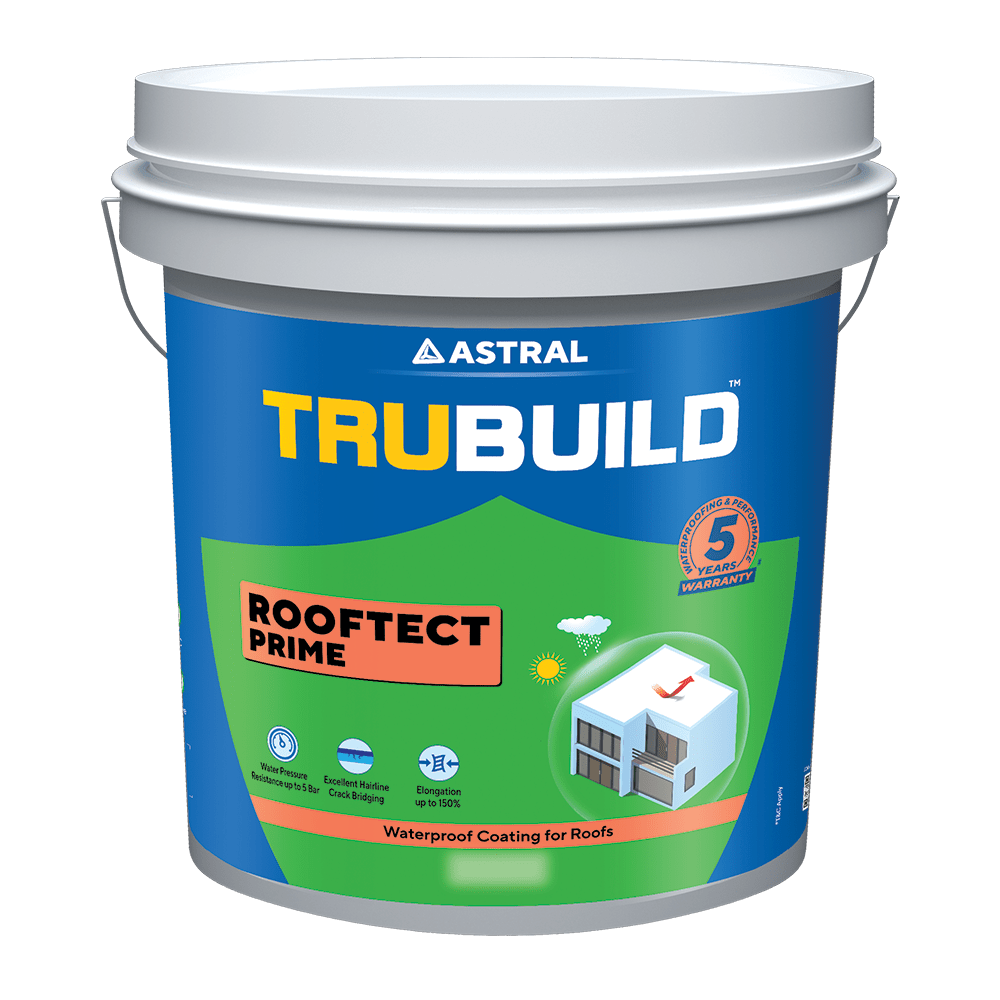
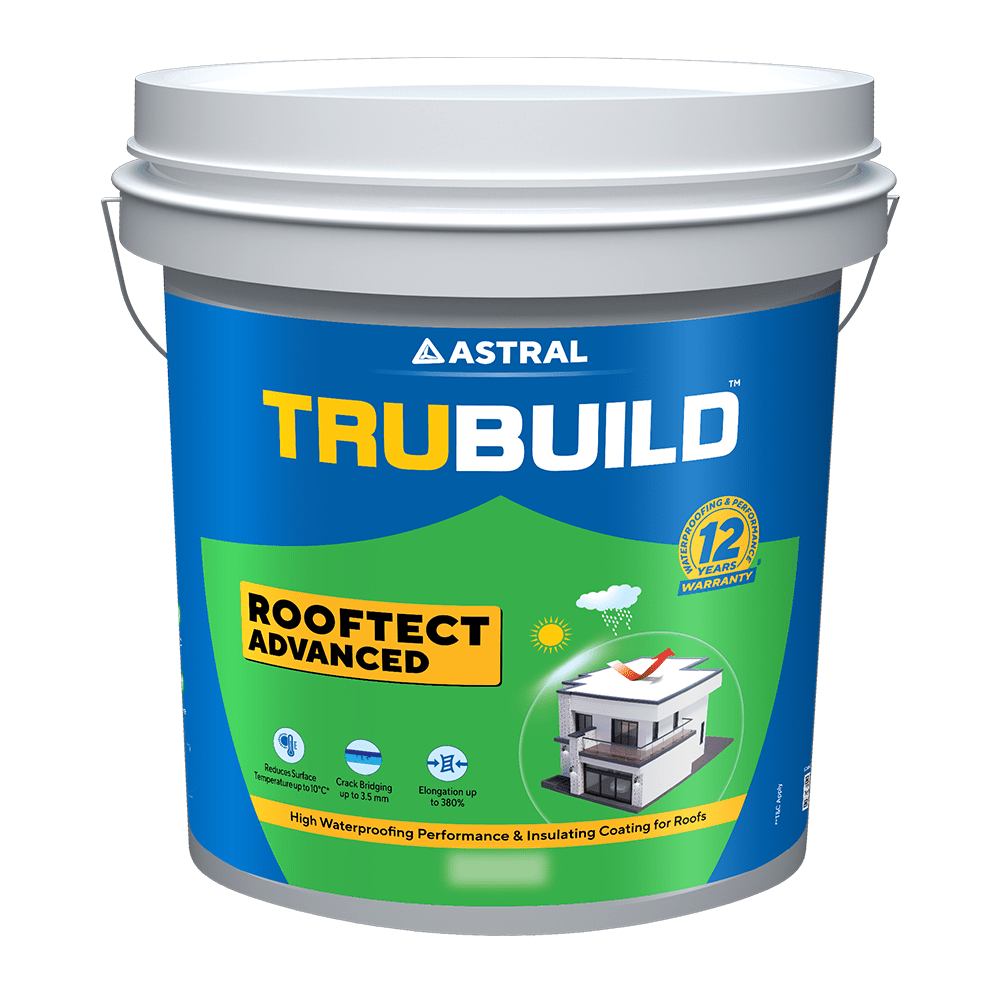
For roof protection, Rooftect Pro is a fibre-reinforced acrylic coating that reduces surface temperature by up to 10 degrees Celsius, a genuine relief in India’s scorching summers. Rooftect Advanced takes this further with a PU-acrylate formula that offers elongation of up to 220% and crack bridging of up to 2mm.
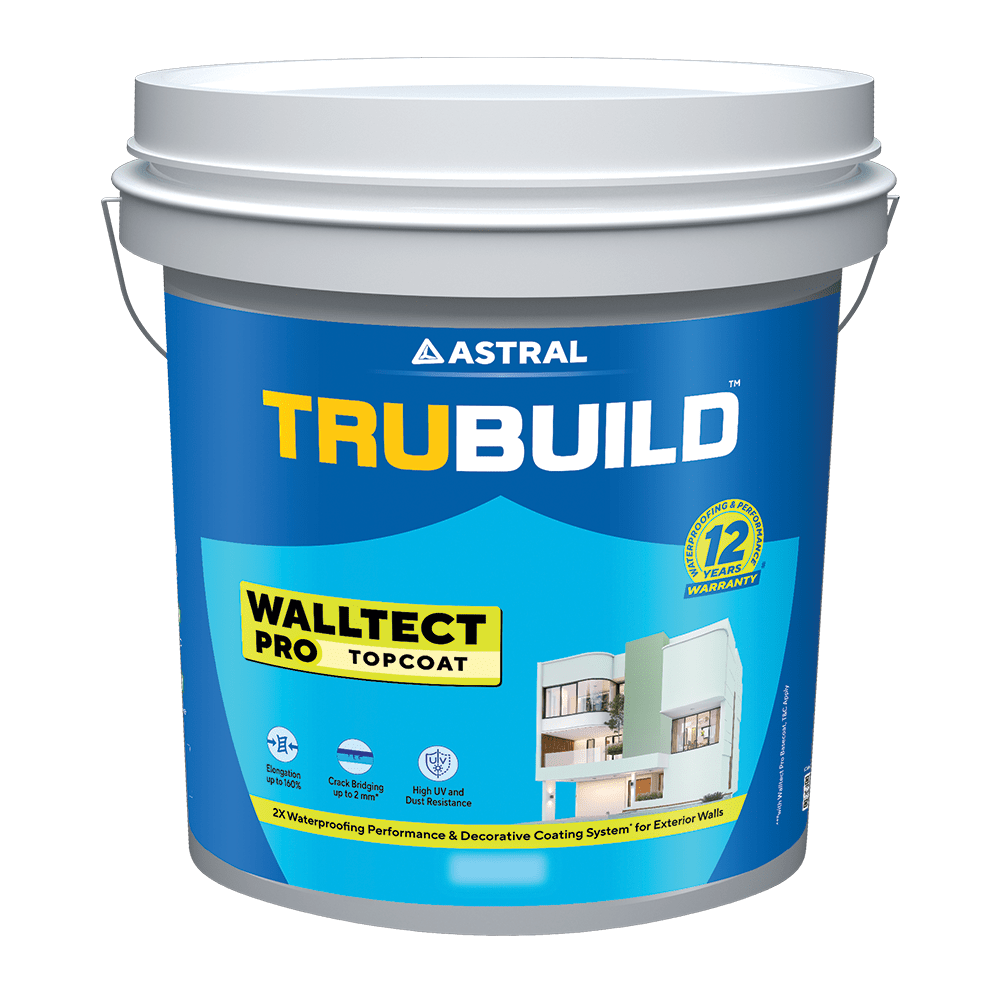
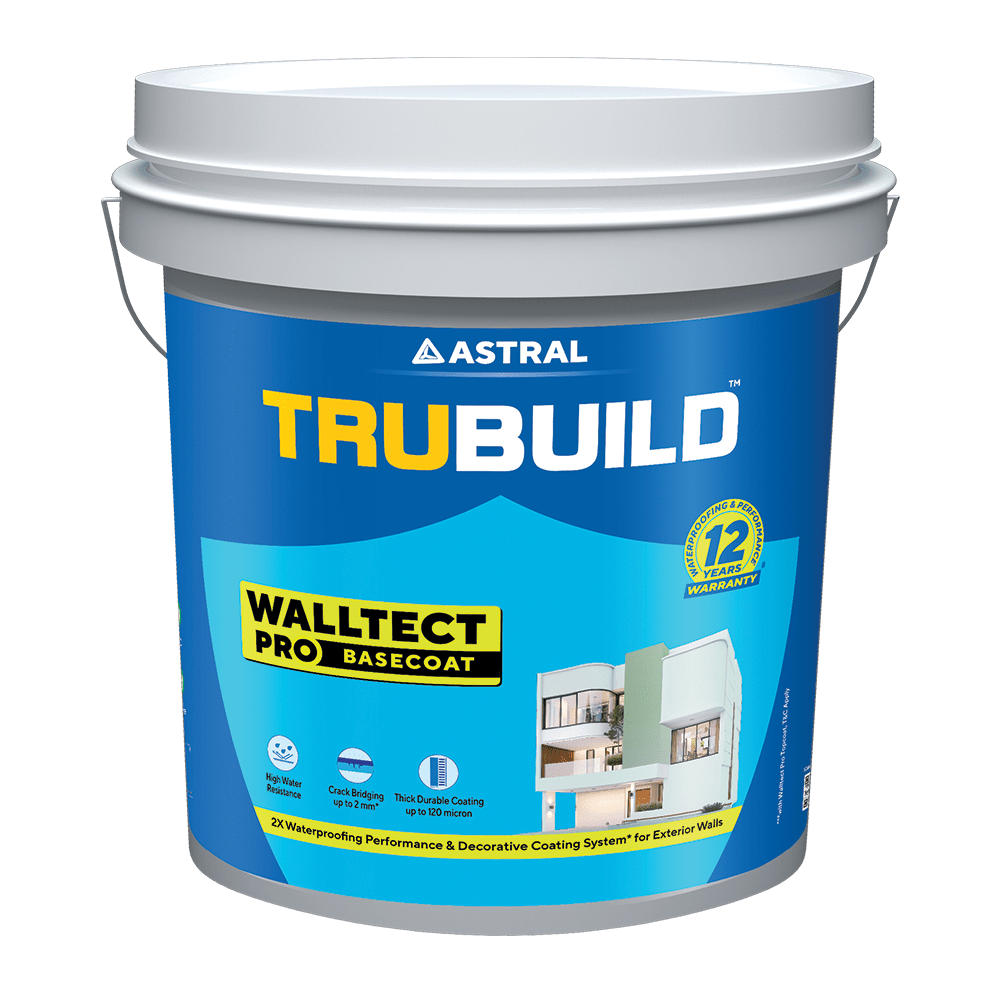
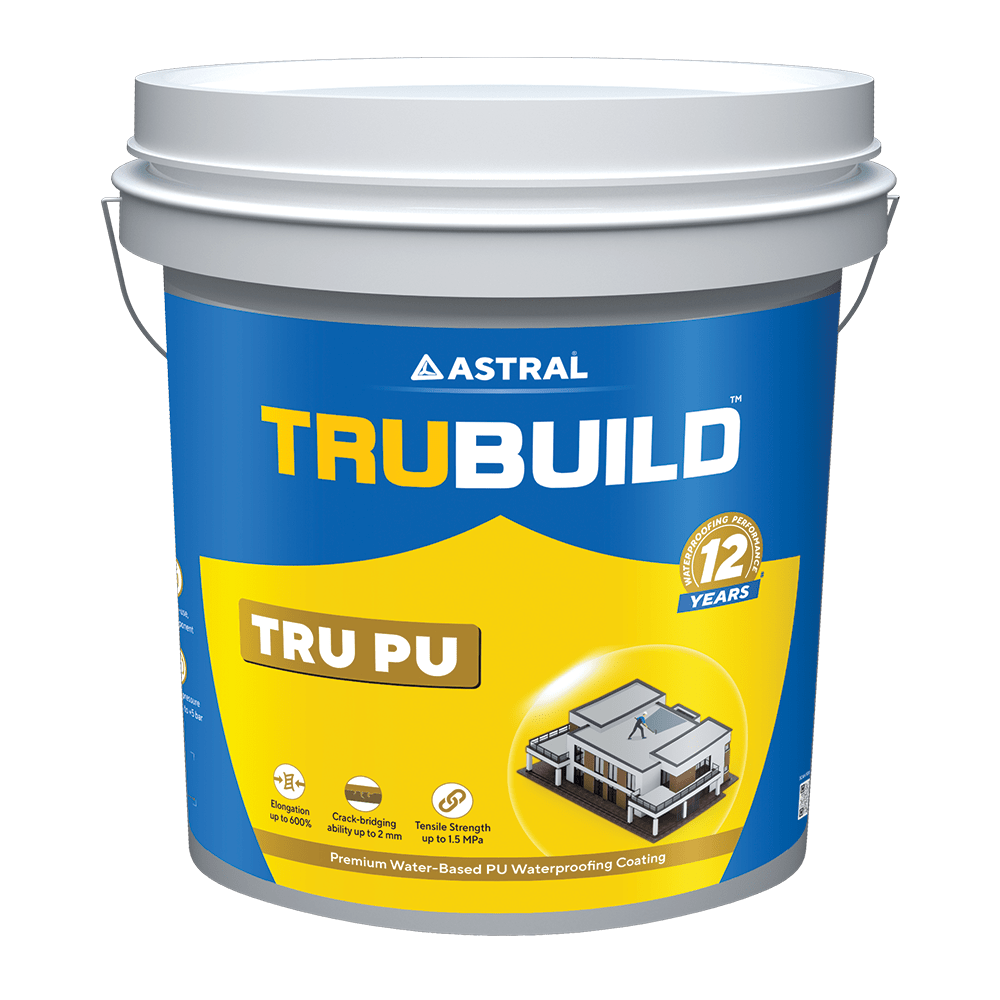
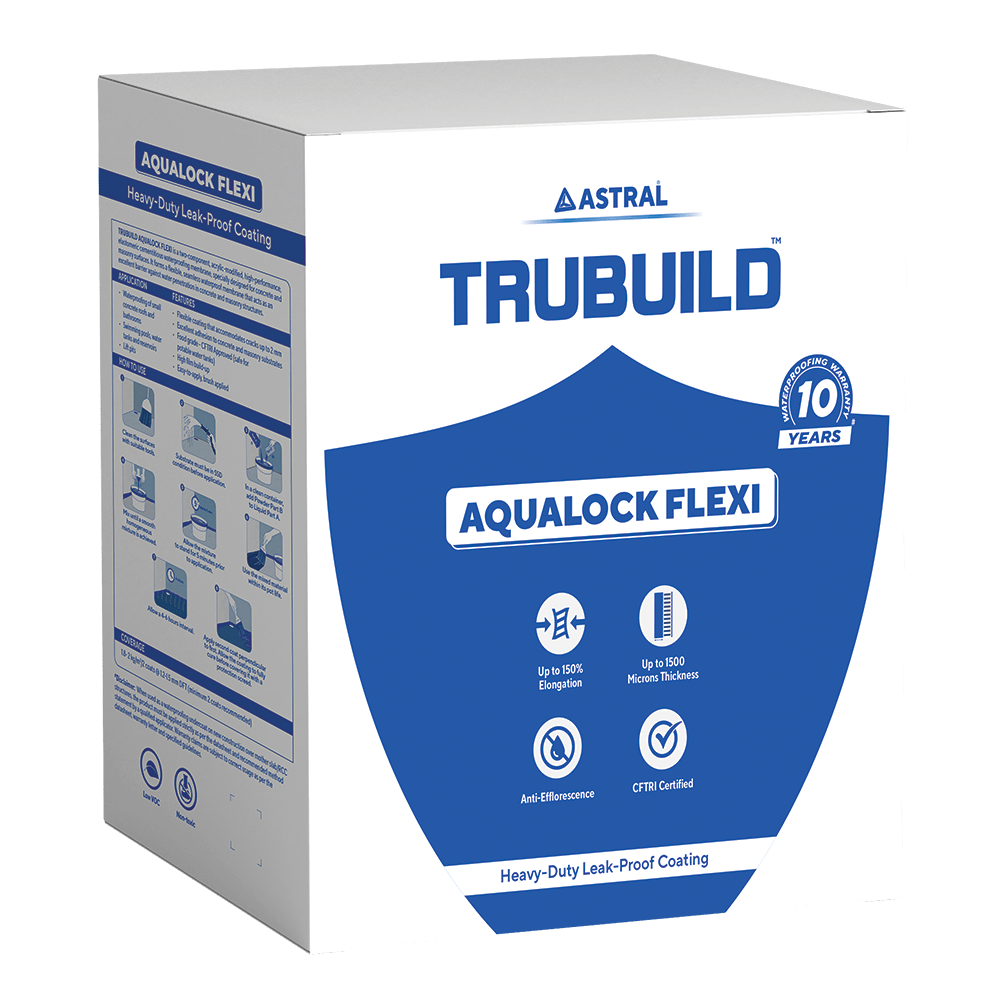
For wet areas and basements, Aqualock Flexi is a two-component cementitious coating that resists hydrostatic pressure, the force of water pushing against a surface from either side. It is CFTRI-approved and safe for use in water tanks. For external walls, the Walltect range provides elastomeric acrylic protection that blocks rain, UV rays and microbial growth. For heavy-duty roof and foundation waterproofing, TRU PU is a single-component polyurethane membrane with excellent elongation and strong hydrostatic pressure resistance.
Protecting your home from water damage starts with understanding the different types of waterproofing and matching each product to the right surface. The right waterproofing solution today prevents costly structural repairs tomorrow.
Explore Astral Trubuild’s full range of waterproofing products online.
FAQ
What are the different types of waterproofing?
The five primary types used in Indian construction include cementitious, liquid membrane, bituminous, polyurethane, and acrylic coatings. Cementitious is ideal for internal wet areas like bathrooms, while liquid membranes and polyurethane offer the flexibility needed for roofs. Bituminous coatings are best for underground foundations , and acrylics provide excellent UV resistance for external walls.
Which waterproofing product is best for roofs?
For Indian rooftops, liquid waterproofing membranes and polyurethane (PU) coatings are the top choices due to their seamless, rubber-like finish and high flexibility. Products like Astral Trubuild’s Rooftect Advanced are specifically designed for these areas, offering 220% elongation and crack-bridging capabilities up to 2mm. These solutions withstand extreme heat and heavy monsoon rains without becoming brittle.
Where are waterproofing solutions used in construction?
Waterproofing is essential for any area exposed to moisture, including terraces, balconies, and external walls to block rain penetration. It is also critical for internal "wet areas" like kitchens, bathrooms, and water storage tanks. Additionally, it is used below ground in basements, lift pits, and foundations to prevent groundwater from seeping into the structure and causing hidden damage.
Why are waterproofing products important?
While they don’t change concrete’s base strength, waterproofing products significantly extend a building's lifespan. They block moisture from reaching internal steel reinforcement, which prevents rust, expansion, and structural cracking. By addressing porosity early during the construction stage, these solutions prevent expensive repairs caused by peeling paint, damp patches, and long-term structural instability triggered by India's high humidity.

