
 Concrete and Mortar
 Exterior Waterproofing
 Professional Sealants
 Roof Waterproofing
 Substructure Waterproofing
  Tiling and Grouting
 Water Tanks and Other Areas
  Wet Areas

 Home
HomeWhy Builders Prefer Advanced Concrete Waterproofing Systems?
Mar 18, 2026

What is Concrete Waterproofing?
Concrete waterproofing is the process of applying a specialised barrier to block water from entering the tiny pores and hairline cracks of a concrete surface. Think of concrete like a very hard sponge. Thousands of microscopic channels form inside it as it dries, and water finds its way through these channels over time. Advanced coatings and membranes seal these channels completely. In modern construction across India, this step is not optional. It is a fundamental part of building something that lasts.
Why Do Concrete Structures Need Waterproofing?
Buildings face constant pressure from their environment. Rain, humidity and groundwater all push against the structure every single day. When water enters concrete, the damage goes far deeper than a visible damp patch. Water eventually reaches the steel reinforcement bars inside the concrete. Once it does, rust begins. As steel rusts, it expands, forcing the concrete to crack and break apart from within. This process silently weakens entire walls, floors and columns. Reliable concrete waterproofing breaks this cycle before it starts. The cost of a quality system is always far lower than major structural repair work years down the line.
Where is Concrete Waterproofing Used?
Moisture protection is needed across many parts of a property. Builders categorise these by the level of water exposure:
1. Basements and Foundations: In constant contact with soil moisture and groundwater, these areas need barriers that work from both the wet and dry sides.
2. Terraces and Roofs: It is the first surface to face rainfall, so it requires solutions that handle UV heat and standing water.
3. Balconies and Podiums: Flat surfaces that collect water and need seamless, gap-free coatings.
4. Water Tanks and Reservoirs: Concrete water tank waterproofing is the most demanding application, as the structure faces sustained water pressure from within and must use materials that are completely safe for stored water.
What are the Benefits of Advanced Waterproofing?
|
Benefit |
What It Means for You |
| Structural Longevity | Prevents internal steel from rusting and concrete from cracking apart |
| Healthier Living | Blocks the damp conditions that encourage mould and fungal growth |
| Lower Maintenance Costs | Reduces frequent repainting and expensive repair bills |
| Better Property Value | A leak-free building commands a stronger price in the market |
How Do You Choose the Right Solution?
The right product depends on where it will be used. Keep these factors in mind:
- Location-Specific Needs: Roofs need UV resistance. Water tanks need a non-toxic, food-safe coating.
- Flexibility: Concrete expands and contracts with temperature changes. A flexible coating moves with the structure rather than cracking away.
- Crack Bridging: Look for products that can seal hairline cracks already present in the surface.
- Certification: For water storage, the coating must be independently certified as safe for human use.
Why Choose Astral Trubuild for Concrete Waterproofing?
Instead of surface-level coatings, professional builders often turn to a combination of integral waterproofing and structural repair systems:
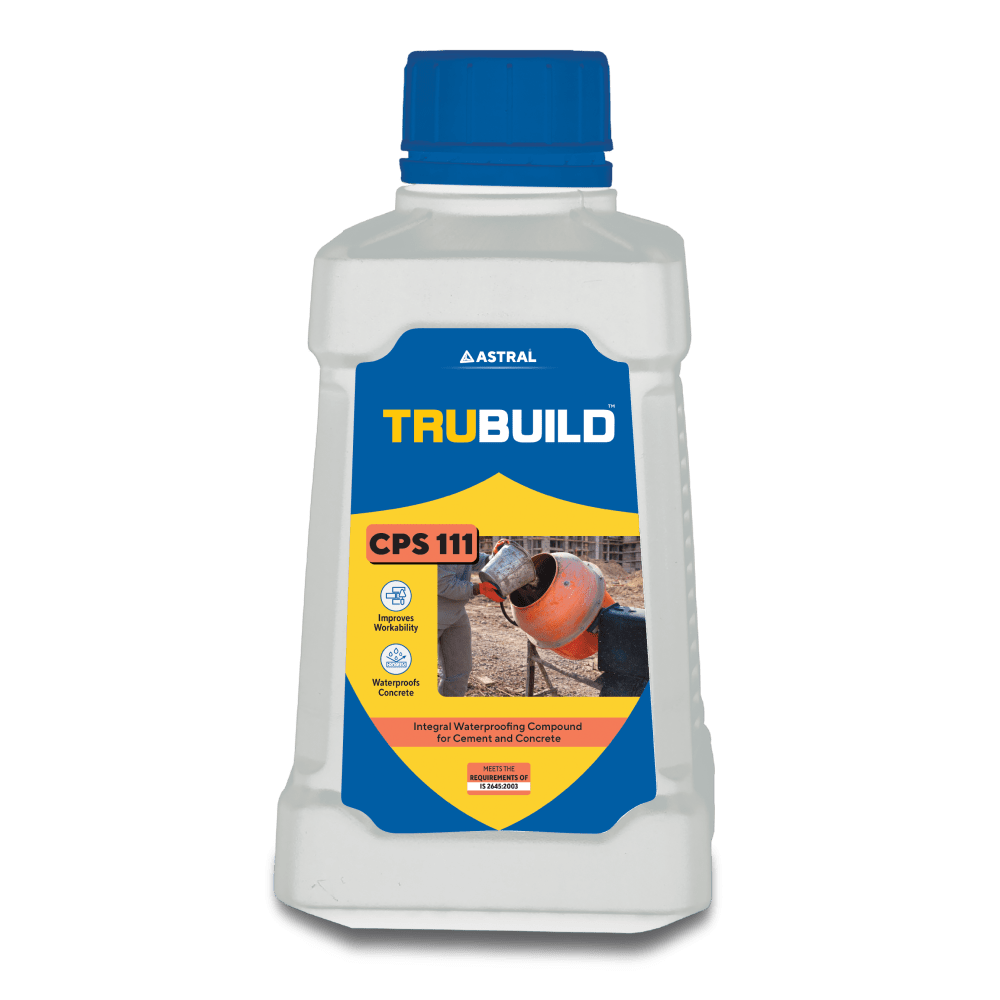
- Trubuild CPS 111 (Concrete Porosity Sealer): This is an integral waterproofing compound designed for the construction stage. It is added directly to cement concrete, mortars, and plasters to reduce permeability. By filling the ‘sponge-like’ pores of the concrete as it sets, it provides a cohesive barrier that protects reinforced steel against corrosion.
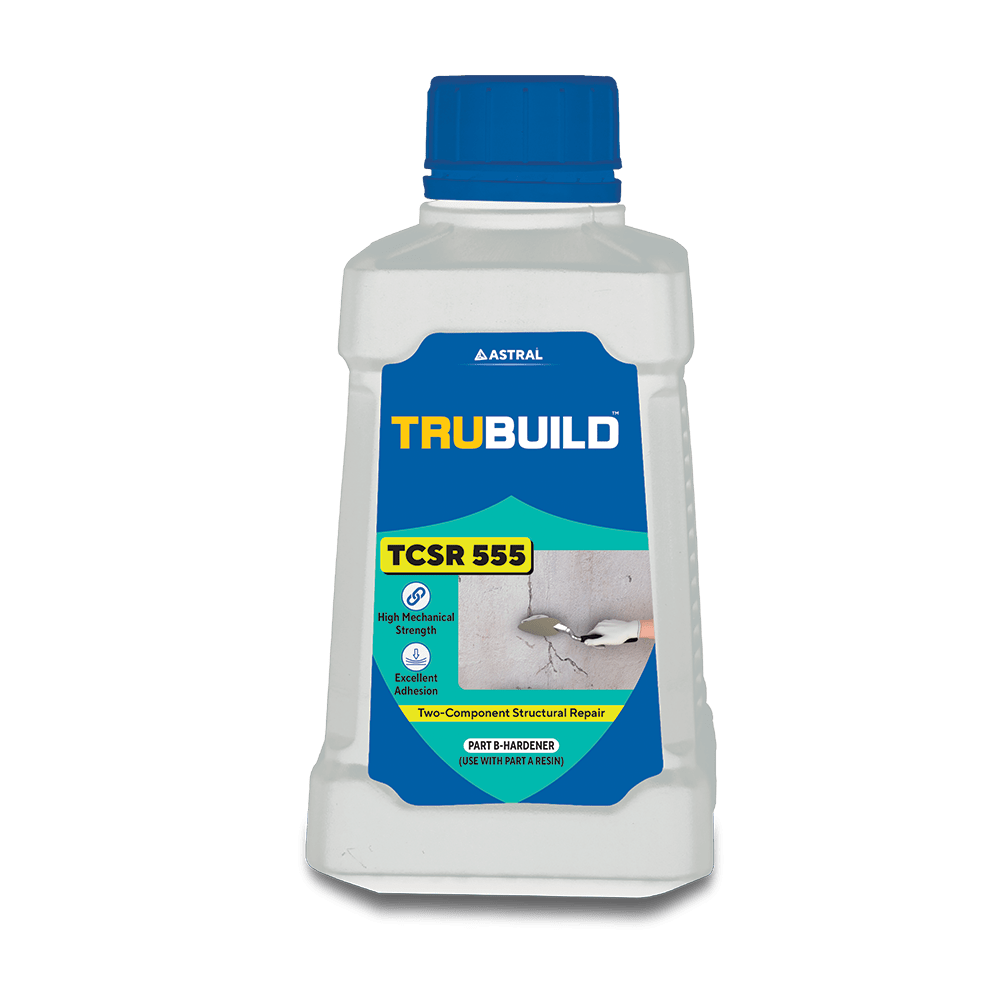
- Trubuild TCSR 555: This is a two-component, solvent-free epoxy system specifically for repairing cracked and damaged concrete structures. If a structure already has damp or wet cracks, TCSR 555 can be injected to seal them. It is also used for bonding new structural concrete to old concrete, ensuring a seamless and high-strength connection.
Where are these systems used:
- Water Tanks and Reservoirs: Concrete water tank waterproofing is demanding. CPS 111 is used in the initial mortar to make the tank walls impermeable, while TCSR 555 can be used to repair structural cracks or seal high-pressure leaks.
- Terraces and Roofs: CPS 111 is ideal for the cement-sand mortar used in roof slabs to prevent seepage into the rooms below.
- Basements and Foundations: These areas face constant groundwater pressure. Using a porosity sealer ensures the foundation remains dry and the steel remains rust-free.
Water is a silent threat to concrete structures across India, especially during monsoon season. Investing in the right concrete waterproofing system protects the structure, the people inside it, and the property’s long-term value.
FAQ
Why is concrete waterproofing important?
Concrete is naturally porous. Without a protective coating, water seeps through microscopic channels, causing dampness, mould growth and rusting of the internal steel reinforcements. As rust expands inside the concrete, it forces cracks and structural failure over time. A proper system stops this cycle early, protecting both the residents' health and the building's long-term stability.
How to waterproof a concrete water tank?
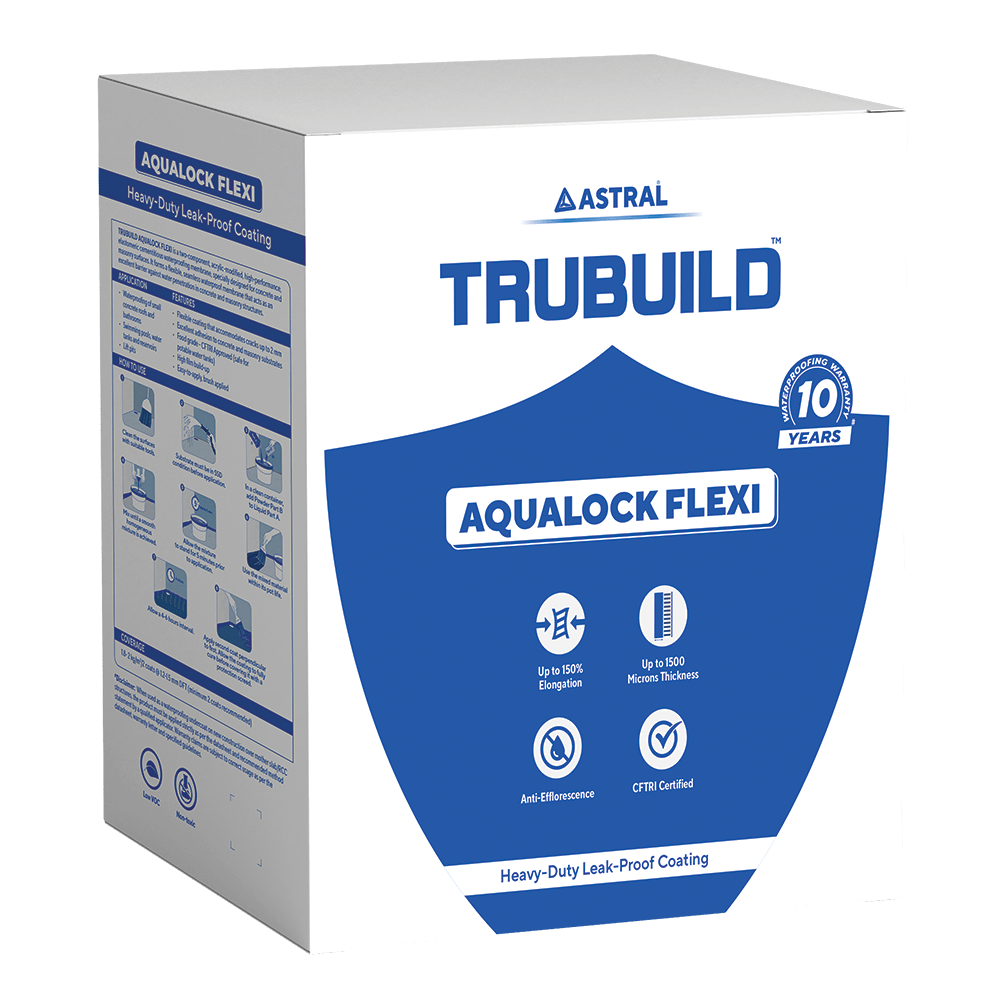
Start by cleaning the surface thoroughly to remove dust, grease and loose material. Fill any existing cracks with a suitable repair mortar. Once the surface is in a damp but surface-dry condition, apply Trubuild Aqualock Flexi in a minimum of two coats to reach a total thickness of 1.2 to 1.5 mm. Allow the tank to cure for at least seven days before filling it with water.
Which waterproofing is best for concrete?
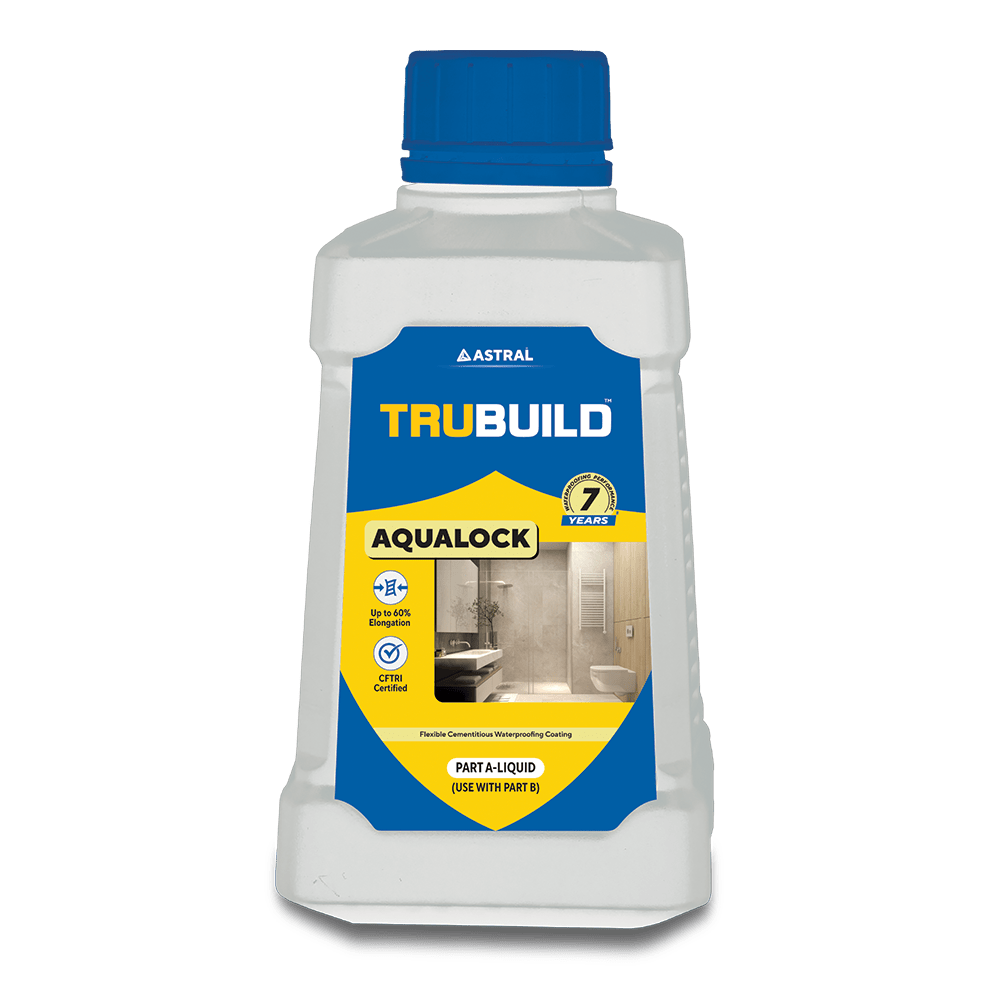
The best choice depends on the application. For wet areas like bathrooms and balconies, Trubuild Aqualock offers strong, reliable protection. For concrete water tank waterproofing or surfaces subject to movement and sustained water pressure, Trubuild Aqualock Flexi is the better option. Its elongation of over 150% and crack-bridging capacity of up to 2 mm allow it to handle structural shifts without losing its seal.

