
 Concrete and Mortar
 Exterior Waterproofing
 Professional Sealants
 Roof Waterproofing
 Substructure Waterproofing
  Tiling and Grouting
 Water Tanks and Other Areas
  Wet Areas

 Home
HomeHow to Waterproof a Roof?
Feb 18, 2026
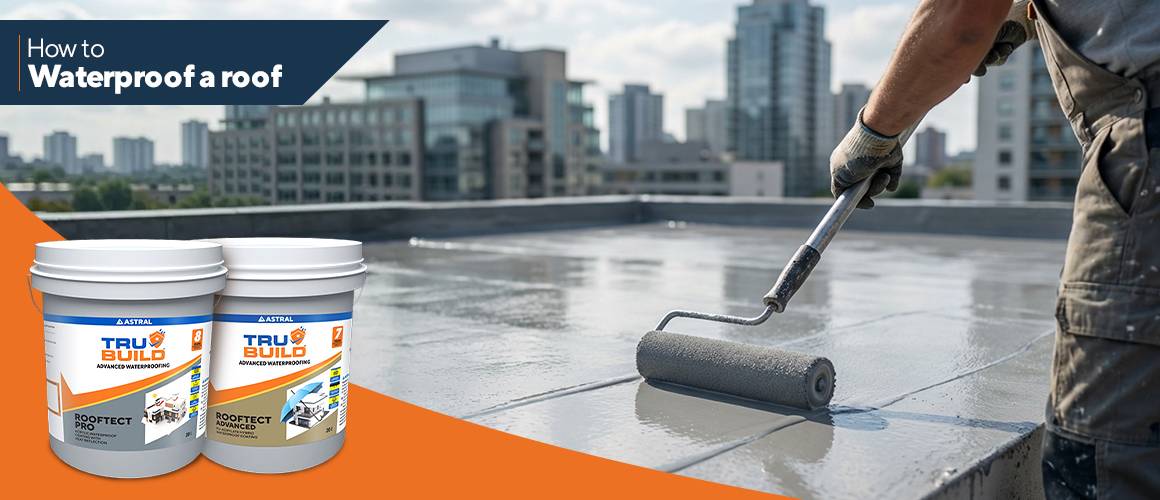
That damp patch spreading across the ceiling after the first heavy shower, it is a sign millions of Indian homeowners know too well. Leaky roofs stain walls and they also corrode steel reinforcements, drive up indoor temperatures and rack up repair bills year after year. Understanding how to waterproof a roof is the starting point for stopping all of this. This guide breaks down the causes of roof leakage, the best methods for waterproofing of roof surfaces and the right products to use for lasting results.
Why Is Roof Waterproofing Important for Every Home?
India’s climate puts roofs through constant stress. Extreme summer heat followed by heavy monsoon rains creates cycles of expansion and contraction that weaken the surface over time. Without a proper waterproofing of roof, water seeps into the concrete slab and triggers a chain of damage:
- Damp patches and mould growth on interior walls and ceilings
- Corrosion of steel reinforcements, which weakens the structure
- Higher indoor temperatures during the summer months
- Frequent, costly repair cycles that compound over the years
A quality roof waterproofing system stops water at the surface before any of this begins.
What Are the Common Causes of Roof Leakage?
Knowing why leaks occur makes the waterproofing of roof surfaces far more targeted and effective. The most frequent causes include:
- Cracks: Thermal expansion and structural movement create gaps in the slab over time.
- Poor Drainage: Stagnant water on flat roofs puts continuous pressure on the surface.
- UV Degradation: Prolonged sun exposure breaks down standard cement finishes, making them porous.
- Faulty Joints and Penetrations: Areas around pipes, HVAC units and solar panels are common weak spots.
How to Waterproof a Roof: Step-by-Step Process
The long-term success of any roof waterproofing application depends on how well the surface is prepared. Here is the standard process for liquid-applied membranes:
Step 1: Surface Preparation
Remove all loose material, oil, debris and old coatings from the roof using mechanical means. A clean, sound base is non-negotiable for good adhesion.
Step 2: Crack Repair
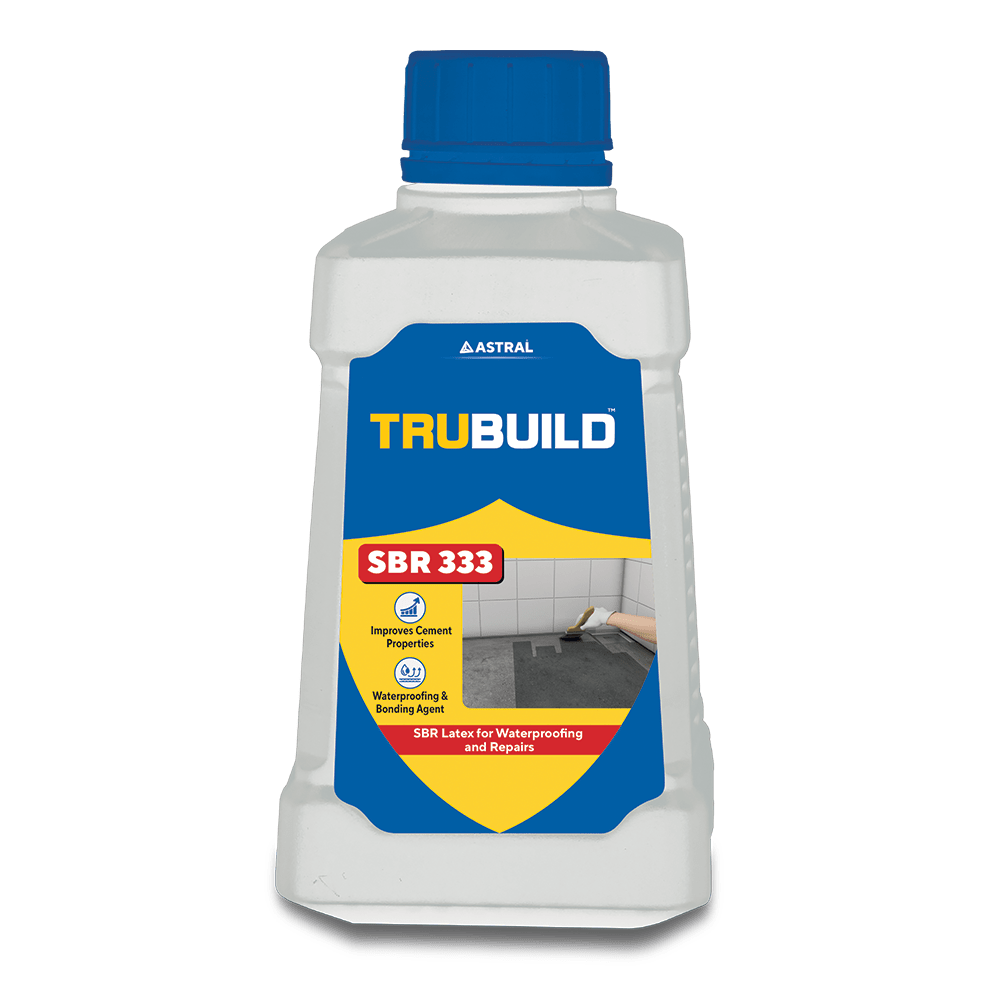
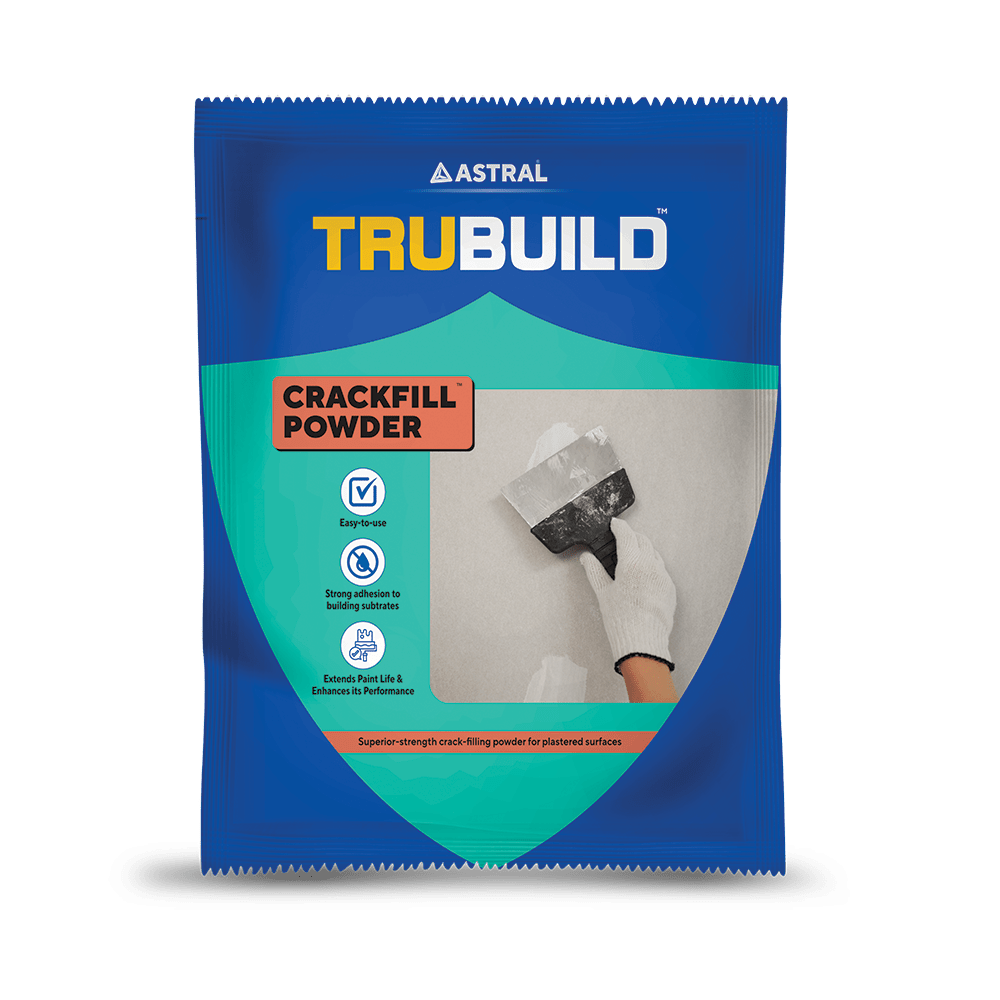
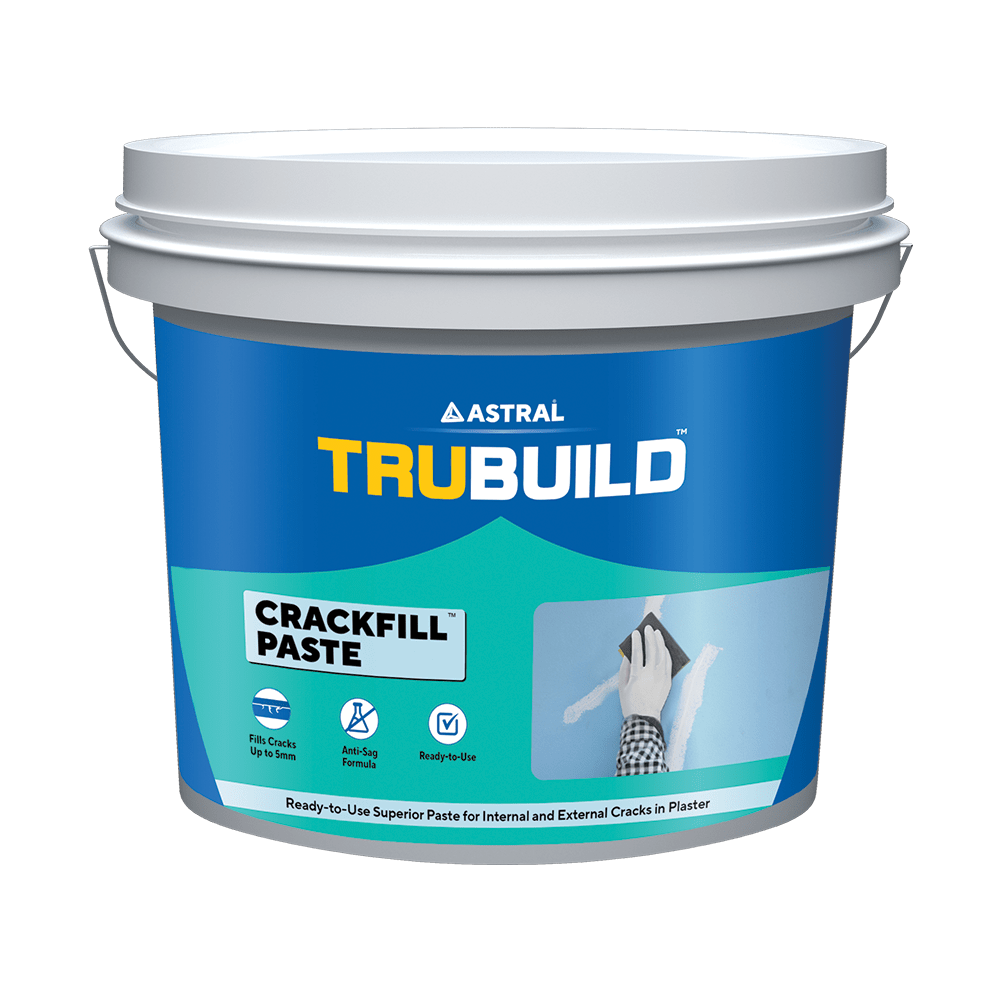
Fill cracks up to 5 mm with Trubuild CFP 425 after making a V-groove. For larger cracks, use a polymer-modified mortar prepared with Trubuild WPL 333 or Trubuild BWP 222.
Step 3: Angle Fillets
Apply a polymer-modified mortar at wall-to-slab junctions to create a smooth curved fillet. This prevents water from pooling at corners and edges.
Step 4: Priming
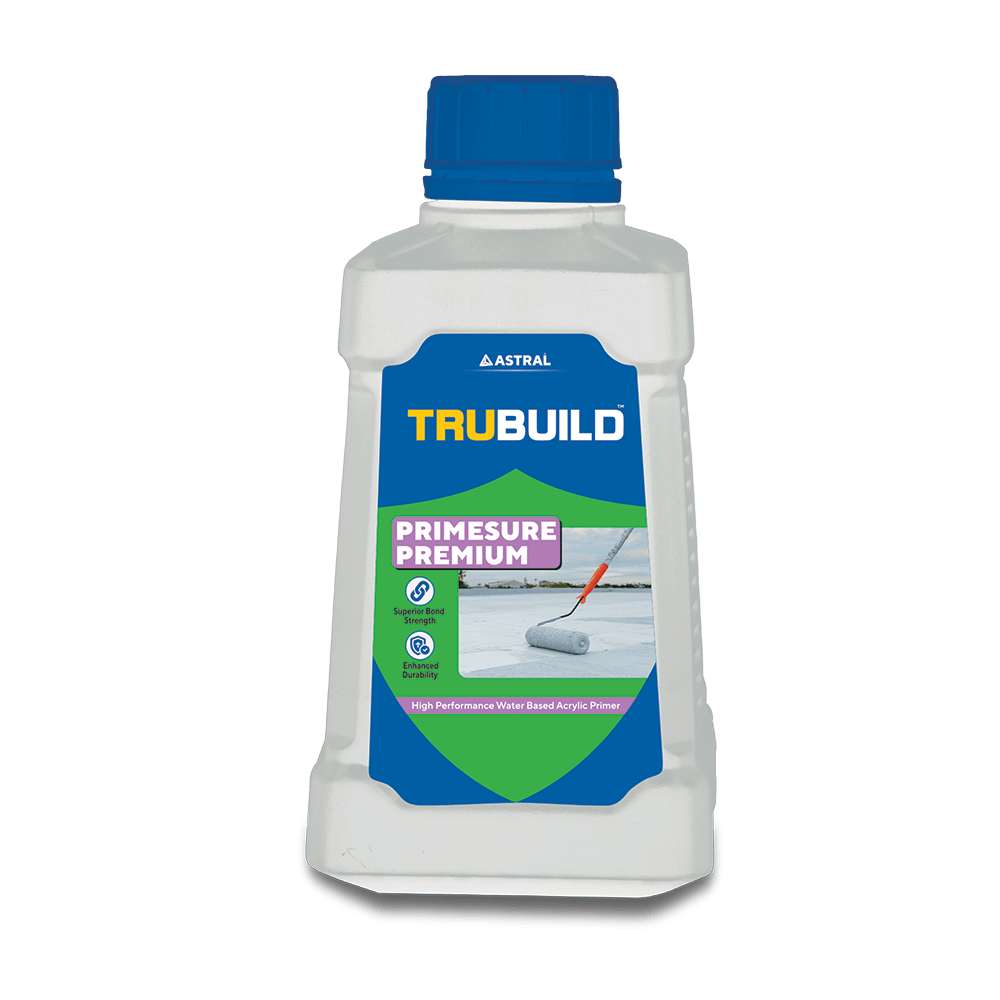
Apply a self-primer coat on the substrate in Saturated Dry Condition (SSD). For smoother surfaces that need stronger bonding, Trubuild Primesure Premium is the recommended option.
Step 5: Applying the Coating
Apply the first coat horizontally. Once dry (minimum 4-6 hours), apply the second coat vertically. Allow the full system to air-cure for 7-10 days. A pond test at 50 mm height for 24 hours confirms the system is watertight.
What Are the Best Methods for Roof Waterproofing?
1. Liquid Waterproofing Membrane
A liquid-applied coating cures into a seamless, rubber-like film that flexes with the surface. Trubuild Rooftect Pro is a fibre-reinforced acrylic product with up to 350% elongation, making it ideal for flat Indian roofs that experience regular thermal movement.
2. Cementitious Waterproofing
Cement-based systems are easy to apply and work well in wet areas. They tend to be less flexible than liquid membranes, which makes them less suited to roofs with significant thermal expansion.
3. Bituminous Waterproofing
Asphalt-based systems are a traditional choice but can become brittle under prolonged UV exposure. In Indian conditions, a protective topping is often required.
4. Polyurethane Waterproofing
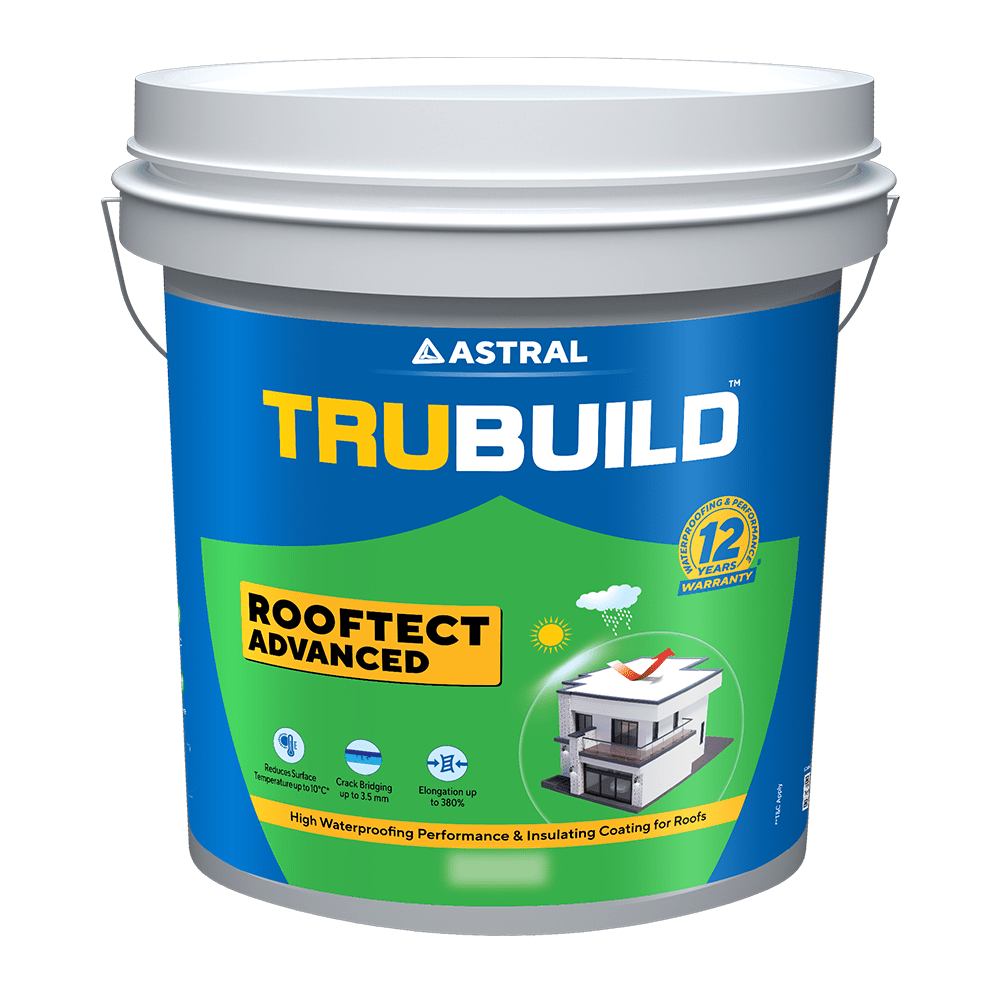
PU systems deliver high flexibility and durability. Trubuild Rooftect Advanced uses a PU acrylate formulation with elongation of over 220% and crack-bridging up to 2 mm, a strong choice for complex roof shapes.
5. Acrylic Waterproof Coatings
Water-based and eco-friendly, acrylic coatings offer UV resistance, good breathability and strong adhesion. They are among the most practical options for residential roof waterproofing in India.
Astral Trubuild Waterproofing Solutions
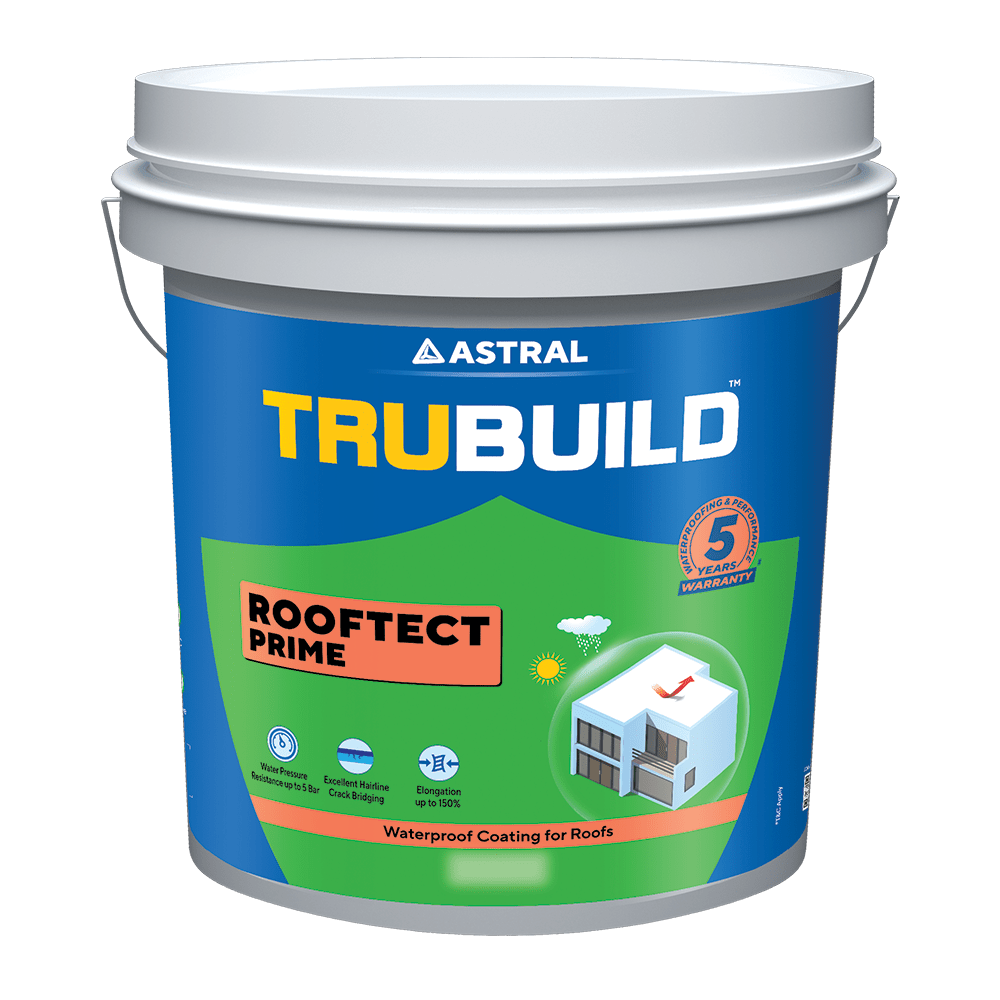
At Astral Trubuild, we offer a range of roof waterproofing products built for Indian climatic conditions. Trubuild Rooftect Pro is a single-component, acrylic coating that forms a seamless, breathable film with exceptional elongation and UV resistance. Trubuild Rooftect Advanced takes performance further with a PU acrylate base, delivering stronger bonding and greater durability for demanding applications. Both products carry an SRI value of 107 and reduce roof surface temperatures by up to 10°C. They are available in 1 L, 4 L and 20 L packs, suited for brick bat coba, cement mortar screed, flat and sloppy roofs.
Explore Astral Trubuild roof waterproofing solutions today!
FAQ
What is the best way to waterproof a roof?
For Indian flat roofs, a liquid-applied membrane is widely recommended. Products like Trubuild Rooftect Pro form a seamless, flexible film that handles thermal expansion well. Pair the coating with thorough crack repair and priming for proper waterproofing of roof. The result is a watertight surface that holds up through monsoon rains and harsh summer heat.
How long does roof waterproofing last?
A high-quality system, applied with good surface preparation, delivers protection for several years. Trubuild Rooftect Pro has a shelf life of 36 months in its container. Once applied, it forms a durable, weather-resistant film. Regular post-monsoon inspections help spot areas that may need attention over time.
Can roof waterproofing stop leakage completely
Yes. A professionally applied system that covers surface preparation, crack filling, angle fillet creation and proper curing can stop leakage completely. Each step in the process plays a role. Skipping any part reduces performance and can lead to early failure. Following the full application system is key to lasting results.
Which material is best for roof waterproofing?
PU acrylate and fibre-reinforced acrylic coatings are excellent choices for most Indian homes. They offer the right balance of flexibility, UV resistance and heat reflection. Both Trubuild Rooftect Pro and Trubuild Rooftect Advanced are engineered specifically for Indian conditions and backed by detailed technical support from the Astral Trubuild team.

