
 Concrete and Mortar
 Exterior Waterproofing
 Professional Sealants
 Roof Waterproofing
 Substructure Waterproofing
  Tiling and Grouting
 Water Tanks and Other Areas
  Wet Areas

 Home
HomeHow to Identify Waterproofing Failure in Toilets?
Nov 10, 2025

Waterproofing in toilets keeps your home safe from water damage, dampness and costly repairs. Spotting failure early helps prevent bigger issues that can be expensive and inconvenient. Discover how to go about it and what are the right solutions for waterproofing toilets.
Why Waterproofing in Toilet Matters?
Bathroom spaces in India face constant water exposure, especially in urban settings with frequent use. Traditional materials combined with humid climates can increase risks, so regular checks and maintenance are vital to prevent leaks, cracks and health hazards like mould. This is why waterproofing of bathrooms and toilets is necessary.
Signs of Failure in the Waterproofing of Bathrooms and Toilets
Visual Clues You Can Spot
1. Damp patches or peeling paint near toilet areas: Indicates moisture creeping through walls or floors.
2. Water leaking from floor joints or toilet base: Often noticeable as puddles or wet spots around the pan.
3. Cracks in tiles or flooring: Hairline cracks give water a way through to underlying layers.
4. Loose or hollow tiles: Water seepage loosens adhesives, leading to gaps in tile work.
5. White powdery deposits (efflorescence): Salts brought out by water suggest hidden leaks.
6. Persistent musty smells or sulphur odour: Indicates water trapped in wall cavities.
7. Black or green spots on walls or ceilings: Sign of stubborn mould and mildew due to lingering moisture.
Subtle Signs Not to Miss
1. Soft spots on flooring or walls: A gentle press reveals sponginess, an indicator of damage below the surface, which can be due to failure of waterproofing in toilet.
2. Water pooling near drains or toilet corners: Poor drainage or improper slope increases leakage risk.
3. Grout deterioration and gaps between tiles: Worn grout lines are one of the earliest failure points.
Common Causes Behind Failure of Waterproofing in Toilet
- Inadequate surface preparation before applying waterproofing layers.
- Using low-quality materials or skipping recommended steps during waterproofing of bathrooms and toilets (e.g., membranes, primers, sealants).
- Wrong installation techniques or poor attention to corners, edges and joints. During waterproofing in toilet
- Structural movement, frequent plumbing repairs or high water pressure causing cracks and pipe leaks.
- Poor ventilation leading to constant humidity and mould growth.
Best Toilet Waterproofing Materials in India
Here is a quick table on popular bathroom and toilet waterproofing materials favoured in Indian homes:
|
Material |
Features |
Applications |
| Cementitious coatings |
Easy to apply, durable |
Walls, floors |
| Liquid waterproofing |
Flexible, can reach corners |
Joints, edges |
| Sheet membranes |
High protection, strong barrier |
Under tile, floor |
| Silicone sealants |
Ideal for gaps, high flexibility |
Corners, pipe areas |
| Acrylic-based coatings |
Fast drying, UV resistant |
Walls, junctions |
| Polymer-modified cement |
Extra adhesion, prevents shrinkage |
Under tiles |
How to Identify and Fix Issues with the Waterproofing of Bathrooms and Toilets?
Step 1: Inspect visual signs, look for any changes in toilet waterproofing materials, paint, grout lines, tile surfaces and odours.
Step 2: Test for leaks, pour water and let it stagnate on suspect areas for 24 hours to spot any seepage.
Step 3: Examine the drain slope; water should flow quickly to drains, not stagnate in corners.
Step 4: Tap tiles and feel for hollowness or gaps, which sound different from healthy, solid sounds.
Step 5: Check behind toilet base and around pipe connections for moisture.
Maintenance and Prevention for Waterproofing in Toilet
1. Clean and reseal grout lines regularly with recommended sealants
2. Keep drains unclogged and flooring inclined towards the drain openings
3. Use pH-neutral cleaners to preserve waterproof coatings
4. Schedule annual checks for waterproofing layers because renewing coatings may be needed
5. Repair any pipe leaks or loose fittings at the earliest sign to avoid further problems
Astral Trubuild’s Solution for Waterproofing of Bathrooms and Toilets
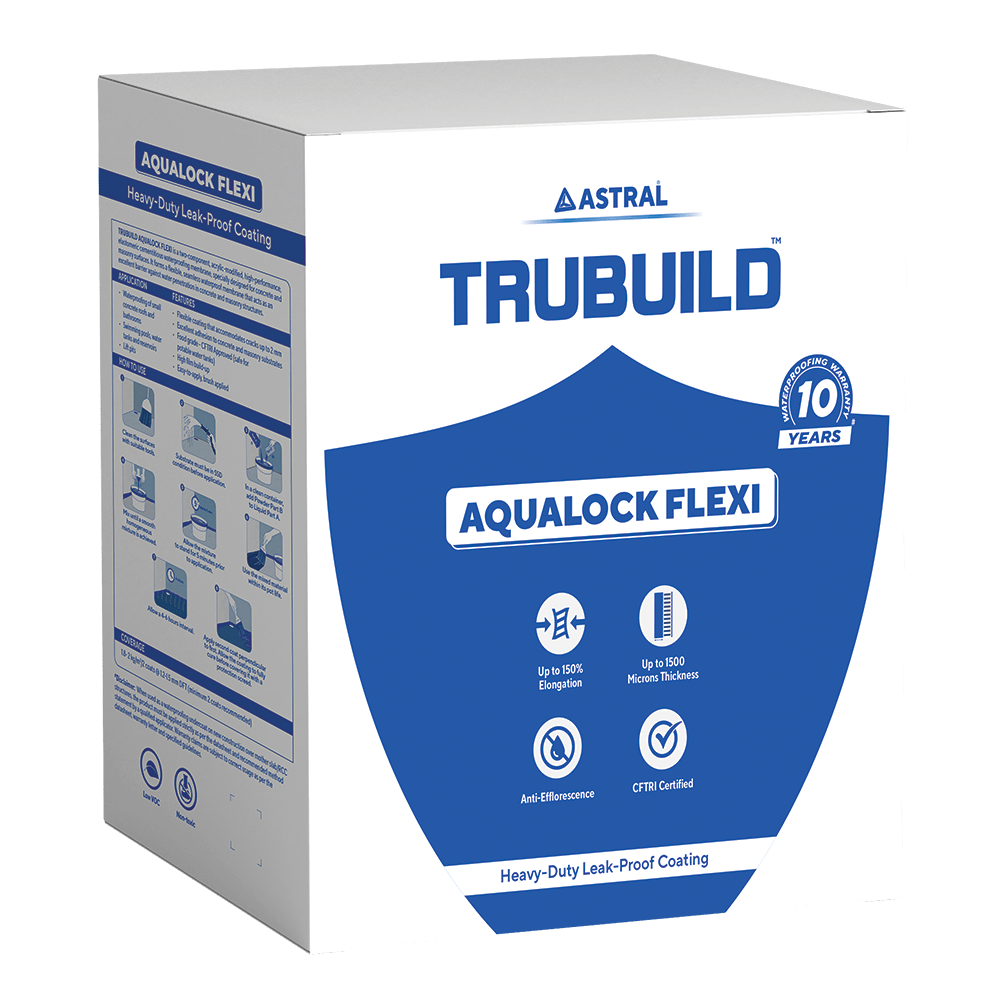
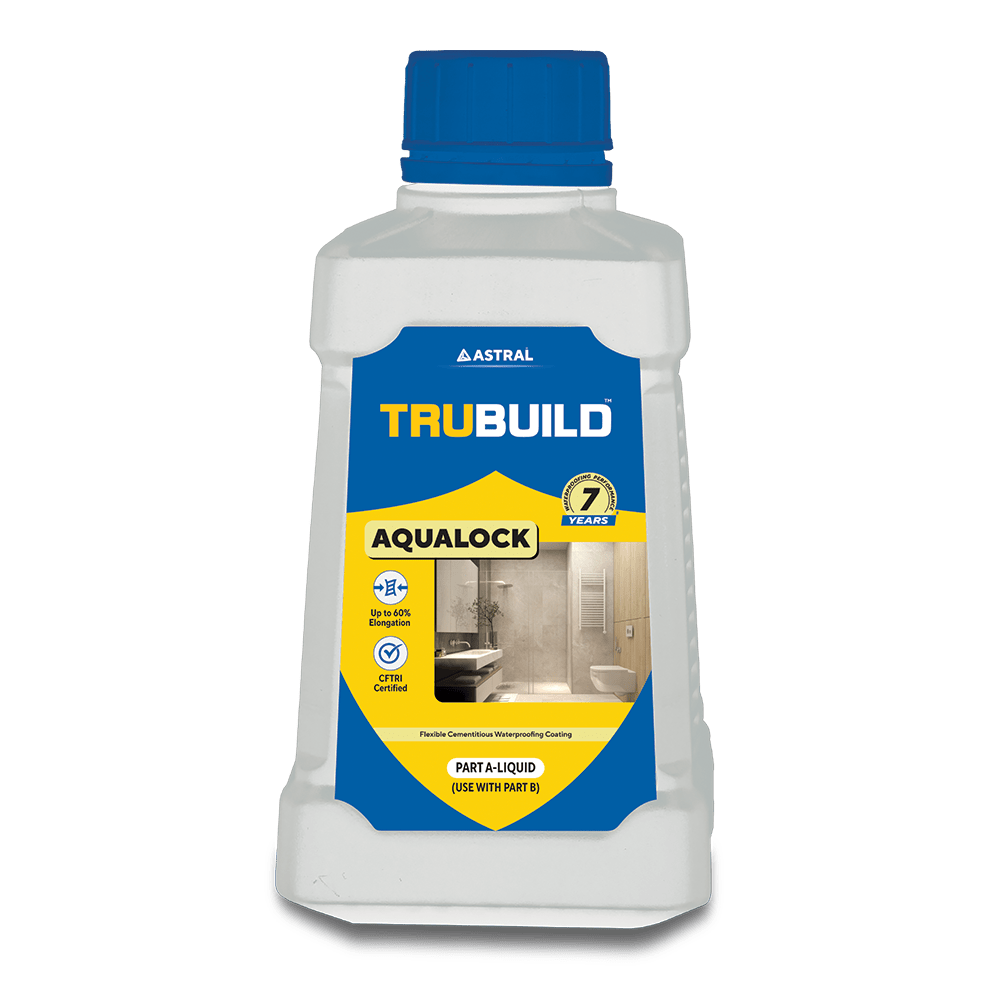
Trubuild Aqualock is a waterproofing membrane made with acrylic-modified cement that is made for concrete and masonry surfaces. The product comes in a ready-to-mix kit, simply combine the powder with the acrylic emulsion, then apply the mixture. Once applied, it forms a flexible, seamless coating that acts as a strong water barrier. It can be applied to damp surfaces, which is a quality for bathrooms and toilets. The barrier helps to protect concrete and masonry from moisture and leaks. Explore the full range of products solutions for wet area waterproofing at Astral Trubuild today!
FAQ
What if there is still dampness after repairs?
Further investigation into the bathroom or toilet waterproofing material used and the installation method may be needed. Sometimes, replacing failed membranes is necessary for a long-term fix of the waterproofing of bathrooms and toilets.
How long does waterproofing last in Indian toilets?
With regular maintenance and good materials, waterproofing can last from 5 to 10 years. Renewal or repairs may be needed based on use, the climate and also installation quality.
What is the best time to check waterproofing?
At least once a year, especially before the monsoon, is recommended for Indian homes.

