
 Concrete and Mortar
 Exterior Waterproofing
 Professional Sealants
 Roof Waterproofing
 Substructure Waterproofing
  Tiling and Grouting
 Water Tanks and Other Areas
  Wet Areas

 Home
HomeWhy Exterior Wall Coatings Are Essential for Modern Buildings?
Mar 5, 2026

Have you ever noticed dark patches on your bedroom ceiling after a heavy monsoon week in Mumbai or Delhi? Or perhaps you have seen fine, hair-like cracks spreading across your bungalow’s outer facade. They are early warnings that your structure is fighting a losing battle against the elements. In the current Indian climate, where heatwaves are followed by record-breaking rainfall, the outer layer of your home needs more than just paint. It requires a protective shield.
Modern architecture focuses on sleek designs and large surfaces, but these structures are often more vulnerable to thermal expansion and moisture ingress. This is where high-performance exterior wall coatings come into play. They act as a protective barriers that keep your interiors dry and your structure strong for decades.
What are Exterior Wall Coatings?
Think of an exterior wall coating as a heavy-duty, functional layer applied to the outer surfaces of a building. While regular paint provides colour, these specialised coatings are engineered to provide a thick, flexible and water-resistant finish. They are designed to withstand harsh UV rays, extreme temperature shifts and lashing rain without losing their bond to the wall.
What are the Benefits of Exterior Wall Waterproofing?
Choosing quality exterior wall waterproofing offers more than just peace of mind during the rainy season. It fundamentally changes how a building ages.
1. Structural longevity: Water is the biggest enemy of steel reinforcements inside concrete. By stopping water at the surface, you can prevent the rusting of internal bars and the gradual weakening of pillars and walls.
2. Healthier interiors: Damp walls are breeding grounds for mould and mildew. These fungi release spores that cause respiratory issues for children and the elderly. Effective exterior waterproofing also helps to keep indoor air quality safe.
3. Temperature regulation: Many modern coatings have sunlight reflective properties. It helps to keep the rooms cooler.
4. Long-term cost savings: The initial application costs more than a basic paint job, but it saves money over time. Frequent repairs for dampness or peeling plaster become far less likely.
What Are the Different Types of Exterior Wall Coatings?
The choice of coating depends on the age of the building, the local climate and the existing surface condition. Here are the different types of exterior wall coatings that can be considered:
1. Acrylic Coatings
These are water-based and very popular for residential projects. They provide good UV resistance and are easy to apply. They suit areas with moderate rainfall and homeowners who want a wide variety of colour options without compromising on basic protection.
2. Elastomeric Coatings
This is a superior choice for buildings in coastal regions or areas with high humidity. Elastomeric coatings are flexible like rubber. They can stretch and return to their original shape. When a small crack develops in the wall due to heat, the film stretches over it instead of snapping. This crack-bridging ability is a defining feature of high-performance exterior wall coatings that are made for India’s climate conditions.
3. Cement-Based Coatings
These are often used on new constructions or raw concrete surfaces. They create a strong, rigid bond with the substrate. They are excellent for preventing water ingress but are less flexible than elastomeric options.
|
Feature |
Acrylic | Elastomeric |
Cement-Based |
|
Flexibility |
Moderate | High | Low |
| Water Resistance | Good | Excellent | Very High |
| Ideal For | General homes | High-rise and coastal |
New concrete |
Signs Your Exterior Walls Need Waterproofing
It is better to act before a leak becomes a flood. If you notice any of these signs, your current exterior wall coatings may have failed:
- Hairline cracks: Even tiny cracks can act as a straw, sucking rainwater deep into the bricks via capillary action.
- Peeling or flaking paint: When water gets trapped between the wall and the paint film, it pushes the paint away and causes it to bubble or fall off.
- Damp patches: Darker spots on the outside or inside of walls indicate that moisture is already sitting within the structure.
- Efflorescence: The white, powdery salt deposits you see on brickwork or plaster. This occurs when water dissolves minerals inside the wall and carries them to the surface.
How Does Exterior Waterproofing Protect Buildings?
The science behind exterior waterproofing is simple yet effective. Most masonry materials, like brick and concrete, are naturally porous. Under a microscope, they look like a sponge with millions of tiny holes.
When you apply a high-quality coating, it fills these voids or covers them with a water-repelling membrane. During a storm, water beads up and rolls off the surface instead of being absorbed. Advanced exterior waterproofing solutions penetrate deep into the surface and form a permanent barrier that becomes part of the wall itself. The building’s wall surface allows internal moisture vapour to escape and it also blocks external water from entering.
Why Choose Astral Trubuild Exterior Wall Coatings?
Astral Trubuild offers a dedicated range of exterior coatings built for India’s demanding climate. The Trubuild WPC 666 is an acrylic-based elastomeric coating with UV stability. It also offers microbial resistance and a minimum elongation of 250%. It forms a thick, seamless film on external facades and masonry walls, with nil water permeability.
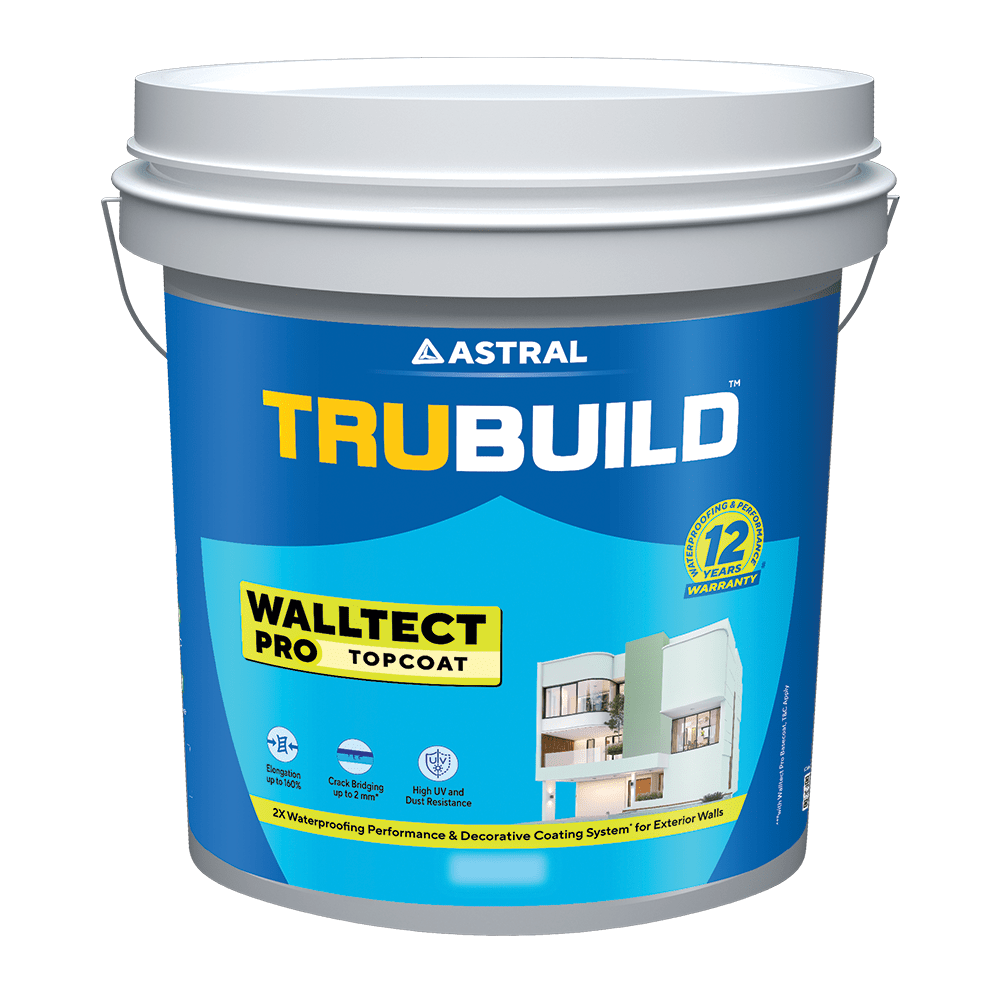
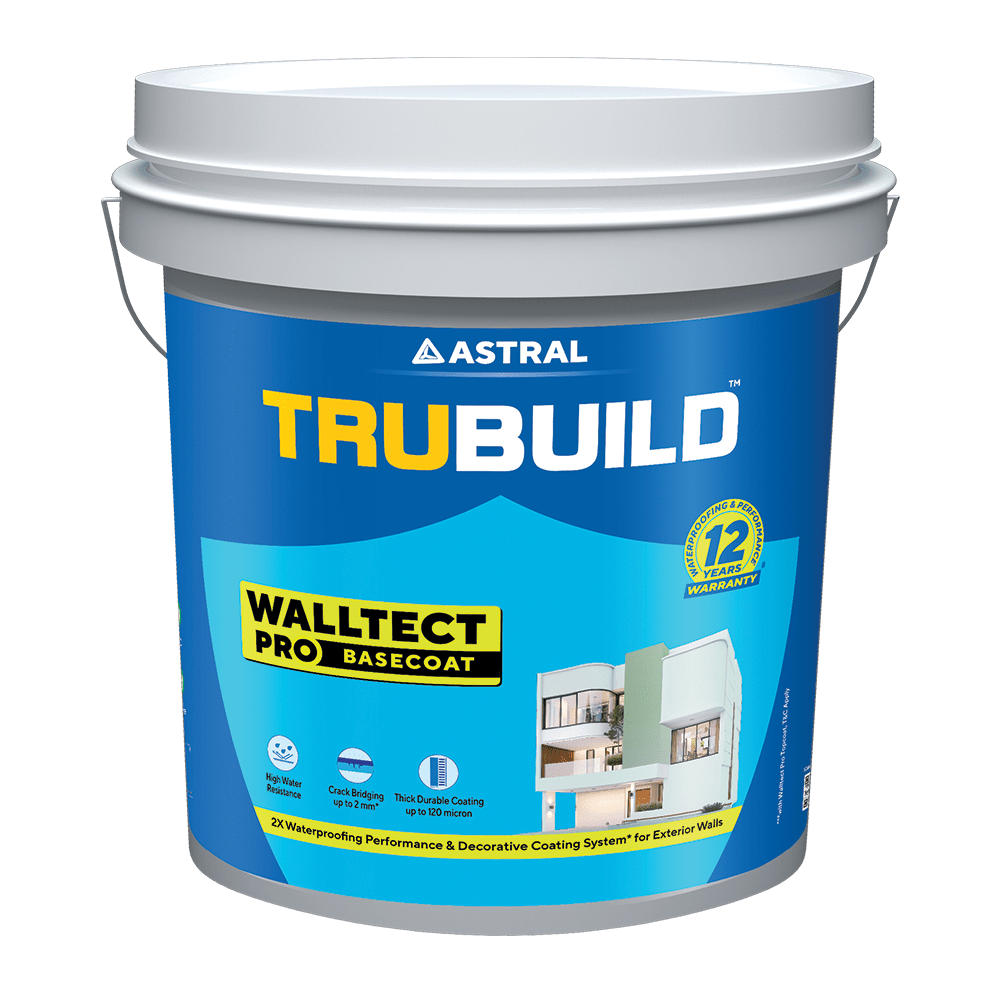
For a comprehensive two-stage system, the Walltect range delivers layered protection.
- Trubuild Walltect Basecoat: It acts as the waterproofing foundation. It achieves nil water penetration at 5 bar pressure and delivers elongation of 150% and carries excellent fungi resistance.
- Trubuild Walltect Topcoat: This solution adds an elastomeric, decorative finish with a Solar Reflectance Index (SRI) of 98, crack-bridging capacity of over 1mm and excellent UV resistance.
Relying on basic decorative paint is no longer enough for modern structures. By choosing the right exterior wall coatings and prioritising professional exterior wall waterproofing, you can protect your financial investment and the health of your family. A high-quality exterior waterproofing system is the smartest move you can make for your property.
FAQ
What is exterior wall waterproofing?
It is the process of applying a water-resistant layer or chemical treatment to the outer surfaces of a building. This prevents rainwater from penetrating the walls and it can cause damage to the interiors and the structural frame.
How long do exterior wall coatings last?
A high-quality application can last anywhere from 5 to 10 years, depending on the product used and the weather conditions of the region. Regular maintenance and selecting the right product for your specific climate can extend this lifespan.
Which coating is best for exterior walls?
For most modern Indian homes, an elastomeric coating is the best choice because it handles the expansion and contraction caused by extreme heat and monsoon rain. It bridges cracks effectively and provides long-lasting protection.

